
CHANGHORN CHANGHORN

China Top 10 EtherCAT Module Manufacturers

Time:2026-10-14 Author:Charlotte
0%

China has become a major source of industrial communication technology, including compact and high-performance EtherCAT module solutions. Manufacturers now serve automation builders, machine designers, and system integrators worldwide. Their products appear in robotic arms, packaging lines, CNC equipment, and intelligent conveyor systems.

This guide introduces China’s top 10 EtherCAT module manufacturers through practical selection criteria. It considers product reliability, protocol compatibility, engineering experience, production capacity, and after-sales support. Technical details matter. A module may support EtherCAT communication, distributed clocks, and flexible I/O, yet still fail under heat, vibration, or electrical noise. Therefore, factory testing, traceable quality procedures, and relevant certifications deserve close attention.

The evaluation also looks at customization. Some projects require digital I/O modules, analog input units, motion-control interfaces, or safety-related communication options. Reliable suppliers should explain wiring, current limits, cycle times, and integration requirements clearly. They should also provide documentation that engineers can use without repeated clarification.

Real-world performance matters most. A polished product page cannot replace stable operation on a factory floor. Testing reveals weaknesses. Buyers should request samples, inspect enclosure quality, and confirm firmware update procedures before placing large orders. Supplier rankings are never completely objective, either. Pricing, lead times, and technical support can change by project and region. This overview offers a useful starting point, but each company should still be verified against current specifications, customer references, and application demands.
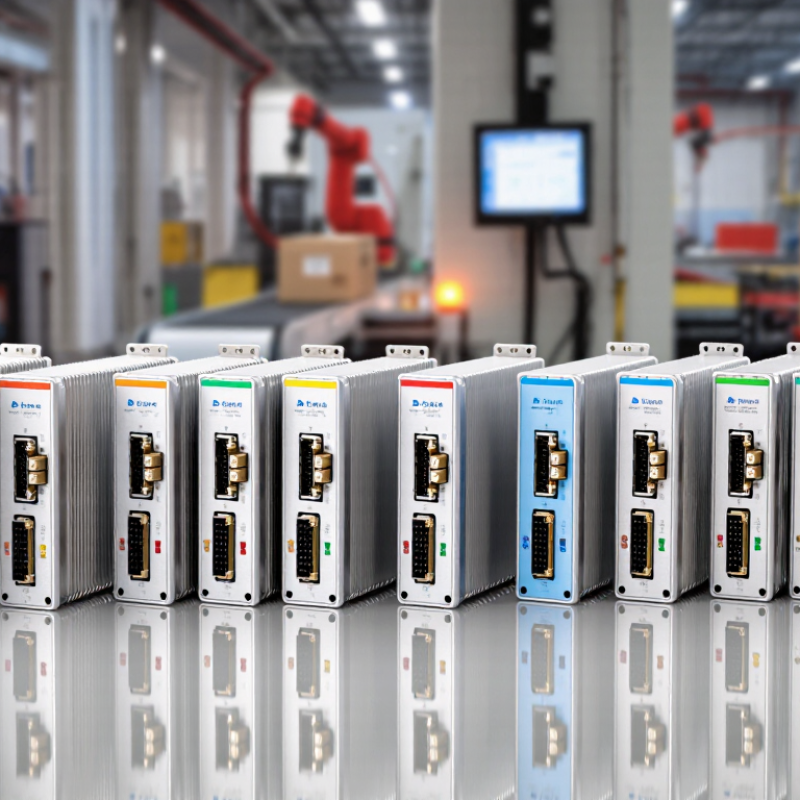
China Top 10 EtherCAT Module Manufacturers

What Are EtherCAT Modules and How Are They Used?

What Are EtherCAT Modules and How Are They Used?

EtherCAT modules are compact industrial devices that connect sensors, actuators, drives, and controllers through an EtherCAT network. Common types include couplers, digital I/O units, analog I/O units, motion modules, gateways, and safety terminals. They process data while passing the communication frame through each station, which reduces delay and wiring. Distributed Clock technology also helps synchronize motion, often within microsecond-level accuracy. Practical applications include robotic arms, packaging machines, CNC equipment, semiconductor tools, and battery production lines.

Market evidence supports this demand. HMS Networks’ 2024 Industrial Network Market Shares report placed industrial Ethernet at 71% of newly installed factory network nodes. EtherCAT represented about 11% of that market. The EtherCAT Technology Group also reported more than 8,000 member companies, showing broad ecosystem adoption. However, module performance depends on topology, cable quality, grounding, controller configuration, and diagnostic skills. The boundary is not always clean. A fast network can still perform poorly when installation practices are weak.

Tips: Check cycle time, synchronization needs, I/O density, temperature range, and certification before selection. Test the complete machine, not only one module. Keep spare couplers and connectors onsite. Documentation matters more than impressive specifications. Some commissioning problems remain easy to overlook.

China Top 10 EtherCAT Module Manufacturers — What Are EtherCAT Modules and How Are They Used?

EtherCAT modules are distributed I/O and control devices connected to an EtherCAT network. They collect sensor signals, control actuators, process analog values, and support functions such as safety, temperature measurement, and motion feedback.

The chart shows representative channel-count ranges commonly offered for different EtherCAT module categories. Actual configurations vary by application and system design; the figures are not company sales data or market-share estimates.

How China’s EtherCAT Module Manufacturing Market Is Structured

China’s EtherCAT module market is structured around four layers: semiconductor supply, module design, equipment integration, and machine manufacturing. Module producers typically combine communication controllers, isolated interfaces, firmware, and metal or polymer housings. Many also provide configuration files and diagnostic tools for faster commissioning.

Demand comes mainly from robotics, semiconductor equipment, packaging, logistics, and battery production. The International Federation of Robotics reported 276,288 industrial robot installations in China during 2023, representing about 51% of global installations. This scale creates steady demand for compact I/O modules, servo interfaces, and safety-related communication products. The EtherCAT Technology Group reported more than 8,000 member companies worldwide in recent membership data, showing how widely the ecosystem has expanded. China’s role is significant, but public data rarely separates module sales from broader automation revenue.

Manufacturing is usually divided between specialized electronics factories and system integrators. The former focus on PCB assembly, testing, firmware, and protocol compliance. The latter adapt modules for welding cells, inspection lines, and high-speed motion systems. Export-oriented suppliers must manage temperature testing, EMC verification, traceability, and regional certification requirements. Field experience shows that documentation quality often matters as much as hardware. A module may pass bench testing yet fail during noisy factory operation. The market remains fragmented, and supplier rankings can change quickly. That uncertainty deserves more careful measurement.

Criteria for Ranking China’s Top 10 EtherCAT Module Manufacturers

China Top 10 EtherCAT Module Manufacturers

Ranking China’s top 10 EtherCAT module manufacturers requires more than comparing catalog prices. China installed 276,288 industrial robots in 2023, representing 51% of global installations, according to the International Federation of Robotics. This scale increases demand for stable, fast, and serviceable motion-control modules.

A practical ranking should assign the highest weight to EtherCAT conformance, cycle-time stability, synchronization accuracy, and multi-vendor interoperability. Test records, firmware control, and documented error handling deserve careful review. EtherCAT Technology Group reports more than 8,000 member companies worldwide, making compatibility evidence more valuable than attractive product language. Manufacturers should also be assessed through ISO 9001 systems, traceable component sourcing, production testing, and field-failure rates. Real engineering support matters.

Fast replies matter.

Evaluation should include delivery capacity, customization skill, and after-sales response in overseas markets. A supplier that provides sample units, wiring diagrams, ESI files, and five-year product records earns stronger credibility. However, public data is often incomplete. Some companies disclose revenue but hide return rates; others publish test results without explaining test conditions. That weakness should reduce their scores. Pilot projects, factory audits, and interviews with system integrators can correct the paper-based ranking. The final list should balance measurable evidence with practical experience, while admitting that no scoring model fully captures long-term reliability.

China’s Top 10 EtherCAT Module Manufacturers Compared

China’s Top 10 EtherCAT Module Manufacturers Compared

China’s top ten EtherCAT module manufacturers differ in product focus, testing depth, and customization speed. Some concentrate on compact I/O modules for machine builders. Others provide remote I/O, motion interfaces, safety modules, or gateway solutions. A useful comparison should examine more than catalog size. Check protocol compliance, cycle time, connector quality, firmware stability, and available diagnostics. These details affect production uptime.

Factory experience also matters. Ask whether the manufacturer has tested modules with servo drives, PLCs, sensors, and mixed network loads. Request test reports, sample units, wiring diagrams, and lifecycle information. Technical support should explain fault codes clearly, not only send a generic manual. Delivery records and quality-control procedures can reveal more than promotional claims. Still, no ranking is perfect. A strong supplier for packaging equipment may not suit a high-speed assembly line.

Tips: Compare identical specifications before comparing prices. Test startup time, communication recovery, temperature performance, and output response. Confirm ESI file accuracy and software compatibility. Keep one sample running for several days under realistic loads. This exposes small issues, such as loose terminals or unclear diagnostics. A manufacturer that accepts technical questions openly is often easier to trust. However, some evaluations remain incomplete because public data is limited. Independent testing should support every final purchasing decision.

How to Select the Right Chinese EtherCAT Module Supplier

Selecting a Chinese EtherCAT module supplier requires more than comparing unit prices. HMS Networks reported in its Industrial Network Market Shares 2024 study that Ethernet-based networks represented 71% of new industrial network installations. This growth increases supplier choice, but also raises quality risks. Verify EtherCAT conformance, supported cycle times, jitter performance, and diagnostic features through test records rather than sales claims.

Experience matters here. Request a working sample and connect it to your actual PLC, servo drive, and sensor layout. Measure startup time, synchronization stability, packet loss, and performance under electrical noise. A reliable supplier should provide traceable production records, firmware revision control, EMC test evidence, and clear environmental ratings. Check whether the module supports the required temperature range, isolation voltage, and mounting conditions. Small details matter.

ETG reported more than 8,000 member companies globally in 2024, showing the ecosystem’s scale and complexity. However, membership alone does not prove product quality. Review independent conformity evidence against relevant IEC 61158 and IEC 61784-2 requirements. Audit the factory, not only the website. Ask about component traceability, spare-part availability, engineering response time, and software documentation. A two-year supply promise sounds useful, but it should be written into the agreement. Some buyers also overlook firmware compatibility after commissioning. That can become expensive. No selection process is perfect; even experienced engineers should retest samples after hardware or firmware changes.

China Top 10 EtherCAT Module Manufacturers - How to Select the Right Chinese EtherCAT Module Supplier

No. Evaluation Dimension What a Qualified Supplier Should Provide Practical Verification Method Suggested Weight Selection Signal
1 EtherCAT Conformance The module should implement EtherCAT communication according to IEC 61158 Type 12 and support standard EtherCAT configuration and diagnostic functions. Request the product manual, EtherCAT device description file, firmware version, and conformance or interoperability test records. 15% Documented compliance and successful controller interoperability.
2 Module Type and I/O Density The portfolio should cover the required module category, such as digital I/O, analog I/O, motion, safety, gateway, or power distribution modules. Compare channel count, signal type, voltage range, current rating, resolution, isolation, and installation dimensions with the machine design. 12% The module meets the electrical and space requirements without unnecessary expansion.
3 Cycle Time and Synchronization The supplier should publish communication and process-data performance under defined network conditions. EtherCAT supports distributed clocks for precise device synchronization. Test the complete network with the intended controller, node count, cable length, process-data size, and required update interval. 12% Stable cycle performance and acceptable jitter at the target load.
4 Controller and PLC Compatibility The module should work with the customer’s EtherCAT master, engineering software, operating system, and required configuration workflow. Complete a proof-of-concept using the actual master, device description file, application profile, and diagnostic tools. 12% No custom driver or unsupported configuration workaround is required.
5 Electrical and Environmental Ratings The product specification should clearly state supply voltage, power consumption, operating temperature, humidity, vibration, shock, ingress protection, and EMC conditions. Match the published ratings with the cabinet environment and request relevant EMC, safety, and environmental test reports. 10% Ratings include sufficient margin for the actual installation environment.
6 Production Quality Control A reliable supplier should use documented incoming inspection, assembly control, firmware management, functional testing, traceability, and nonconformance procedures. Review quality certificates, inspection plans, sample test records, lot traceability, and corrective-action procedures. 10% Repeatable production records and clear quality ownership.
7 Customization and Engineering Support The supplier should be able to support firmware configuration, connector selection, mechanical changes, special I/O ranges, and application-level troubleshooting when required. Ask for the engineering contact, change-control process, development timeline, prototype policy, and support response procedure. 8% Technical requests receive specific, written answers rather than generic quotations.
8 Supply Capacity and Lead Time The supplier should provide realistic sample, pilot, and mass-production lead times, together with capacity information for key components and assembly lines. Request a production schedule, minimum order quantity, safety-stock policy, forecast process, and delivery performance history. 8% The supplier can support both engineering samples and repeat orders.
9 Total Cost of Ownership Evaluation should include unit price, engineering fees, software or configuration costs, cabling, accessories, testing, warranty, spare parts, and service expenses. Compare itemized quotations using the same technical specification, order quantity, Incoterm, warranty period, and payment conditions. 7% The lowest initial price does not conceal higher integration or maintenance costs.
10 Documentation, Warranty, and After-Sales Service The supplier should provide English manuals, wiring diagrams, device files, firmware notes, troubleshooting guidance, warranty terms, and replacement procedures. Review the document package, warranty exclusions, RMA process, spare-part availability, and average technical response time. 6% Clear documentation and accountable support throughout the product life cycle.
Total Recommended Evaluation Weight 100% Use a scored supplier comparison matrix.

FAQS

What are EtherCAT modules used for?

They connect sensors, actuators, drives, and controllers on one industrial network. A robotic arm, packaging machine, or CNC system may use several modules.

Which types of EtherCAT modules are common?

Common types include couplers, digital I/O, analog I/O, motion modules, gateways, and safety terminals. A coupler may sit beside a controller. I/O modules handle field signals.

How do EtherCAT modules reduce wiring and delay?

Each station processes data while passing the communication frame forward. This reduces separate cables and communication delays. Good wiring still matters.

How important is synchronization in motion applications?

Distributed Clock technology can synchronize motion at microsecond-level accuracy. This helps coordinate servo axes and robotic movements. The result depends on configuration.

What should buyers check before selecting a module?

Check cycle time, synchronization needs, I/O density, temperature range, and certifications. Also review isolation voltage, mounting conditions, and diagnostic functions. Specifications can look impressive.

How can buyers test a supplier’s module properly?

Connect a sample to the actual controller, servo drive, and sensor layout. Measure startup time, packet loss, synchronization stability, and noise performance. Test the complete machine.

Does network membership prove module quality?

No. Membership shows ecosystem participation, not long-term product reliability. Request conformance evidence, test records, firmware controls, and error-handling details. Evidence beats promises.

What production and support details deserve review?

Review component traceability, factory testing, software documents, spare parts, and engineering response times. Ask for wiring diagrams and device files. Fast replies matter.

How should buyers judge supplier rankings?

Give strong weight to conformance, cycle stability, synchronization, interoperability, and field-failure records. Use pilot projects, factory audits, and integrator interviews. No scoring model is perfect.

What common mistakes can weaken EtherCAT performance?

Poor cables, weak grounding, incorrect controller settings, and unsuitable topology can cause trouble. A fast network may still perform badly. Retest after firmware changes.

Conclusion

This article provides a practical overview of China’s EtherCAT module manufacturing industry, beginning with an explanation of what EtherCAT modules are and how they support fast, synchronized communication between industrial controllers, sensors, drives, and other automation devices. It also examines how the market is organized, including product development, hardware manufacturing, software integration, testing, and export services. To create a useful comparison, manufacturers are assessed according to technical capability, product compatibility, quality management, customization support, delivery reliability, service responsiveness, and overall value.

The article then compares China’s top 10 EtherCAT module manufacturers from a neutral, application-focused perspective, highlighting differences in product range, engineering expertise, manufacturing capacity, and support for various industrial environments. Finally, it offers guidance for selecting the right Chinese supplier, emphasizing the importance of communication protocols, system compatibility, certification, lifecycle support, sample testing, and transparent cooperation terms. This framework helps buyers make informed decisions based on project requirements rather than relying solely on price or production scale.

Charlotte

Charlotte

Charlotte is a seasoned marketing professional with a deep understanding of the company's portfolio and a passion for elevating its presence in the market. With a keen eye for detail and a commitment to excellence, she ensures that our professional blog is regularly updated with insightful articles......