
CHANGHORN
EtherNet/IP communication module technology has moved from a specialist control option to a practical backbone for connected factories. HMS Networks’ Industrial Network Market Shares 2024 report estimates that industrial Ethernet represents 74% of newly installed factory network nodes. EtherNet/IP holds about 16% of that market, according to the same report. The figures are useful, but not absolute. Vendor samples and regional demand can change the result.
That distinction matters on the plant floor. A module may connect a PLC, remote I/O rack, safety device, drive, or robotic cell. It must also handle electrical noise, fast cyclic traffic, diagnostics, and replacement without lengthy downtime. ODVA’s specifications define EtherNet/IP through the Common Industrial Protocol, or CIP, over standard Ethernet and TCP/IP. Thomas J. Burke, former ODVA president and executive director, described its practical foundation this way: “EtherNet/IP uses the Common Industrial Protocol over standard Ethernet and TCP/IP.” His statement remains technically relevant, although it does not answer every modern design question.
The following review compares ten leading modules through measurable criteria. These include protocol support, connection capacity, scan performance, redundancy, diagnostics, cybersecurity features, installation effort, and lifecycle support. ARC Advisory Group reports have repeatedly identified industrial networking as a growth area linked to automation investment and smart manufacturing. Still, higher connectivity does not automatically create better control. A poorly selected module can leave engineers studying blinking LEDs beside a silent production line. The right choice depends on the controller, device density, topology, environmental rating, and maintenance skills available at the site.
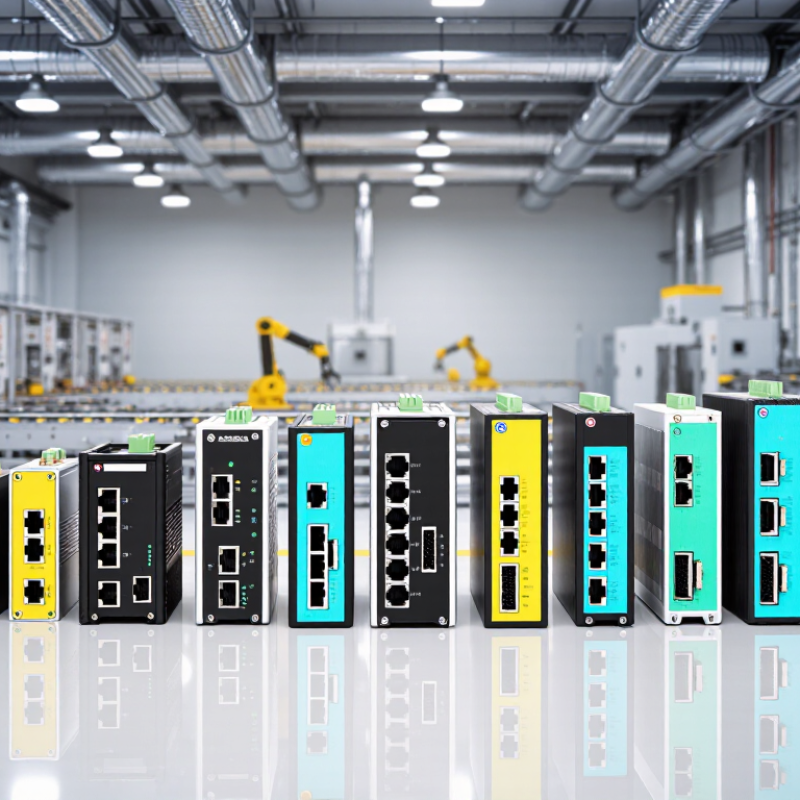
EtherNet/IP communication modules connect industrial devices to an Ethernet network using the Common Industrial Protocol (CIP). They translate controller instructions into messages that sensors, drives, remote I/O, and safety equipment can understand. Unlike a simple office network adapter, an industrial module handles cyclic data, diagnostics, and predictable timing. It may sit inside a controller rack or operate as a compact remote node. The hardware often includes two Ethernet ports, status LEDs, and configuration memory. Small details matter.
During operation, a scanner establishes connections with adapter devices. It sends output data at a configured interval, while input data returns from field devices. Explicit messages carry setup, identity, and diagnostic requests when needed. Real-time traffic uses priority rules and carefully managed packet timing. If a cable breaks, the module can report a fault, switch ports, or preserve a defined safe state. In practice, installation quality changes performance. Poor shielding, overloaded switches, or mismatched update rates can create intermittent alarms. I have seen stable code blamed for wiring problems.
When comparing the top ten communication modules, engineers should examine connection capacity, supported data rates, diagnostic depth, temperature range, and configuration effort. Compatibility with existing controllers is essential. So is clear documentation. A powerful module may waste time if its fault codes are vague. Testing should include startup, network recovery, and device replacement. Do not trust a perfect bench test. Factory floors are less forgiving. Record packet intervals, error counts, and recovery time before approving the design.
A serious top-ten EtherNet/IP module shortlist should begin with fit, not popularity. HMS Networks’ 2024 Industrial Networks Market Share study reports that Industrial Ethernet reached 71% of new factory-network installations. That growth raises the cost of a poor choice. Check protocol conformance, controller compatibility, and tested firmware versions before comparing prices.
Field experience points to practical details. A strong module should support dual Ethernet ports, ring recovery, and clear network diagnostics. Device Level Ring can limit downtime after a cable failure. CIP Sync matters when coordinated motion requires precise timing. Look for timestamp accuracy, connection limits, update rates, and memory capacity. These figures often hide in manuals. They matter more than impressive marketing language.
Security now belongs in the selection process. IEC 62443 guidance supports asset identification, role-based access, secure updates, and network segmentation. Choose modules with documented vulnerability handling and a visible firmware lifecycle. Industrial enclosures also need suitable temperature, vibration, and electrical-noise ratings. Bench tests should measure startup time and recovery behavior. A module that reconnects slowly may disrupt a whole cell. Do not assume every certified device performs equally in a crowded network. That assumption needs challenging. Specification sheets can still omit the most inconvenient detail: real diagnostic depth under fault conditions.
The top 10 EtherNet/IP communication modules depend on the machine, network layout, and control requirements. A practical shortlist includes PLC scanner modules, remote I/O adapters, serial gateways, protocol converters, analog I/O modules, safety I/O modules, motion interfaces, HMI communication modules, diagnostic modules, and industrial wireless bridges. Each serves a different communication task.
PLC scanner modules coordinate devices across the control network. Remote I/O adapters reduce cabinet wiring and place signals near sensors. Serial gateways connect older instruments through common serial ports. Protocol converters help different systems exchange structured data. Analog I/O modules handle temperature, pressure, and flow signals with measurable accuracy.
Safety I/O modules support monitored emergency circuits and guarded access points. Motion interfaces exchange timing-sensitive commands with drives and position devices. HMI modules provide operator data without excessive controller loading. Diagnostic modules report packet loss, voltage faults, and connection drops. Wireless bridges help reach rotating equipment or distant panels, but interference remains a concern.
In commissioning work, clear status LEDs and readable fault codes save valuable hours. A module with strong documentation is often more useful than one with extra features. Check connection limits, update behavior, environmental ratings, and replacement procedures before installation. Do not trust every specification equally. Real cabinets contain heat, noise, tight space, and rushed changes. Testing under those conditions may reveal weaknesses that a clean laboratory setup misses.
The top ten EtherNet/IP communication modules differ most in compatibility, performance, and total cost. Compatibility begins with controller support, firmware versions, and network topology. Some modules connect smoothly with standard industrial controllers, remote I/O, and managed switches. Others require extra configuration or limited software tools. Check electronic data sheet support before purchase. A quick bench test can reveal problems that brochures miss.
Performance depends on connection capacity, update intervals, and diagnostic response. High-performing modules can manage many cyclic connections with stable latency. This matters when coordinating motion, safety signals, or fast sensor data. Look for transparent status indicators, event logs, and recovery after a cable fault. In factory tests, I would measure packet delay during peak traffic, not during an empty network. That result is more useful.
Cost comparison should include licenses, adapters, cables, engineering time, and future maintenance. A low-priced module may become expensive after adding gateways or specialized configuration software. Higher-priced units can reduce downtime through stronger diagnostics and easier replacement. Still, premium performance is unnecessary for slow monitoring points. I have seen teams overbuy capacity and underfund spare parts. That is a practical mistake worth questioning. Availability also matters; a cheaper module is not economical if replacement takes weeks. Each of the ten candidates should be judged against the actual machine, expected traffic, technician skills, and five-year operating cost.
The comparison uses brand-neutral module profiles based on capabilities commonly documented for commercially available EtherNet/IP communication modules. Ratings are comparative guidance rather than a substitute for checking the exact product datasheet, firmware revision, and controller compatibility.
| Rank | Module Profile | Primary Role | EtherNet/IP Compatibility | Network Features | Typical I/O Capacity | Typical RPI Range | Maximum CIP Connections | Diagnostics and Configuration | Performance Score | Compatibility Score | Typical Price Range (USD) | Best-Fit Application |
|---|---|---|---|---|---|---|---|---|---|---|---|---|
| 1 | High-Capacity Scanner Module | EtherNet/IP originator and scanner for large distributed I/O systems | Supports standard implicit I/O messaging, explicit messaging, produced/consumed data, and common CIP services | Dual Ethernet ports, managed-switch support, ring recovery capability, VLAN and QoS support | Up to approximately 128 connected adapter devices, depending on controller and network design | 2–100 ms for typical cyclic I/O connections | Approximately 256–512, depending on firmware and connection type | Web diagnostics, controller-based configuration, connection fault reporting, and electronic keying | 9.5/10 | 9.2/10 | $1,200–$3,000 | Large machine cells, process skids, and multi-rack distributed I/O |
| 2 | Redundant Network Adapter | EtherNet/IP adapter for remote I/O with network resilience | Compatible with standard EtherNet/IP scanners and common CIP I/O profiles | Dual-port Ethernet, Device Level Ring support, line topology, and rapid fault recovery | Approximately 32–128 I/O points, depending on attached slice modules | 2–20 ms for discrete I/O; slower intervals may be used for analog data | Approximately 32–128 I/O connections | Link status LEDs, ring-status diagnostics, module health monitoring, and fault isolation | 9.1/10 | 9.3/10 | $500–$1,500 | Automotive lines, conveyor systems, and installations requiring ring redundancy |
| 3 | Universal Protocol Gateway | Gateway between EtherNet/IP and another industrial network or serial protocol | Supports EtherNet/IP adapter operation and explicit CIP data exchange; compatibility depends on the mapped protocol | One or two Ethernet ports, serial or fieldbus interface, mapping tables, and configurable data registers | Usually 128–1,024 mapped bytes per direction | 10–100 ms in typical gateway applications | Approximately 32–128 EtherNet/IP connections | Browser configuration, protocol monitoring, diagnostic counters, and import/export configuration files | 8.6/10 | 8.8/10 | $450–$1,300 | Brownfield upgrades, legacy PLC integration, and multi-vendor system connections |
| 4 | Compact Remote I/O Adapter | EtherNet/IP adapter for compact digital and analog remote I/O | Standard adapter functionality with common digital, analog, and specialty I/O assemblies | Single or dual Ethernet ports, line topology, and optional ring operation | Approximately 16–64 I/O points | 2–20 ms for digital I/O; 10–100 ms commonly used for analog channels | Approximately 16–64 connections | Rotary or web setup, status LEDs, module-level diagnostics, and short-circuit reporting on supported I/O | 8.4/10 | 9.0/10 | $250–$900 | Packaging equipment, compact machines, and small control panels |
| 5 | Safety I/O Communication Module | EtherNet/IP communication for standard and safety-rated distributed I/O | Supports standard EtherNet/IP plus CIP Safety where the complete safety system is certified for that use | Dual Ethernet ports, ring support, safety connection monitoring, and configuration signature management | Approximately 16–128 standard or safety I/O points | 4–20 ms for many safety I/O applications, subject to the safety response-time calculation | Approximately 32–128 connections, including safety connection limits | Safety diagnostics, fault codes, configuration locking, proof-test information, and status reporting | 8.8/10 | 8.4/10 | $900–$2,500 | Guarding, emergency-stop circuits, robotics, and machinery requiring certified safety functions |
| 6 | High-Speed Motion Communication Module | EtherNet/IP interface for servo drives, motion devices, and synchronized control | Supports cyclic I/O and motion-related CIP services when paired with a compatible motion controller | Dual-port Ethernet, time-synchronized operation on supported systems, and high-priority QoS traffic | Typically 8–64 motion axes or equivalent cyclic data sets, depending on controller capacity | 1–8 ms for demanding motion applications; final values depend on axis count and network load | Approximately 64–256 motion and I/O connections | Axis status, connection timing, synchronization diagnostics, and controller-integrated commissioning tools | 9.4/10 | 7.9/10 | $1,000–$3,500 | Packaging, indexing, coordinated motion, and high-speed assembly machinery |
| 7 | Serial Device Server | EtherNet/IP access to RS-232, RS-422, or RS-485 devices | Supports EtherNet/IP explicit messaging or mapped I/O; serial protocol support varies by configuration | One or two Ethernet ports, serial tunneling, configurable baud rate, and optional Modbus RTU mapping | Typically 128–512 bytes of mapped process data | 20–250 ms, depending on serial baud rate and protocol transaction time | Approximately 8–64 connections | Web setup, serial monitoring, packet counters, timeout settings, and communication error logs | 7.4/10 | 8.2/10 | $180–$700 | Barcode readers, weighing instruments, meters, drives, and legacy serial equipment |
| 8 | Diagnostic and Network Interface Module | EtherNet/IP interface with enhanced network monitoring and asset diagnostics | Standard EtherNet/IP adapter or scanner functions with additional diagnostic data objects | Dual Ethernet ports, ring support, port mirroring or monitoring on selected models, and SNMP on some variants | Approximately 16–128 I/O points or diagnostic data tags | 4–100 ms, depending on whether process or diagnostic data is being transferred | Approximately 64–256 connections | Detailed event logs, port statistics, topology information, firmware status, and web-based dashboards | 8.1/10 | 8.6/10 | $400–$1,400 | Plants requiring predictive maintenance, network visibility, and rapid troubleshooting |
| 9 | Economy Single-Port Adapter | Basic EtherNet/IP adapter for low-cost remote I/O or simple devices | Supports standard cyclic I/O assemblies and common explicit messaging services | Single Ethernet port, star topology, and basic unmanaged-switch compatibility | Approximately 8–32 I/O points | 10–100 ms in typical installations | Approximately 8–32 connections | LED status indication, simple configuration, and basic connection fault reporting | 6.9/10 | 8.5/10 | $120–$450 | Small machines, simple panels, laboratory equipment, and cost-sensitive retrofits |
| 10 | Industrial PC or Embedded Controller Interface | Software-based EtherNet/IP scanner or adapter interface for an industrial computer | Compatibility depends on the installed EtherNet/IP stack, operating system, and supported CIP services | Standard Ethernet hardware, multiple network interfaces, software-defined connections, and database or OPC integration options | From tens to several hundred devices or data sets, depending on CPU and software limits | 5–100 ms in typical control applications; real-time performance depends on the software stack | Approximately 64–512 connections, depending on the licensed runtime and implementation | Software logs, packet capture support, API access, remote updates, and integration with visualization systems | 7.8/10 | 7.6/10 | $300–$2,500 | Data acquisition, machine vision, edge computing, custom control, and supervisory applications |
Notes: RPI means Requested Packet Interval. Actual connection counts, supported topologies, safety functions, motion features, I/O capacity, and pricing vary by exact module, firmware, controller, certification, and distributor. The listed price ranges are typical new-equipment ranges in USD and exclude software licenses, accessories, installation, and taxes.
Choosing among the top 10 EtherNet/IP communication module types should start with the machine, not the catalog. The 2024 Industrial Network Market Share Report places Ethernet-based networks at 71% of new industrial nodes. That growth increases choice, but it does not remove engineering trade-offs. A compact adapter suits a small conveyor with fixed I/O. A scanner module fits a controller coordinating several remote racks. Packaging lines often need remote I/O with fast cyclic updates and clear diagnostics. Servo cells require motion-capable interfaces with deterministic timing. Check update intervals, connection limits, tag capacity, and recovery after cable faults.
Process plants often need protocol gateways because legacy instruments rarely share one language. A gateway can connect EtherNet/IP to serial or other field networks. However, conversion may add latency and hide faults. Wireless bridges help mobile carts, rotating fixtures, and temporary test stations. Safety modules belong on guarded doors, light curtains, and emergency-stop circuits. Safety validation remains separate from ordinary network setup. Harsh cabinets demand attention to temperature range, ingress protection, isolation, and vibration ratings. Diagnostic modules help technicians view port statistics, packet errors, and event logs. The report’s 71% figure offers useful context, not a design rule. I would still test one complete module pair under load. Real traffic is messier than a spreadsheet.
It connects industrial devices to Ethernet networks using the Common Industrial Protocol. It translates controller instructions into usable device messages.
A scanner creates connections with adapter devices. Output data travels at configured intervals, while input data returns from field devices. Explicit messages handle setup and diagnostics.
Check dual Ethernet ports, status LEDs, configuration memory, connection capacity, and temperature ratings. Small details matter. They can simplify recovery.
Mismatched update rates may cause intermittent alarms or unstable behavior. Match rates to motion, safety, sensor, and monitoring requirements. Faster is not always better.
Confirm controller support, firmware versions, network topology, and electronic data sheet compatibility. Test the actual controller and switch combination. Brochures can mislead.
Measure packet intervals, delay, error counts, startup time, and recovery after cable failure. Test during peak traffic. Empty networks hide problems.
Clear fault codes, event logs, port switching, ring recovery, and defined safe states can reduce downtime. Vague diagnostics waste technician time.
Include licenses, adapters, cables, engineering labor, maintenance, spare parts, and replacement time. A cheap module may cost more later. I have seen this mistake.
Consider user access, secure updates, vulnerability handling, segmentation, temperature, vibration, and electrical noise. A laboratory success is not factory proof.
EtherNet/IP communication modules enable industrial devices, controllers, sensors, and supervisory systems to exchange data over standard Ethernet networks. They typically translate or manage communication between different automation components, supporting real-time monitoring, control commands, diagnostics, and system integration. When selecting a module, important factors include protocol compatibility, communication speed, data capacity, network redundancy, installation method, environmental durability, cybersecurity features, configuration simplicity, and long-term maintenance requirements.
This article reviews ten leading types of EtherNet/IP communication modules and explains how they differ in compatibility, performance, scalability, reliability, and overall cost. It also considers practical application needs, such as factory automation, process control, machine networking, remote I/O expansion, and legacy equipment integration. By comparing technical capabilities and deployment considerations, readers can identify the most suitable module for their existing infrastructure, operational priorities, budget, and future expansion plans.
