
CHANGHORN
China’s servo motion industry has expanded from basic motor control to integrated automation platforms. This guide examines ten Chinese manufacturers connected with the Kinetix servo drive market, including compatible systems, replacement solutions, and engineering support. It does not assume that every supplier produces Allen-Bradley Kinetix hardware.
That distinction matters. A reliable manufacturer should explain compatibility, communication protocols, firmware requirements, and installation limits. It should also provide measurable data, such as rated power, overload capacity, positioning accuracy, and response frequency. Performance matters. Details matter.
The selection focuses on manufacturing experience, product certification, factory capability, application expertise, and after-sales support. Evidence may include technical datasheets, laboratory testing, export records, and customer case studies. Practical value is equally important. A food-packaging line needs clean cabinet design and stable indexing. A CNC machine requires precise feedback control and fast fault diagnosis. A warehouse conveyor may prioritize network integration and easy replacement.
Some companies appear strong online but disclose limited engineering information. That weakness deserves attention. Rankings can also change as products, certifications, and service networks develop. This article therefore treats the list as a research starting point, not a final purchasing decision. Buyers should verify current specifications, local support, warranty terms, and compatibility with their existing Rockwell Automation architecture before placing an order. Careful verification protects uptime, maintenance budgets, and production quality.
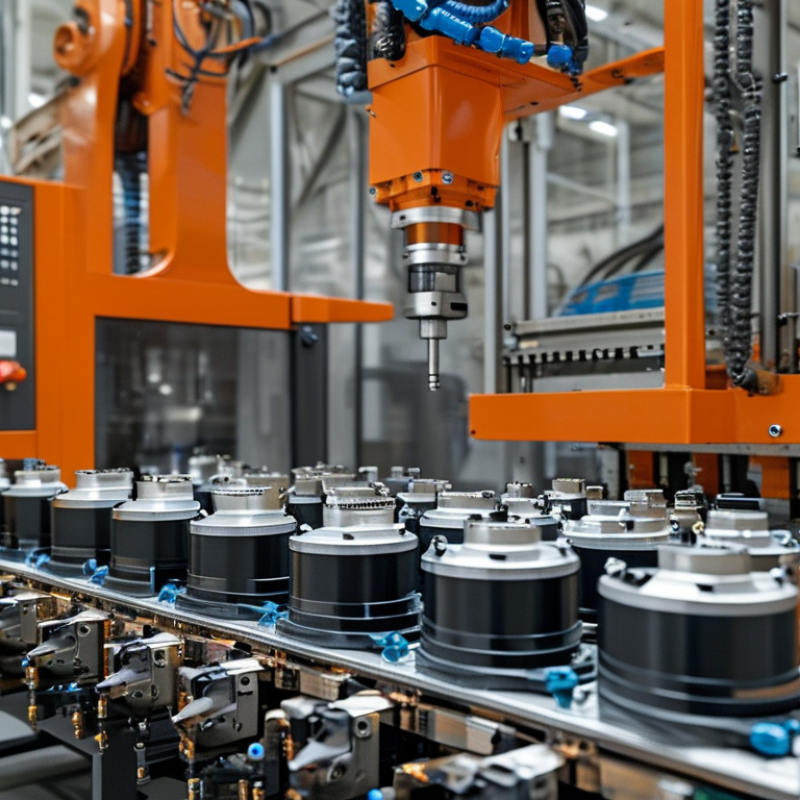
Kinetix servo drives are digital controllers used to manage servo motors with high speed and precision. They receive motion commands from a control system, then adjust motor torque, speed, and position through rapid feedback. In a packaging line, this can move a sealing jaw to the same point repeatedly, even during continuous production. The drive also monitors current, temperature, following error, and overload conditions. This information helps engineers diagnose faults before damaged components stop the line.
These drives are used where ordinary motor control lacks enough accuracy. Common applications include robotic axes, CNC equipment, conveyors, labeling machines, and automated assembly stations. Proper sizing matters. Engineers should check motor voltage, peak torque, continuous load, braking needs, communication protocol, and cabinet temperature. A drive may appear powerful on paper but still perform poorly with an unsuitable motor or weak tuning. Real commissioning experience shows that cable length and grounding can also affect feedback stability. Some assumptions need testing.
Tips: Record the machine’s actual load profile before choosing a drive. Test acceleration, stopping distance, and repeatability under production conditions. Keep feedback cables separated from high-power wiring. Leave ventilation space around the drive. Review alarm history after commissioning, not only during a failure. Manufacturer manuals and qualified electrical professionals should guide final installation decisions.
Evaluating China’s servo drive manufacturers requires more than comparing online prices. Start by checking their engineering depth, production history, and experience with demanding motion systems. Ask for electrical schematics, load calculations, and documented test procedures. A reliable manufacturer should explain these details clearly.
Request samples before signing a large order. Test speed stability, positioning accuracy, noise, heat, and alarm recovery under real operating conditions. Check whether the drive performs consistently after extended use. Factory audits can reveal soldering quality, assembly discipline, calibration equipment, and traceability records. Certifications matter, but certificates alone prove little.
Review the manufacturer’s control algorithms, communication options, firmware update process, and motor compatibility. Confirm support for your voltage range and operating environment. Speak with technical staff, not only sales representatives. Their response time matters when a production line stops. Also inspect spare-part availability and repair procedures. A low purchase price may hide expensive downtime.
Do not trust every performance figure immediately. Some specifications are measured under ideal conditions. Ask how results were obtained. Written warranties should define response times, replacement duties, and testing standards. Language gaps may create small but costly misunderstandings. A careful evaluation should record every assumption, even uncomfortable ones. No supplier is perfect. The stronger choice is usually the manufacturer that admits limitations and provides measurable evidence.
Top 10 Kinetix Servo Drive Manufacturers in China
China’s servo-drive sector is expanding with factory automation, packaging, robotics, and electronic assembly. The International Federation of Robotics reported 276,288 industrial robot installations in China during 2023, representing about 51% of global installations. This scale creates strong demand for precise motion control, fast commissioning, and stable fieldbus communication. The leading ten manufacturers should therefore be assessed through engineering evidence, not website claims. Look for documented torque curves, overload capacity, encoder compatibility, and operating performance at 40°C.
Market research from MarketsandMarkets indicates continued growth in the global servo motors and drives market through 2028, supported by smart factories and energy-efficient equipment. Chinese manufacturers increasingly provide compact drives, EtherCAT support, safety functions, and local technical service. Yet performance varies between product families. A low price may hide tuning limitations, weaker documentation, or inconsistent firmware. That matters on a high-speed packaging line.
From practical supplier evaluations, response time is often as important as rated power. Ask for vibration-test records, EMC reports, lifetime data, and customer references from similar machines. Check whether spare units can be delivered within days, not weeks. Some suppliers still publish incomplete technical files. That is a warning, but not an automatic rejection. An on-site trial can reveal following-error spikes, noisy acceleration, or unstable braking behavior. The strongest candidates combine tested hardware, clear manuals, traceable quality control, and engineers who explain failures honestly.
The top ten servo-drive manufacturers differ mainly in product depth and application focus. Manufacturer one develops compact 400-watt drives for packaging machines, with fast EtherNet/IP communication. Manufacturer two supplies high-power cabinet drives, supporting regenerative braking and precise torque control. Manufacturer three focuses on multi-axis motion controllers for robotic assembly cells. Its synchronization is impressive, although commissioning can feel demanding. Manufacturer four builds servo motors and drives for CNC equipment, emphasizing low-speed stability and encoder accuracy. Manufacturer five offers modular drives for conveyor systems, with removable terminals and clear diagnostics. That practical detail saves maintenance time.
Manufacturer six targets clean manufacturing environments, using sealed housings and simplified cooling paths. Manufacturer seven provides drives for printing and converting lines, where registration errors must remain extremely small. Manufacturer eight combines motion software with safety functions, including safe torque off and monitored stopping. Manufacturer nine specializes in compact drives for medical and laboratory equipment, prioritizing quiet operation and repeatable positioning. Manufacturer ten produces heavy-duty systems for material handling, with overload protection and strong thermal performance. Field engineers often value the tenth supplier’s fault history tools. Still, software usability varies between product families. A technically strong drive can underperform when setup screens are unclear, manuals lack wiring examples, or tuning requires excessive trial and error. Careful testing under real load remains essential.
Choosing a Chinese servo drive supplier requires more than comparing prices. Check whether the supplier understands your machine’s load, speed, inertia, and duty cycle. Ask for sizing calculations, not only a product catalogue. A reliable engineer should explain torque margins and braking requirements in clear language.
Request evidence before placing an order. Review factory test reports, wiring diagrams, firmware records, and traceable serial numbers. Check support for your controller’s communication protocol, such as EtherNet/IP, Modbus TCP, or CANopen. Confirm EMC testing, safety documentation, and applicable market certifications. A supplier with ISO 9001 procedures may offer better process control, but certification alone proves little.
Test a sample under realistic conditions. Mount the drive in a cabinet, run repeated acceleration cycles, and measure temperature after several hours. Listen for unusual motor noise. Ask how quickly technical staff respond to fault codes and parameter questions. Spare parts and repair procedures also matter.
Be careful with unusually low quotations. They may exclude cables, tuning software, or after-sales support. I have seen specifications look complete while thermal limits remained unclear. That gap can delay commissioning. A small pilot order is wiser than a large commitment. Judge the supplier by documentation, response quality, and performance data—not confident promises.
| No. | Evaluation Dimension | What to Check | Relevant Technical or Commercial Data | Recommended Evidence | Selection Guidance |
|---|---|---|---|---|---|
| 1 | Product Compatibility | Confirm compatibility with the required motor type, feedback device, controller, and communication network. | Rated voltage, continuous and peak current, encoder interface, supported motor capacity, and fieldbus options. | Current datasheet, wiring diagram, compatibility list, and a written technical confirmation. | Reject products that require unverified adapters or undocumented firmware changes. |
| 2 | Electrical Performance | Evaluate whether the drive can meet the machine’s speed, torque, acceleration, and regenerative requirements. | Continuous output current, overload capability, speed range, torque response, braking method, and permissible regeneration. | Test report, performance curves, application calculations, and sample test results under representative loads. | Choose a suitable safety margin rather than selecting only by nominal motor power. |
| 3 | Motion Control Capability | Check position, speed, and torque control functions for the intended machine process. | Positioning resolution, synchronization performance, electronic gearing, homing functions, and tuning functions. | Application demonstration, control-function manual, tuning guide, and repeatability test data. | Prioritize documented functions that match the machine’s actual motion profile. |
| 4 | Communication and Integration | Verify integration with the existing PLC, industrial PC, HMI, and machine network. | Supported protocols, update rates, topology, diagnostic objects, parameter access, and synchronization method. | Communication manuals, EDS or equivalent files, sample programs, and integration test records. | A supplier should provide practical integration support, not only a protocol name. |
| 5 | Quality Management | Assess production controls, traceability, inspection procedures, and corrective-action processes. | Quality-system certification status, incoming inspection, in-process testing, final test coverage, and defect controls. | Valid certificates, quality inspection records, audit responses, and serial-number traceability samples. | Verify certificates independently and distinguish factory capability from trading-company claims. |
| 6 | Safety and Compliance | Confirm that the product is suitable for the electrical, environmental, and regulatory conditions of the target market. | Applicable safety standards, EMC performance, protective functions, insulation rating, ingress protection, and operating temperature. | Declaration of conformity, test reports, certificates, user manual, and installation requirements. | Check the exact model and revision; do not rely on certificates for a different product family. |
| 7 | Thermal and Mechanical Design | Review heat dissipation, cabinet installation, vibration resistance, and service-access requirements. | Cooling method, derating curves, mounting clearances, vibration limits, enclosure requirements, and protection functions. | Installation manual, thermal test data, dimensional drawings, and environmental test results. | Allow for cabinet temperature, altitude, airflow, and continuous-duty conditions during sizing. |
| 8 | Customization and Engineering Support | Determine whether the supplier can support parameter configuration, firmware management, and application-specific requirements. | Available parameter settings, firmware policy, application engineering resources, sample programming, and commissioning support. | Technical support procedure, response-time commitment, commissioning plan, and change-control documentation. | Use a written scope of support to prevent ambiguity after the purchase order is issued. |
| 9 | Supply Chain and Lead Time | Evaluate production capacity, component availability, minimum order requirements, and delivery consistency. | Standard lead time, sample lead time, monthly capacity, safety-stock policy, minimum order quantity, and spare-parts availability. | Written quotation, production schedule, capacity statement, shipment records, and business-continuity plan. | Compare promised lead time with confirmed production and shipping milestones. |
| 10 | Total Cost and After-Sales Service | Compare purchase cost with commissioning, maintenance, spare parts, training, warranty, and downtime risks. | Unit price, warranty period, repair or replacement process, spare-parts pricing, service coverage, and expected service life. | Itemized quotation, warranty terms, service-level agreement, return procedure, and customer references. | Select the lowest-risk total cost option, not necessarily the lowest initial price. |
Note: Supplier rankings should be based on verified technical documents, sample testing, factory-audit results, compliance evidence, delivery performance, and after-sales capability rather than marketing claims alone.
: Check engineering depth, production history, and experience with demanding motion systems. Ask for schematics, load calculations, and test records. Clear explanations matter.
Samples reveal real performance. Test speed stability, positioning accuracy, noise, heat, and alarm recovery under actual loads. Extended testing may expose weaknesses.
Inspect soldering quality, assembly discipline, calibration tools, and traceability records. Look for orderly workstations and labeled components. Certificates alone prove little.
Review control algorithms, communication options, firmware updates, and motor compatibility. Confirm voltage support and environmental limits. Ask technical staff, not only sales representatives.
Ask how each result was measured. Ideal laboratory conditions may hide weaker field performance. Repeat tests with heat, vibration, and continuous operation.
Confirm spare-part availability, repair procedures, warranty duties, and response times. A stopped production line needs practical help quickly. Delays become expensive.
Packaging may need compact drives and fast communication. CNC systems need stable low-speed control. Conveyor systems benefit from removable terminals and clear diagnostics.
Unclear setup screens, weak wiring examples, and difficult tuning can slow commissioning. Strong hardware may still underperform. That part deserves more reflection.
Not always. Compare downtime risk, thermal performance, fault history tools, and maintenance effort. A cheaper drive can become costly after repeated stoppages.
Trust measurable evidence and honest limitations. No supplier is perfect. The stronger choice usually documents assumptions, testing methods, and known weaknesses.
This article provides a practical overview of China’s top 10 Kinetix servo drive manufacturers, explaining what a Kinetix servo drive is and why it is widely used in industrial automation, robotics, packaging, motion control, and precision machinery. It examines how servo drives improve positioning accuracy, speed regulation, energy efficiency, and system responsiveness while supporting demanding production environments. The article also introduces key evaluation criteria, including product quality, control performance, compatibility, customization capability, certifications, production capacity, technical support, delivery reliability, and after-sales service.
In addition, the article compares the main products and technical strengths of each manufacturer without focusing on brand promotion. Readers will learn how to assess suppliers according to application requirements, motor and controller compatibility, communication protocols, operating conditions, budget, and long-term maintenance needs. By using these guidelines, buyers can shortlist reliable Chinese manufacturers and select a Kinetix servo drive supplier that offers a suitable balance of performance, flexibility, service, and overall value.
