 CHANGHORN
CHANGHORN
CHANGHORN
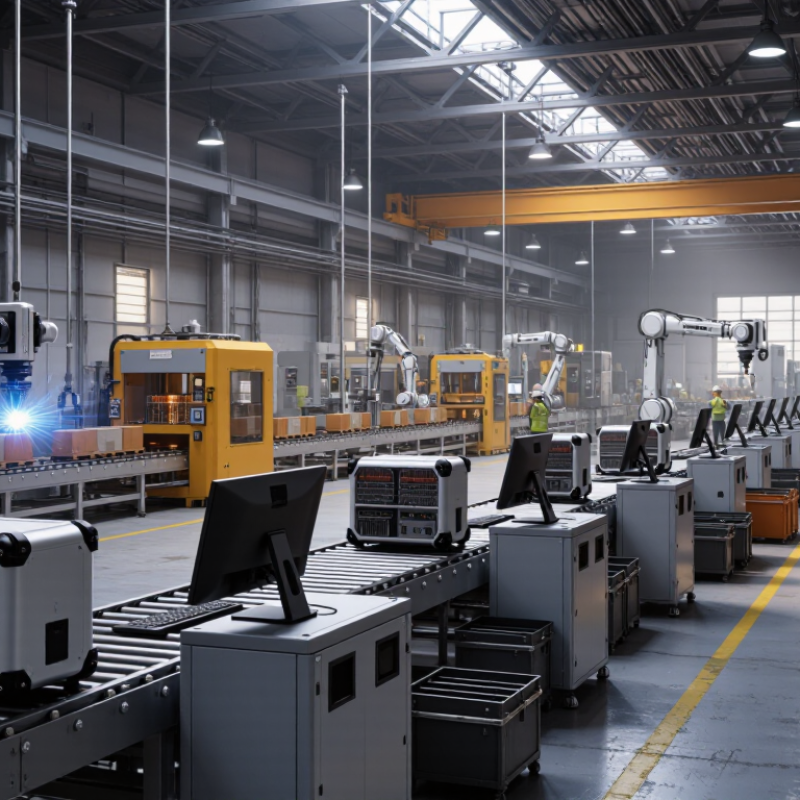
Industrial PCs are becoming the quiet backbone of modern production. They operate beside welding cells, conveyor belts, robotic arms, and inspection cameras. Unlike office computers, an industrial PC must tolerate dust, vibration, heat, long operating cycles, and unstable factory conditions. Reliability is not a slogan here. It is a maintenance cost.
MarketsandMarkets estimates that the global industrial PC market will grow from approximately USD 5.4 billion in 2023 to USD 7.4 billion by 2028. IDC also projects strong growth in worldwide edge-computing spending, reaching hundreds of billions of dollars this decade. These figures explain why manufacturers are competing beyond processor speed. Buyers now examine thermal design, remote management, cybersecurity, operating-system support, certifications, and product availability. ARC Advisory Group analyst Harry Forbes has expressed the central principle clearly: “Value is created when data becomes actionable at the edge.”
This Top 10 Industrial PC Manufacturers list evaluates suppliers for global buyers through that practical lens. It considers hardware durability, customization, lifecycle planning, technical support, and suitability for manufacturing, logistics, energy, transportation, and automation. Some vendors excel in rugged fanless systems. Others offer stronger software ecosystems or broader international service networks. No ranking can fit every factory. That is an important limitation. A low-cost model may look attractive in a catalog, yet fail under continuous vibration or high ambient temperatures. Buyers should verify specifications against real plant conditions, not marketing language. The right industrial PC is the one that keeps decisions moving when the production floor becomes loud, hot, and unforgiving.
Industrial PC demand is expanding beyond traditional factory control rooms. MarketsandMarkets estimates the industrial PC market will grow from about USD 6.4 billion in 2023 to USD 9.1 billion by 2028, representing a 7.3% CAGR. The estimate reflects stronger automation, connected equipment, and distributed computing requirements.
Edge computing is changing purchasing criteria. IDC’s Worldwide Edge Spending Guide projects global edge spending to exceed USD 274 billion in 2025. Industrial buyers increasingly need systems that process camera feeds, vibration data, and machine alarms near production lines. A suitable platform should tolerate dust, heat, electrical noise, and continuous operation. It should also support remote maintenance without creating avoidable cybersecurity exposure.
IIoT demand adds another layer of pressure. Connected sensors can generate thousands of readings each minute. An industrial PC must filter useful signals locally before sending selected data to cloud platforms. Storage endurance, processor lifecycle, expansion options, and operating-temperature ratings deserve careful comparison. The 7%+ CAGR is useful, but it is not a guarantee. Market forecasts vary by definition, region, and application scope. Some procurement teams still overvalue processor speed while ignoring thermal design and long-term component availability. That mistake can turn a low-cost purchase into repeated downtime. Practical testing under real vibration and temperature conditions remains more convincing than a polished specification sheet.
The market may grow from about USD 6.4 billion in 2023 to USD 9.1 billion by 2028. That equals roughly 7.3% annual growth. Forecasts vary by region and market definition, so treat them as guidance, not certainty.
Edge computing processes data near production equipment. It can analyze camera feeds, vibration readings, and machine alarms with less delay. This reduces unnecessary transfers to remote platforms. Fast processing helps, but thermal stability matters more than impressive clock speed.
Check performance under dust, heat, vibration, electrical noise, and continuous operation. A sealed cabinet may reach 45°C. That can cause processor throttling. Test the system in real conditions, not only in a clean office.
Compare sustained performance, thermal design, and workload suitability. Clock frequency alone is misleading. Video inspection and database logging may require different processor profiles. Measure actual workload behavior. That step is easy to skip.
Eight gigabytes may support a basic control interface. Inspection software and local analytics often need more memory. ECC memory can reduce errors in demanding environments. It may also increase cost, so compare the operational benefit.
Compare capacity, write endurance, temperature ratings, and replacement procedures. A fast drive is not automatically durable. Check how often data is written. Confirm whether technicians can replace the drive without long line stoppages.
Count serial ports, Ethernet ports, USB connections, digital inputs, and expansion slots. Check connector locations and cable clearance inside the enclosure. A system may have enough ports on paper but still fit poorly. Physical layout matters.
MTBF values depend on stated temperatures, components, and failure definitions. They do not guarantee performance at every site. Ask for test conditions and service data. Compare the figures with dust, vibration, and power quality records. A polished number can mislead.
Request lifecycle policies, spare-part plans, repair locations, firmware support, and documented lead times. Compare five-year costs, including installation, energy, repairs, downtime, and technician travel. Check warranty exclusions and repair turnaround. Test one unit before a fleet purchase. A cheap quote can hide uncertainty.
The global industrial PC market is expanding steadily, supported by edge computing, industrial automation, and growing IIoT adoption. This guide explains how buyers can compare leading manufacturers by examining processor performance, RAM capacity, storage options, I/O flexibility, thermal design, and MTBF ratings. It also highlights the importance of rugged construction and compliance with requirements such as IP protection levels, IEC 60068 environmental testing, CE, FCC, and UL certifications. Together, these factors help organizations select systems that can operate reliably in demanding industrial environments.
The comparison of ten global manufacturers focuses on product portfolios, regional coverage, revenue scale, and common applications across manufacturing, logistics, energy, transportation, and smart infrastructure. It also provides a practical due-diligence framework covering product lifecycle support, delivery lead times, total cost of ownership, service availability, upgrade paths, and warranty terms. By evaluating technical capability alongside long-term commercial support, buyers can choose an industrial PC platform that balances reliability, compliance, performance, and sustainable operational value.
