 CHANGHORN
Global buyers are reassessing the IO terminal market as factories become more connected, automated, and energy efficient. A reliable terminal is no longer a small cabinet component. It carries power, signals, heat, vibration, and maintenance risk. That matters on a real production floor, where one loose connection can stop a conveyor or trigger hours of troubleshooting.
MarketsandMarkets estimates that the global terminal block market will grow steadily through 2028, supported by industrial automation, renewable energy, and transportation infrastructure. Grand View Research also identifies factory automation and electrical equipment as major demand areas. These reports offer useful direction, but market forecasts are not purchase guarantees. Regional standards, wiring methods, lead times, and product quality still shape the final decision.
“Connectivity is the foundation for the digital transformation of industries,” said Terrence Curtin, former CEO of TE Connectivity. His observation fits the growing role of the IO terminal in control cabinets and distributed systems. The best manufacturers combine secure clamping, clear labeling, compact designs, and dependable testing. They also provide documentation that engineers can actually use.
That sounds simple. It is not always simple.
This guide compares leading IO terminal manufacturers for global buyers, including established brands and specialized suppliers. It considers product range, certification support, customization, supply stability, and after-sales service. Readers should still verify current approvals and regional availability before ordering. A strong reputation helps, but the terminal must survive the actual cabinet, environment, and workload. That is where careful buying decisions begin.
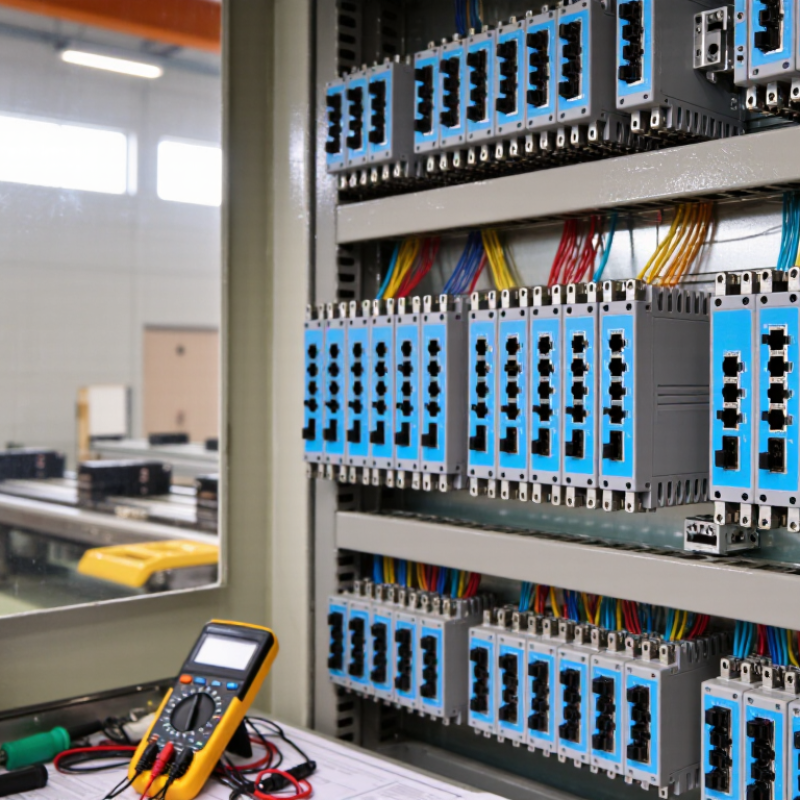
IO terminals are connection points that transfer input and output signals between field devices and control equipment. An input terminal receives information from sensors, switches, or measurement instruments. An output terminal sends commands to motors, valves, relays, or indicator lights. In many control cabinets, these terminals create the practical bridge between wiring in the field and a PLC or remote I/O system.
Global buyers need IO terminals because industrial equipment rarely operates alone. A temperature sensor may sit 80 meters from a control cabinet. A valve may require a separate power circuit and clear fault monitoring. Suitable terminals keep these connections organized, labeled, and easier to test. They can also reduce wiring errors during installation and maintenance. For international projects, buyers should check voltage ratings, current capacity, wire ranges, insulation materials, and environmental protection. Documentation matters too. Clear drawings and consistent marking can save hours across different languages and work teams.
A reliable terminal should match the application, not just the catalog image. Vibration, dust, humidity, and repeated temperature changes can expose weak designs. Spring-clamp connections may speed installation, while screw connections can suit familiar maintenance practices. Neither option is perfect. A low-cost terminal may increase labor later. A premium specification may be unnecessary for a clean indoor cabinet. Buyers should request samples, inspect clamping force, and verify compatibility with local standards before placing large orders. Small details matter.
IO terminals are connection components used to terminate, organize, distribute, and protect electrical signals and power circuits. The table below provides a brand-neutral purchasing reference for global buyers comparing common terminal solutions, technical specifications, compliance requirements, and typical industrial applications.
| IO Terminal Type | Primary Function | Common Pitch or Size | Typical Conductor Range | Typical Electrical Use | Common Mounting Method | Relevant Standards and Ratings | Best-Fit Buyer Applications |
|---|---|---|---|---|---|---|---|
| Pluggable Terminal Blocks | Allows the wiring section to be disconnected from the PCB or equipment without removing individual wires. | Approximately 2.50–7.62 mm pitch; 3.50, 5.00, 5.08, and 7.62 mm are widely used formats. | Commonly suitable for approximately 0.20–2.50 mm² conductors, depending on the design. | Low- to medium-power signal, control, sensor, and power connections. | PCB solder mounting with removable plug and fixed header. | IEC 60998 or IEC 60999 may apply; voltage, current, and creepage requirements depend on construction and certification. | Industrial controllers, automation equipment, instrumentation, HVAC controls, and serviceable electronic assemblies. |
| PCB Screw Terminal Blocks | Provides a direct, mechanically secured connection between field wiring and a printed circuit board. | Commonly 3.50, 5.00, 5.08, 7.50, or 7.62 mm pitch. | Often designed for approximately 0.20–4.00 mm² conductors, subject to terminal geometry. | Signal, control, relay, sensor, and moderate DC or AC power circuits. | Through-hole, surface-mount, or wire-to-board PCB installation. | UL 1059 and applicable IEC terminal-block requirements may be relevant; finger protection and torque ratings should be verified. | Control panels, measurement devices, power supplies, motor controls, and embedded industrial electronics. |
| DIN-Rail Terminal Blocks | Organizes field wiring in control cabinets while providing electrical distribution, isolation, and test access. | Typical modular widths include approximately 5.00, 6.00, 8.00, and 10.00 mm; larger sizes are used for higher conductor cross-sections. | Common product families cover approximately 0.20–35 mm² or more. | Control, signal, grounding, distribution, and industrial power circuits. | 35 mm DIN rail systems are widely used; 15 mm rail systems are also available for compact equipment. | IEC 60947-7-1, IEC 60947-7-2, IEC 60529 for enclosure protection, and regional approval requirements may apply. | Switchgear, PLC cabinets, machine controls, building automation, energy systems, and industrial distribution panels. |
| Spring-Clamp Terminal Blocks | Uses spring pressure to maintain conductor contact and reduce the effect of vibration or thermal cycling. | Commonly available in modular DIN-rail widths from approximately 3.50 mm upward. | Frequently covers approximately 0.20–6.00 mm², with larger versions available. | Reliable signal, control, sensor, and power connections in high-vibration environments. | DIN rail mounting or equipment-specific mounting systems. | IEC 60947-7-1 and applicable national approvals; conductor preparation requirements vary by clamp design. | Rail transportation, factory automation, process control, renewable energy, and machinery exposed to vibration. |
| Barrier Terminal Strips | Separates adjacent circuits with insulating barriers and provides screw-secured wire termination. | Typical center spacing includes approximately 5.08, 6.35, 9.50, and 11.10 mm. | Commonly used with approximately 0.50–6.00 mm² conductors, depending on the terminal size. | Low- and medium-power wiring, relay outputs, motors, transformers, and general equipment connections. | Screw mounting to panels, PCBs, or equipment enclosures. | UL 1059, IEC 60998, insulation class, creepage distance, and rated torque should be checked for each series. | Power supplies, control panels, lighting equipment, HVAC systems, and general industrial equipment. |
| Feed-Through Terminal Blocks | Creates a straight-through electrical connection between conductors on opposite sides of a panel or rail. | Modular widths commonly range from approximately 4.00–20.00 mm or more. | Available from small signal conductors to approximately 35 mm² or higher for power versions. | Signal, control, grounding, and power distribution without circuit interruption. | DIN rail or panel mounting. | IEC 60947-7-1, rated impulse voltage, pollution degree, insulation material, and short-circuit performance are key selection factors. | Industrial control cabinets, machine building, utility equipment, and field wiring interfaces. |
| Grounding and Earth Terminal Blocks | Connects protective conductors to the grounding system and can bond the terminal to a conductive mounting rail. | Size usually matches the associated feed-through terminal family. | Commonly available from approximately 0.20–35 mm² or higher. | Protective earth, functional earth, shielding, and equipotential bonding. | Usually DIN rail mounted with a conductive or dedicated grounding connection. | IEC 60947-7-2 and applicable protective-conductor requirements; color coding is commonly green/yellow. | Control cabinets, machinery, industrial automation, power distribution, and equipment requiring protective bonding. |
| Fuse Terminal Blocks | Combines wire termination with circuit protection and allows convenient fuse inspection or replacement. | Modular widths vary according to fuse format, commonly for miniature cylindrical or blade-style fuses. | Often designed for approximately 0.20–6.00 mm² conductors. | Branch-circuit protection for control, instrumentation, sensor, and auxiliary power circuits. | DIN rail or PCB mounting, depending on the product family. | IEC 60947-7-3 may apply; fuse voltage, interrupting rating, temperature rise, and derating must be verified. | Automation cabinets, measurement systems, vehicle equipment, power supplies, and control circuits. |
| Disconnect and Test Terminal Blocks | Provides a separable connection point for measurement, troubleshooting, isolation, and commissioning. | Modular widths commonly range from approximately 5.00–12.00 mm. | Frequently supports approximately 0.20–6.00 mm² conductors. | Instrumentation loops, current transformers, voltage measurement, and control signals. | DIN rail mounting with knife, slide, plug, or test accessories. | IEC 60947-7-1 and application-specific measurement safety requirements should be considered. | Process automation, energy metering, substations, test equipment, and maintenance-intensive installations. |
| Barrier-Type I/O Interface Modules | Provides a structured interface between field wiring and PLC, DCS, remote I/O, or electronic control equipment. | Usually arranged in compact multi-position formats; pitch and channel count depend on the interface design. | Commonly accepts small control conductors, often approximately 0.20–1.50 mm². | Digital input/output, analog signals, relay interfaces, and low-voltage control circuits. | DIN rail, panel, or direct equipment mounting. | IEC 61131-related system requirements may apply to the control equipment; terminal safety and EMC specifications must also be checked. | PLC cabinets, remote I/O systems, machine automation, packaging lines, and process-control installations. |
It connects field wiring with control equipment. Input points receive sensor signals. Output points send commands to valves, relays, motors, or lights. In a cabinet, it forms a practical wiring bridge.
They organize long cable runs between devices and control cabinets. A sensor may sit 80 meters away. Clear labels simplify testing, maintenance, and multilingual teamwork. That can reduce wiring mistakes.
Check voltage, current, wire range, signal type, insulation, temperature, and environmental protection. Confirm available space and mounting method. Do not trust the catalog image alone.
Request samples from different production lots. Test clamping force, contact resistance, insulation, vibration, and temperature performance. Use actual wires and installation tools. Small details matter.
Spring clamps can speed installation and resist some loosening. Screw terminals may suit familiar maintenance routines. Neither is perfect. Choose according to vibration, service habits, and operator skill.
Ask for applicable declarations, material records, drawings, inspection reports, and batch traceability. Records should connect raw-material lots with finished shipments. A certificate alone proves little.
Review production capacity, lead-time history, packaging, shipping plans, and customs support. Ask about mold failure, material shortages, and port delays. Promised dates need evidence.
Avoid approving large orders from attractive samples alone. Check tool compatibility, markings, colors, accessories, and enclosure fit. A cheap terminal may create rework later. I would leave room for a pilot order and operator feedback. Good decisions sometimes need one more review.
This article explains what an IO terminal is and why it is essential for global buyers seeking reliable connections between field devices, control systems, and industrial networks. It examines the key factors to compare among IO terminal manufacturers, including electrical performance, signal capacity, modular design, installation flexibility, durability, and compatibility with different automation environments. By understanding these features, buyers can better identify solutions that support stable operation, efficient maintenance, and long-term system expansion.
The article also outlines how to evaluate manufacturers for quality consistency, international compliance, production capabilities, customization services, delivery reliability, and technical support. It provides practical guidance for selecting the right IO terminal manufacturer according to application requirements, operating conditions, project scale, and budget. With a structured evaluation process, international customers can reduce sourcing risks, improve system reliability, and build stronger supply partnerships for industrial automation projects.
