 CHANGHORN
CHANGHORN
CHANGHORN
Select, high-performance automation components ready for rapid international dispatch
Hongyunlai Technology Co., Ltd. is based in Xiamen, Fujian Province, focusing on the supply of industrial automation electrical components for global markets. Upholding the business philosophy of integrity and win-win cooperation, we rely on sufficient inventory, professional technical consultation and efficient delivery. We aim to be your trustworthy long-term partner for industrial automation spare parts.
With years of in-depth experience in the industrial control industry, we have established stable global supply channels and a professional team for international sales and product selection. We deliver one-stop procurement solutions for system integrators, manufacturing factories and equipment maintenance enterprises across the world.
We operate a standardized warehouse and implement strict pre-shipment inspection to guarantee product quality. We respond rapidly to model inquiries and provide flexible international logistics solutions, fully supporting customers’ equipment maintenance, production line upgrading and engineering renovation projects.
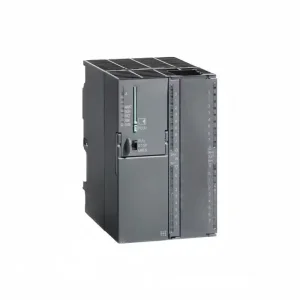
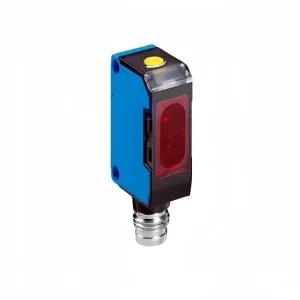
Our comprehensive brand portfolio guarantees compatibility and minimizes system downtime. We supply industrial spare parts of mainstream international brands, including PLC controllers, servo drives & motors, inverters, HMI touch screens, sensors, contactors, distributed I/O modules, power supply modules and other core automation components.
From electro-mechanical switching to networked intelligence in Industry 4.0
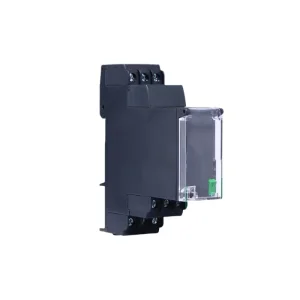
Solid-State Relays (SSRs) are increasingly replacing Electro-Mechanical Relays (EMRs) in high-cycle applications. Lacking physical contacts, SSRs prevent electrical arcing, suppress EMI noise, and extend operational lifetimes, making them essential for high-frequency control in thermal regulation and automotive assembly.
Modern manufacturing plants mandate functional safety protocols. Safety relays with force-guided contacts prevent unsafe machine operations in the event of contact welding, complying with SIL (Safety Integrity Level) and PL (Performance Level) classifications.
Relay boards integrated with fieldbus communications (such as Modbus, EtherCAT, and IO-Link) enable remote status monitoring. Plant operators can track coil parameters, relay health, and switching cycle counts in real-time.
Why CE certification and structured exporter verification protect your supply chain
For relay modules operating within 50 to 1,000 Volts AC or 75 to 1,500 Volts DC, LVD compliance is mandatory. This directive regulates electrical insulation, creeping distances, temperature rise limits, and structural enclosure safety to protect operators from electric shock.
Industrial relay switching generates high-voltage transients that can disrupt nearby microcontrollers and network equipment. CE-certified modules feature optimized suppression circuits, such as RC snubbers and varistors, to ensure stable operations without generating excessive EMI.
Modern relay manufacturing requires lead-free solder and cad-free contact materials (e.g., AgNi, AgSnO2) to prevent hazardous substances from entering landfills, aligning with global eco-design and circular economy mandates.
As an established exporter, Hongyunlai Technology Co., Ltd. verifies factory certifications, batch tracking, and raw materials. Our standardized testing and documentation processes ensure that delivered goods match required specifications.
Deploying advanced relay modules across challenging global industrial landscapes
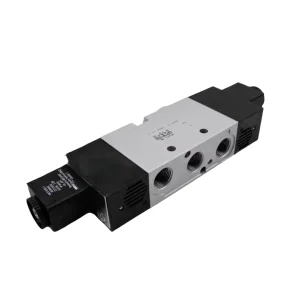
Fast, high-cycle switching for pneumatic control valves, conveyors, and assembly robots requires relays with high electrical durability (e.g., AgSnO2 contacts) to minimize downtime.
Solar combiner boxes and inverters use high-voltage DC isolation relays to safely disconnect solar arrays during grid faults or routine maintenance.
Relay boards integrated with PLCs manage lighting systems, HVAC actuators, and security access points, supporting building energy-saving initiatives.
Salty, high-humidity marine applications rely on sealed, vibration-resistant, CE-certified relay modules to prevent contact corrosion and oxidation.
Key technical parameters for system designers and procurement leads
| Technical Parameter | Evaluation Criteria | Engineering Significance |
|---|---|---|
| Contact Configuration | SPDT, DPDT, 4PDT options | Determines the number of isolated circuits a single relay can control simultaneously. |
| Switching Current/Voltage | AC (up to 250V/16A) & DC (up to 30V/10A) | Must match the peak inrush currents of capacitive or inductive loads to prevent contact welding. |
| Dielectric Strength | Typically ≥ 4,000 V AC (Coil to Contact) | Ensures electrical isolation between the control PLC and high-voltage power components. |
| Contact Material Science | Silver Nickel (AgNi) or Silver Tin Oxide (AgSnO2) | AgNi offers good all-around performance; AgSnO2 provides higher resistance to arc erosion. |
| Response Time | Typically ≤ 10 ms (EMR) or ≤ 1 ms (SSR) | Critical for high-speed automated production processes. |
Predictive maintenance, ultra-thin profiles, and green automation
The next generation of CE-certified relay modules focuses on intelligent load monitoring and physical footprint reduction. Modern cabinet builders require slim 6.2mm relay interfaces to save space, allowing for more components per linear foot of DIN rail.
Additionally, zero-crossing switching in solid-state devices reduces initial inrush currents, protecting upstream capacitors and power supplies from voltage dips. By integrating health monitoring directly into the relay’s internal ASIC, systems can predict failure states before an outage occurs, supporting shift-based predictive maintenance schedules.
Key technical and regulatory insights for industrial control buyers
Browse our broader range of PLCs, sensors, and power management units