 CHANGHORN
CHANGHORN
CHANGHORN
In modern industrial automation, rotary and linear encoders serve as the critical "sensory organs" of complex motion control loops. These precision sensors detect physical changes in angular or linear position, converting mechanical motion into digital electrical signals. These signals are compiled and evaluated by programmable logic controllers (PLCs), variable frequency drives (VFDs), and servo amplifiers to optimize velocity, path length, and positional accuracy.
As global production moves toward complete digital integration under the Industry 4.0 framework, demand has shifted toward highly resilient, high-resolution absolute encoders. From heavy-duty steel manufacturing plants to micro-millimeter pharmaceutical packaging machinery, the reliability of encoders directly determines overall equipment effectiveness (OEE). High-precision sensor designs must withstand mechanical shock, chemical washes, extreme thermal shifts, and electromagnetic interference (EMI) while delivering uninterrupted, real-time diagnostic feedback.
Over the past decade, Chinese industrial automation manufacturers have evolved from basic components assembly centers to major R&D hubs. China's encoder supply chain benefits from centralized component sourcing, highly automated surface mount technology (SMT) lines, and a robust domestic market for CNC machinery, robotics, and new energy vehicles. This clustering effect ensures that Chinese factories can source optics, magnetic elements, metal shafts, and ASIC processors locally, reducing production lead times to a fraction of the European and North American averages.
For international sourcing officers, procurement speed is critical. European suppliers often quote lead times of 16 to 24 weeks for specialized encoders. Chinese manufacturers, supported by efficient logistics hubs like Fujian and Shenzhen, can build, test, and ship comparable high-precision absolute encoders in 2 to 4 weeks. This supply chain flexibility helps reduce downtime for overseas plants during unexpected production line stoppages.
Utilize a high-precision glass scale or plastic disk featuring photolithographic patterns. An LED light source passes through the disk, and photo-detectors record the pattern changes. They provide exceptional accuracy and high resolution, though they require clean operating environments to prevent performance degradation from dust or oil mist.
Rely on Hall-effect sensors to track the rotation of a magnetized wheel. Because they feature no optical paths that can be blocked, magnetic encoders operate reliably in dirty, wet, or vibration-heavy environments, making them ideal for heavy machinery, agriculture, and paper mills.
Modern systems support point-to-point and fieldbus protocols. While SSI (Synchronous Serial Interface) provides reliable, simple digital transmission, modern architectures rely on BiSS-C, EtherCAT, PROFINET, or IO-Link to transmit real-time diagnostics alongside core positional data.
When specifying an encoder for high-duty applications, engineering teams must evaluate physical, electrical, and environmental interfaces. The primary question is whether to select an Incremental Encoder (which outputs relative pulses and requires a homing routine upon power loss) or an Absolute Encoder (which outputs a unique digital code for each angular position, eliminating the need for homing).
Absolute encoders are further divided into single-turn and multi-turn variations. Single-turn units measure displacement within one 360-degree rotation, whereas multi-turn units track both the angular position and the total number of rotations via internal gear trains or electronic counters. This distinction is critical for linear positioning systems, cranes, and robotics, where unexpected power outages cannot be allowed to cause loss of positional tracking.
The mechanical life of an encoder depends on its bearing design and ingress protection. Standard industrial encoders offer IP65 ratings, but washdown zones in food processing or petrochemical industries require IP67 or IP69K protection. To withstand high axial and radial shaft loads, premium encoders utilize heavy-duty, double-shielded ball bearings.
Under high mechanical stress, coupling selection is key. Rigid couplings transfer motor shaft runout directly to the encoder bearings, accelerating wear and leading to premature failure. Using flexible, spring-loaded, or bellows-type couplings isolates the encoder shaft from minor misalignments, ensuring long-term operational life.
Sourcing industrial automation products from overseas requires careful technical validation. A reliable supplier should provide comprehensive data sheets, mechanical CAD drawings, mounting manuals, and electromagnetic compatibility (EMC) reports. Global enterprises should check for compliance certifications such as CE, RoHS, and UL, which verify adherence to international safety standards.
Hongyunlai Technology Co., Ltd. is based in Xiamen, Fujian Province, focusing on the supply of industrial automation electrical components for global markets. With years of in-depth experience in the industrial control industry, we have established stable global supply channels and a professional team for international sales and product selection. We deliver one-stop procurement solutions for system integrators, manufacturing factories and equipment maintenance enterprises across the world.
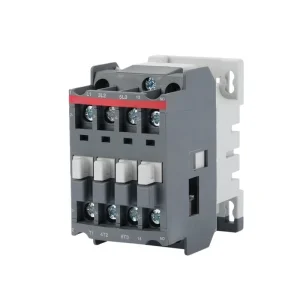
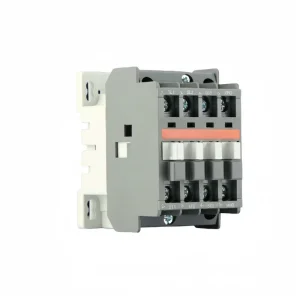
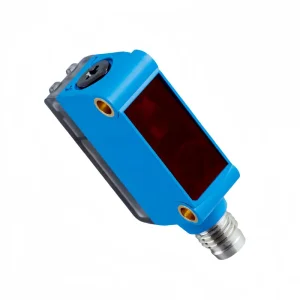
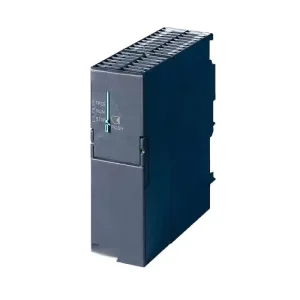
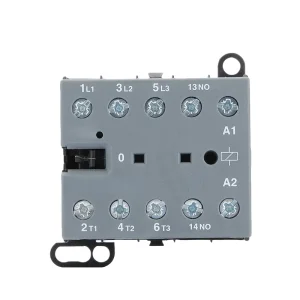
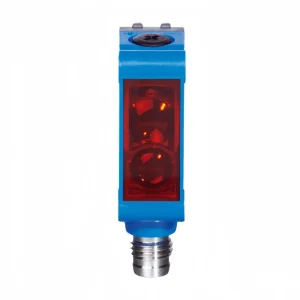
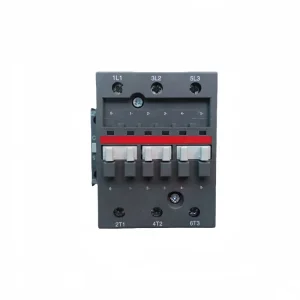
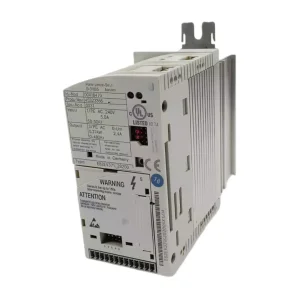
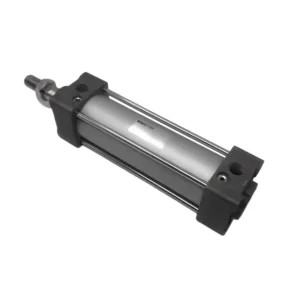
We supply industrial spare parts of mainstream international brands. Our product portfolio includes PLC controllers, servo drives & motors, inverters, HMI touch screens, sensors, contactors, distributed I/O modules, power supply modules and other core automation components.
We operate a standardized warehouse and implement strict pre-shipment inspection to guarantee product quality. We respond rapidly to model inquiries and provide flexible international logistics solutions, fully supporting customers’ equipment maintenance, production line upgrading and engineering renovation projects.
Upholding the business philosophy of integrity and win-win cooperation, we rely on sufficient inventory, professional technical consultation and efficient delivery. We aim to be your trustworthy long-term partner for industrial automation spare parts.
The decision is based on safety requirements and system start-up times. Incremental encoders are cost-effective and suitable for high-speed velocity feedback. However, if the machine requires homing routines that could damage tools or workpiece materials after a power loss, an absolute encoder is required. Absolute encoders provide instantaneous positional data upon power-up, improving overall process safety.
Signal degradation over long distances is typically caused by line capacitance and electromagnetic noise. To prevent this, use differential line driver outputs (such as RS-422) instead of single-ended push-pull outputs. High-quality shielded twisted-pair cabling is essential, with the shield grounded at the controller side only to prevent ground loops. In noisy environments, optical isolation modules can isolate the encoder signals from the controller.
Temperature variations cause thermal expansion and contraction of the internal metal hub and glass/metal scale disk. This expansion can shift the photolithographic grid alignment, resulting in small measurement offsets. For applications requiring sub-micron accuracy in varying temperatures, select encoders with low-expansion glass-ceramic disks and temperature-compensated electronics.
Yes. Most high-quality Chinese encoders use standardized mounting dimensions (such as 58mm flange sizes), shaft diameters, and standard electrical interfaces (such as M12 or M23 connectors). By matching the mechanical interface (synchro flange, clamping flange, or hollow shaft), electrical output (line driver, push-pull, or absolute SSI/EtherCAT), and resolution (pulses per revolution), you can install a cost-effective, high-performance replacement with minimal downtime.
At Hongyunlai Technology Co., Ltd., we run a standardized warehouse system. Each incoming component undergoes physical validation, cosmetic inspection, and model verification against OEM specifications. Before international dispatch, our technicians conduct operational inspections to verify that the components perform reliably under load conditions, ensuring plug-and-play installation for global buyers.