 CHANGHORN
CHANGHORN
CHANGHORN
Direct access to globally recognized, certified, and quality-tested industrial control and communication interfaces.
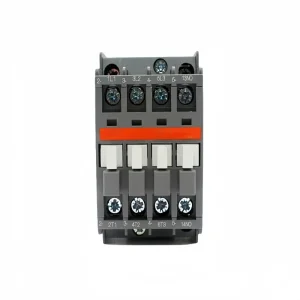
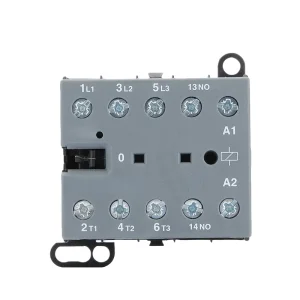
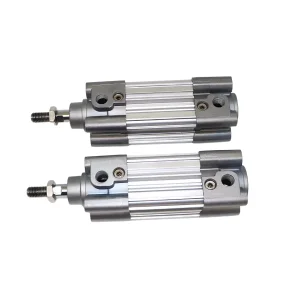
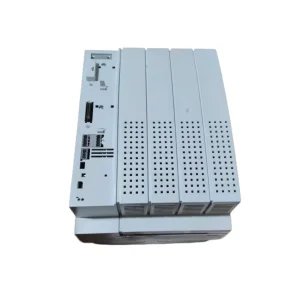
Modern factories require lightning-fast data processing speeds, low latencies, and high environmental tolerance. In this context, standard centralized architectures have transitioned rapidly toward decentralized I/O systems.
Global manufacturing networks are becoming increasingly complex. In traditional setups, heavy runs of field cabling had to route back to a centralized PLC control cabinet. This archaic design incurred high material costs, complex electrical engineering plans, and significant downtime risks due to wire breakage or noise interference.
Today, Distributed I/O terminals act as the decentralized sensory nerve endings of the automated factory. By converting analog, digital, and safety signals close to the field devices—such as sensors, actuators, valves, and contactors—and translating them into standardized industrial fieldbus protocols like EtherCAT, PROFINET, Modbus TCP, and EtherNet/IP, distributed terminals dramatically lower installation time, improve signal integrity, and enable modular scalability.
Decentralizing signals allows field devices to interface directly with local DIN-rail blocks, reducing field cabling needs by up to 70% and minimizing electromagnetic interference in harsh environments.
Modern Chinese industrial I/O factories prioritize multi-protocol compatibility on a hardware level. A single terminal node can switch between Profinet, EtherNet/IP, and Modbus TCP protocols via basic firmware or configuration file uploads.
As the world’s manufacturing hub, Chinese I/O terminal factories are leading the development of robust, micro-sized terminal networks tailored for aggressive environments.
Minimizing space within control cabinets is a primary design driver. High-density I/O terminals squeeze up to 16 digital or 8 analog channels into a slim 12mm wide chassis, optimizing slice-based layouts without compromising thermal dynamics.
To shield expensive CPU brains (such as Modicon or Siemens PLCs) from high-voltage surges, Chinese I/O components leverage optocoupler isolation and integrated thermal fuses, offering isolation values up to 2.5 kV AC.
For applications such as mechanical presses, wind turbines, and automated guided vehicles (AGVs), factories construct safety-integrated I/O terminals that conform to IEC 61508 and EN ISO 13849-1 standards for fail-safe configurations.
| Technical Criteria | Legacy Remote I/O Terminals | Advanced Chinese Factory Standards | Application Benefits |
|---|---|---|---|
| Supported Protocols | Single fieldbus (Profibus DP / Modbus) | Multiprotocol (EtherCAT, PROFINET, EtherNet/IP, CC-Link IE) | Universal plant-wide integration, standardized stock keeping units (SKUs) |
| Signal Density | 4 to 8 channels per terminal block | 16 to 32 channels per module (Ultra-slim 12mm slice) | Up to 50% cabinet space savings, cleaner electrical design layouts |
| Diagnostics Features | No dynamic channel diagnostics | Real-time short circuit, overvoltage, and wire-break detection | Minimized mean time to repair (MTTR) with precise system alarms |
| Operating Temperature | 0°C to 55°C (standard environments) | -40°C to +70°C (extended temperature models) | Highly reliable in outdoor renewable energy plants, heavy chemical plants |
Understanding how deep integration within Chinese manufacturing zones yields significant lead time and quality advantages for global purchasers.
Southern and Eastern China host dense clusters of semiconductor packaging, PCB routing, and high-frequency connector factories. This micro-proximity ensures raw materials reach the assembly line in hours, rather than weeks, dramatically streamlining production scheduling.
From custom pin layouts to private-label silk-screening, Chinese factories offer exceptionally fast engineering changes. System integrators requiring custom firmware to match specialized PLC networks can expect operational test units in fraction of standard Western lead times.
Quality control goes beyond visual checks. Leading manufacturers utilize high-precision AOI, functional testing on automated simulators, and thermal chamber burn-in routines for 100% of finished terminal units to eliminate premature hardware failures.
Top-tier factories align their quality assurance protocols with international standards. Products leaving China are typically backed by CE, FCC, RoHS, and UL compliance, allowing seamless deployment within EU and North American jurisdictions.
Distributed I/O terminals are deployed across major industrial sectors, translating physical parameters into readable Ethernet structures.
In highly robotic automotive welding and assembly lines, IP67 block I/O terminals are directly mounted onto robotic arms. Using high-flex industrial cables, these modules transmit pneumatic, valve manifold, and proximity switch signals back to host PLCs over EtherNet/IP, keeping the robot footprint clean and weight-optimized.
With massive cleanroom constraints and battery cell chemical processes, precise temperature logging is vital. Chinese RTD and thermocouple I/O slices feature high ambient noise rejection and rapid conversion rates, transferring critical process values over high-speed EtherCAT backbones.
Turbine nacelles sit high in the air and endure massive vibrations, wide temperature swings, and lightning risks. Rugged remote I/O modules with vibration resistance up to 5G and operating limits from -40°C to +70°C ensure stable communications between blade controllers and pitch drives.
Hongyunlai Technology Co., Ltd. is based in Xiamen, Fujian Province, focusing on the supply of industrial automation electrical components for global markets. With years of in-depth experience in the industrial control industry, we have established stable global supply channels and a professional team for international sales and product selection. We deliver one-stop procurement solutions for system integrators, manufacturing factories and equipment maintenance enterprises across the world.
We supply industrial spare parts of mainstream international brands. Our product portfolio includes PLC controllers, servo drives & motors, inverters, HMI touch screens, sensors, contactors, distributed I/O modules, power supply modules and other core automation components.
We operate a standardized warehouse and implement strict pre-shipment inspection to guarantee product quality. We respond rapidly to model inquiries and provide flexible international logistics solutions, fully supporting customers’ equipment maintenance, production line upgrading and engineering renovation projects.
Upholding the business philosophy of integrity and win-win cooperation, we rely on sufficient inventory, professional technical consultation and efficient delivery. We aim to be your trustworthy long-term partner for industrial automation spare parts.
Verify stock availability and request quotations for our second tier of precision industrial controller parts.