 CHANGHORN
CHANGHORN
CHANGHORN
In the modern paradigm of Industrial Automation and Smart Manufacturing (Industry 4.0), the architecture of data acquisition has shifted decisively from centralized control panels to decentralized, edge-computed layouts. A Remote I/O system acts as the vital communication bridge between field sensors, actuators, and the central Programmable Logic Controller (PLC) or Distributed Control System (DCS). By shifting physical wire terminations close to the actual processing machinery, industrial facilities reduce wiring complexity by up to 80%, slash installation costs, and mitigate electromagnetic signal degradation.
As a premier supplier and partner, Hongyunlai Technology Co., Ltd. (based in the global trade hub of Xiamen, Fujian Province) bridges the gap between high-caliber manufacturing capabilities and the stringent specifications required by global system integrators. By combining sufficient inventory of mainstream international brands (such as Modicon, S7, S-M-C, and others) with highly reliable supply chains, we ensure your automation projects meet strict operational deadlines and performance metrics.
Industrial procurement teams, engineering consulting firms, and OEM machine manufacturers prioritize resilience, multi-protocol interoperability, and long-term support when sourcing Remote I/O nodes. When selecting a China-based wholesale supplier, global clients evaluate systems based on key physical and technical parameters:
Modern factories deploy mixed-vendor systems. High-quality Remote I/O coupling modules must natively support industrial fieldbus standards including Modbus TCP/RTU, PROFINET, EtherNet/IP, EtherCAT, and CC-Link to guarantee seamless integration.
Fieldbus nodes are deployed in harsh environments. Look for modules offering wide-temperature operation ratings (-40°C to +75°C), high electromagnetic compatibility (EMC class A/B), and vibration resistance conforming to IEC standards.
To minimize unplanned downtime, enterprise-grade systems feature hot-swappability, channel-level LED diagnostic indicators, and predictive maintenance alerts communicating directly with SCADA systems.
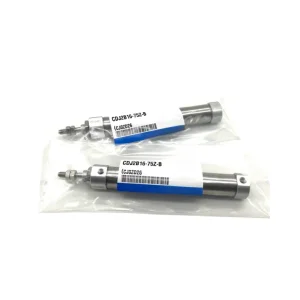
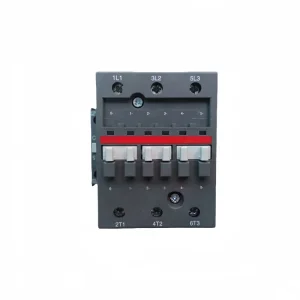
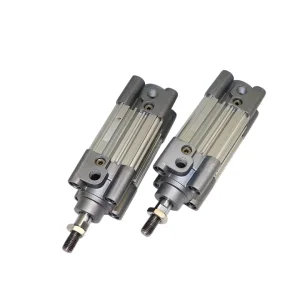
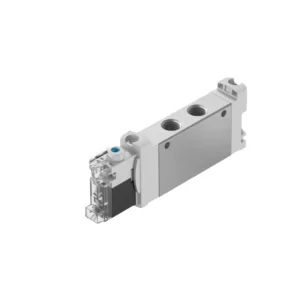
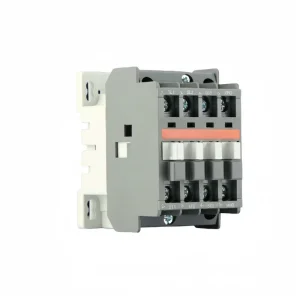
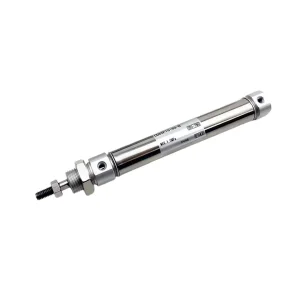
Remote I/O systems do not operate in isolation; they are integral parts of high-performance topologies. In chemical, oil & gas, water treatment, and heavy automotive production lines, distributed I/O systems process millisecond-critical data. These systems link field sensors, pneumatic controllers (like S-M-C Double Acting Cylinders), and circuit breakers (like ABB S202M series) to PLC cores such as the Modicon M200/M241/M251 or Siemens S7-300 networks.
By deploying Remote I/O nodes, factory floors realize dynamic scalability, enabling modular expansion of production lines without requiring extensive rewiring or panel reconstruction.
The Remote I/O landscape is experiencing rapid innovation. As industrial networks evolve towards higher bandwidth and lower latencies, several technology trends dominate the design criteria of global manufacturers:
IO-Link is revolutionizing standard sensor connectivity. Modern Remote I/O master modules act as IO-Link gateways, converting discrete digital and analog inputs into intelligent, parameterizable data packages that reveal real-time operational diagnostics of field hardware.
To achieve deterministic communication over standard Ethernet, future-proof Remote I/O designs implement TSN protocols. This guarantees real-time process synchronization directly from the field I/O slice to cloud-based ERP systems, breaking down historical IT/OT barriers.
With increased connectivity comes cybersecurity risks. Advanced Remote I/O fieldbus couplers now feature secure hardware elements, firmware encryption, and disable-unused-port options to prevent unauthorized network penetration at the physical plant level.
Sourcing automation components from a global supplier requires strict adherence to international industrial regulations. Any distributed network module deployed globally must conform to safety and environmental standards including CE, FCC, RoHS, and UL approvals. Furthermore, proper galvanic isolation (e.g., 1.5kV AC between I/O channels and the system bus) must be integrated to prevent ground loops from damaging expensive controller units.
Hongyunlai Technology Co., Ltd. supports engineering projects by securing high-quality, authentic hardware, maintaining dynamic stock levels, implementing pre-shipment quality verification, and organizing robust international logistics pathways. Whether upgrading production lines or executing comprehensive engineering retrofits, our professional sales and selection team provides flexible, one-stop procurement solutions.
Remote I/O systems dramatically reduce the length of analog and digital signal cables by placing I/O modules directly at the machine. A single fieldbus or industrial Ethernet cable replaces hundreds of individual copper wires, reducing installation time, labor costs, and debugging efforts while minimizing electromagnetic interference.
Selection depends on your central PLC/DCS master controller. If you are using Siemens S7 systems, PROFINET is ideal. For Rockwell Automation/Allen-Bradley architectures, EtherNet/IP is preferred. For high-speed motion control and rapid cycle times, EtherCAT is the industry benchmark.
Industrial-grade modules should feature optocoupler or magnetic isolation between the field-side circuits (24VDC/220VAC) and the internal logic/bus controller. This protection prevents high-voltage spikes, short circuits, or ground loop currents from damaging the main processor and other network components.
Yes, we operate a standardized warehouse facility and implement strict pre-shipment inspection procedures. We verify hardware model numbers, physical integrity, and packaging standards to guarantee that our customers receive fully functional, authentic components matching project specifications.