 CHANGHORN
CHANGHORN
CHANGHORN
Ethernet for Control Automation Technology (EtherCAT) has transitioned from a niche high-performance fieldbus to the dominant industrial communication standard globally. Originally developed by Beckhoff Automation, EtherCAT operates on the "processing on the fly" principle. As the Ethernet frame passes through each node, the EtherCAT Slave Controller (ESC) reads address-specific data and inserts data back into the frame in microsecond intervals.
In modern Industry 4.0 paradigms, the demand for deterministic communication has soared. Manufacturers no longer view sub-millisecond refresh times as luxury; they are critical constraints for applications ranging from high-speed packaging equipment to synchronized multi-axis robotics. The evolution towards EtherCAT G and EtherCAT G10 (operating at 1 Gbps and 10 Gbps respectively) indicates a future where enormous diagnostic data, high-resolution video streams, and real-time motion commands coexist seamlessly on a single ethernet physical layer.
Global procurement directors and hardware design engineers face a growing dilemma: standard off-the-shelf EtherCAT couplers and slave modules are often too bulky, contain unnecessary physical interfaces, or fail to match specific footprint constraints of modern space-restricted machines. This has triggered a significant shift towards Custom OEM EtherCAT Module manufacturing.
Modern procurement mandates modules that integrate directly onto proprietary carrier boards via board-to-board connectors or standard RJ45 ports. Key requirements include:
The hardware manufacturing ecosystem in China, particularly within major industrial clusters like Fujian Province and the tech corridor of Xiamen, offers unparalleled supply chain resilience for custom OEM electronics. Leveraging advanced SMT (Surface Mount Technology) assembly lines, localized sourcing of microchips, and highly optimized testing rigs, Chinese manufacturers can execute product development lifecycles in fractions of the time required by traditional Western facilities.
For global buyers, partnering with a supplier situated in these hubs provides dynamic scale-up capabilities. As industrial demands fluctuate, the localized availability of ancillary parts (connectors, cabling, mounting rails, and enclosure materials) ensures that customized hardware modifications do not trigger multi-month lead times. Furthermore, rigid quality assurance measures—including automated optical inspection (AOI), in-circuit testing (ICT), and thermal burn-in—are natively integrated into standard production processes, guaranteeing maximum reliability before dispatch.
| Parameters | Standard Specifications | OEM / ODM Custom Options |
|---|---|---|
| EtherCAT Controller | Beckhoff ET1100 / Microchip LAN9252 | ASIC, FPGA, or SoC-based (TI Sitara, STM32) |
| Communication Cycle Time | < 250 μs | Down to 50 μs (optimized for ultra-high-speed motion control) |
| Synchronous Modes | Free Run, SM-Synchronous, DC Mode | Custom Distributed Clock jitter customization < 50 ns |
| Physical Layer Interface | Dual RJ45 Ports (IN / OUT) | M12 Connectors, Fiber Optics, or Board-to-Board Plugs |
| Environmental Protection | IP20 rated open board | IP67 Sealed Housing, Conformal Coating, Vibration Hardening |
To understand the value of Custom OEM EtherCAT modules, we must look at concrete implementations across key industries:
Precise temperature controllers and mass flow controllers must communicate with master systems in real time. Custom EtherCAT interfaces integrate the precise sensor arrays directly with the network, preventing signal degradation caused by long analog cables.
Welding guns and clamp manifolds utilize custom OEM I/O modules mounted directly on the robotic wrist. This cuts down cable routing over bending joints, reducing mechanical failure points and downtime.
Automated Guided Vehicles require compact, energy-efficient dual-channel motor drive interfaces. The OEM EtherCAT design combines logic control and communication routing on a single space-optimized PCB.
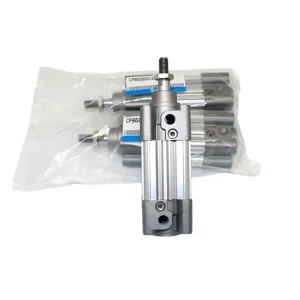
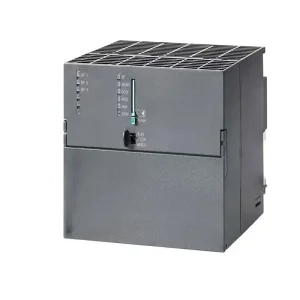
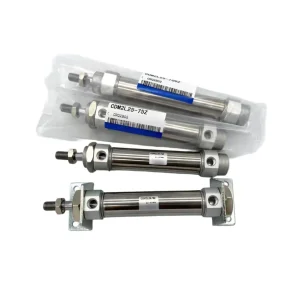
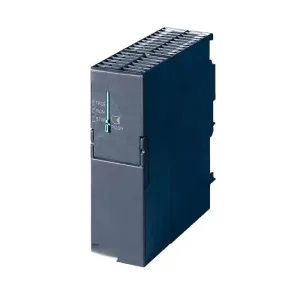
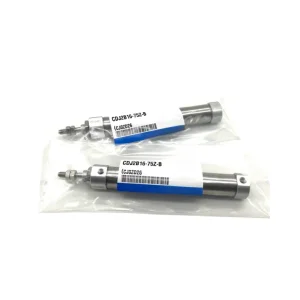
An optimized EtherCAT network does not exist in isolation. Modern industrial lines are heterogeneous environments where customized EtherCAT OEM modules must communicate with legacy or high-performance third-party hardware. For example, fieldbus networks must translate actions seamlessly between S-M-C pneumatic cylinders (like the standard double acting CM2B20-50Z) and Siemens PLC controllers (such as the S7-300 or S7-400 series).
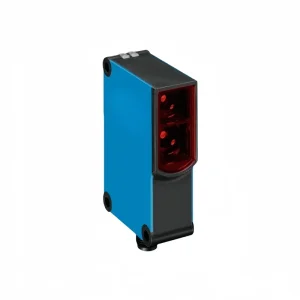
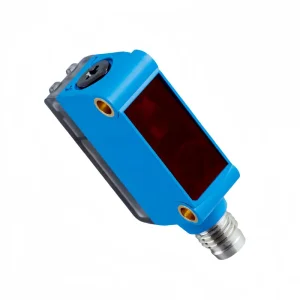
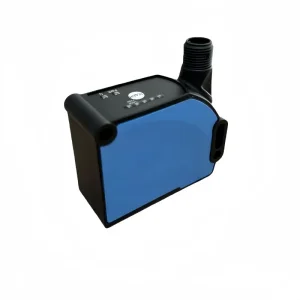
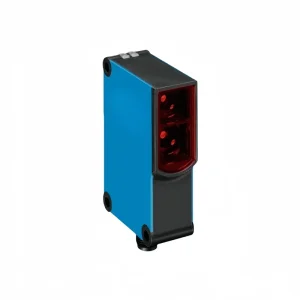
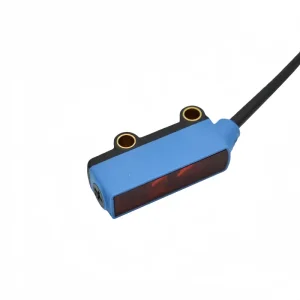
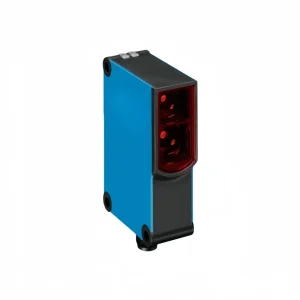
By utilizing custom OEM gateways, system integrators can map PROFINET or MODBUS registers from devices like Schneider BMX Series modules directly into the EtherCAT memory space. Sensors (like Sick Photoelectric or Laser Distance Sensors) can be connected to local OEM EtherCAT I/O hubs, digitizing the analog signals directly at the point of detection, thus reducing electromagnetic interference and ensuring that signal feedback loops are measured in microseconds rather than milliseconds.
Hongyunlai Technology Co., Ltd. is based in Xiamen, Fujian Province, focusing on the supply of industrial automation electrical components for global markets. With years of in-depth experience in the industrial control industry, we have established stable global supply channels and a professional team for international sales and product selection. We deliver one-stop procurement solutions for system integrators, manufacturing factories and equipment maintenance enterprises across the world.
We supply industrial spare parts of mainstream international brands. Our product portfolio includes PLC controllers, servo drives & motors, inverters, HMI touch screens, sensors, contactors, distributed I/O modules, power supply modules and other core automation components.
We operate a standardized warehouse and implement strict pre-shipment inspection to guarantee product quality. We respond rapidly to model inquiries and provide flexible international logistics solutions, fully supporting customers’ equipment maintenance, production line upgrading and engineering renovation projects. Upholding the business philosophy of integrity and win-win cooperation, we rely on sufficient inventory, professional technical consultation and efficient delivery. We aim to be your trustworthy long-term partner for industrial automation spare parts.