 CHANGHORN
CHANGHORN
CHANGHORN
Explore our high-performance distributed interface modules, PLCs, and precision sensors for industrial ethernet architectures.
A technical examination of industrial communication layers and decentralized hardware design.
In modern industrial process control and discrete manufacturing systems, the efficiency of signal transmission is paramount. Historically, point-to-point wiring linked every sensor and actuator directly to a centralized control cabinet housing a programmable logic controller (PLC). This model is highly resource-intensive, difficult to troubleshoot, and vulnerable to signal degradation. The advent of Distributed I/O systems completely changed this paradigm. At the heart of this decentralized layout sits the fieldbus coupler.
A fieldbus coupler acts as the bridge between the high-speed backplane bus of local input/output modules and the wider industrial networks such as EtherCAT, PROFINET, Modbus TCP, EtherNet/IP, or PROFIBUS. By converting physical and electrical signals into logical protocol frames, the fieldbus coupler enables clean, deterministic control loops over long distances. For global industrial manufacturers, obtaining custom fieldbus couplers designed for specific machinery, extreme temperatures, or custom protocol variations is a critical lever for system reliability and cost reduction.
Translates native cyclic process data from internal local buses directly into Ethernet frame registers, supporting microsecond latency loops across complex, multi-axis motion control networks.
Supports flexible configurations of digital inputs, analog sensors, and high-frequency counter modules, adapting dynamically to the physical architecture of the automated production line.
Utilizes advanced optocouplers and isolated power supplies to prevent high-voltage industrial surges from damaging logic components, offering stable MTBF metrics in extreme environments.
Analyzing physical layers, transmission speeds, and node counts for common bus configurations.
When selecting or developing a custom OEM fieldbus coupler, engineers must weigh the constraints of bandwidth, network cycle time, physical distance, and integration complexity. Modern networks favor industrial Ethernet over legacy serial networks, but both remain prevalent. Below is a detailed performance matrix comparing the dominant protocols handled by our custom couplers.
| Protocol / Standard | Physical Layer | Typical Cycle Time | Max Bandwidth | Max Network Nodes | Topology Support |
|---|---|---|---|---|---|
| EtherCAT | 100Base-TX Ethernet | < 100 μs | 100 Mbps (Full Duplex) | 65,535 | Line, Tree, Star, Ring |
| PROFINET RT / IRT | Ethernet (IEEE 802.3) | 250 μs - 1 ms | 100 Mbps / 1 Gbps | Unlimited (IP-bound) | Star, Line, Ring, Tree |
| EtherNet/IP | Ethernet (TCP/IP, UDP) | 1 ms - 10 ms | 10 to 1000 Mbps | Unlimited (IP-bound) | Star, Device Level Ring (DLR) |
| Modbus TCP | Ethernet (TCP/IP) | 5 ms - 20 ms | 10 to 100 Mbps | Up to 247 per subnet | Star, Line |
| PROFIBUS DP | RS-485 (Shielded Twisted Pair) | 1 ms - 10 ms | Up to 12 Mbps | 126 (with repeaters) | Linear bus |
For applications demanding highly synchronized motion control—such as multi-axis servo configurations—EtherCAT is often preferred due to its use of "processing on the fly," where frames are read and written to dynamically as they pass through the coupler. For process industries with broad, decentralized layouts, PROFINET and EtherNet/IP offer excellent integration with standard enterprise network infrastructures.
How local production clusters, advanced SMT capability, and component sourcing lower capital expenses.
For international buyers and original equipment manufacturers (OEMs), procuring fieldbus couplers from qualified Chinese factories offers a compelling mix of financial and technological advantages. Over the past decade, Chinese automation hubs have moved up the value chain from basic PCB assembly to complete, high-precision electronic manufacturing services (EMS) featuring proprietary firmware design, rigorous testing, and strict compliance verification.
We work directly with system integrators to configure:
Key metrics that define our fieldbus couplers and distributed system components.
Deploying fieldbus networks to resolve wiring complexity, optimize bandwidth, and minimize downtime.
In highly automated automotive body shops, dozens of robotic arms require fast feedback loop sensors. Custom fieldbus couplers with built-in digital/analog I/O allow localized sensor multiplexing, routing signals over a single EtherCAT or PROFINET cable back to the central controller, reducing tooling weight and maintenance cycles.
Packaging equipment handles thousands of movements per minute, demanding microsecond synchronization between rotary encoders, pneumatic actuators, and servo drives. Real-time distributed couplers map discrete outputs immediately to maintain synchronous slicing, wrapping, and labeling.
Spread across vast geographic areas, water and wastewater facilities depend on long-distance telemetry. Modbus TCP or PROFIBUS couplers collect level sensor data, flow rates, and valve positions from outlying pump stations, delivering robust data back to the central SCADA terminal.
Key compliance targets and QA parameters for engineering and procurement managers.
To be utilized within global markets, fieldbus components must comply with stringent electrical safety and environmental regulations. All custom designs are certified under:
Component obsolescence is a major threat in industrial engineering. As a proactive supplier, we employ specific safeguards to protect buyers' product lifecycles:
Providing comprehensive industrial components, rapid engineering support, and reliable global distribution.
Hongyunlai Technology Co., Ltd. is based in Xiamen, Fujian Province, focusing on the supply of industrial automation electrical components for global markets. With years of in-depth experience in the industrial control industry, we have established stable global supply channels and a professional team for international sales and product selection. We deliver one-stop procurement solutions for system integrators, manufacturing factories and equipment maintenance enterprises across the world.
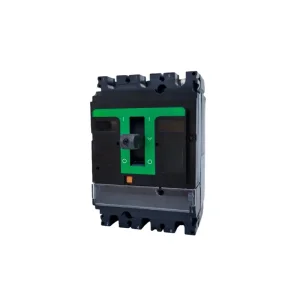
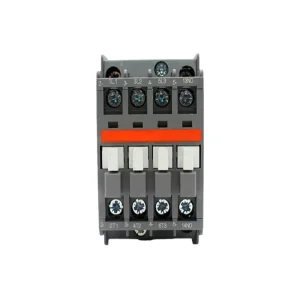
We supply industrial spare parts of mainstream international brands. Our product portfolio includes PLC controllers, servo drives & motors, inverters, HMI touch screens, sensors, contactors, distributed I/O modules, power supply modules and other core automation components.
We operate a standardized warehouse and implement strict pre-shipment inspection to guarantee product quality. We respond rapidly to model inquiries and provide flexible international logistics solutions, fully supporting customers’ equipment maintenance, production line upgrading and engineering renovation projects. Upholding the business philosophy of integrity and win-win cooperation, we rely on sufficient inventory, professional technical consultation and efficient delivery. We aim to be your trustworthy long-term partner for industrial automation spare parts.
Answering common integration, wiring, and diagnostic inquiries from field technicians and buyers.
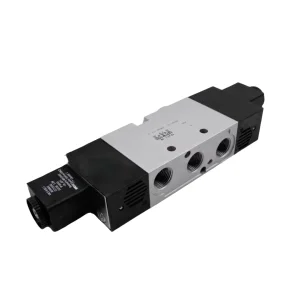
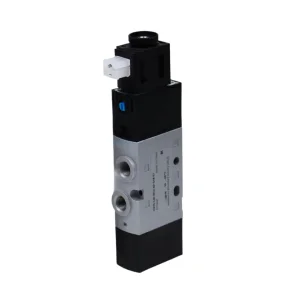
Browse our broader range of original manufacturer accessories, fieldbus connectors, and pneumatic components.