 CHANGHORN
CHANGHORN
CHANGHORN
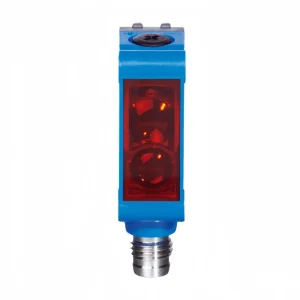
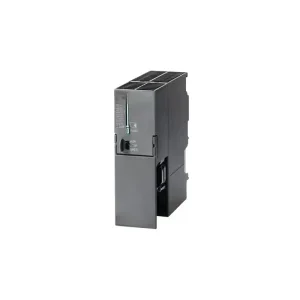
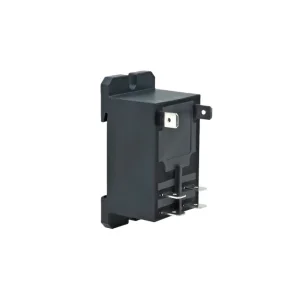
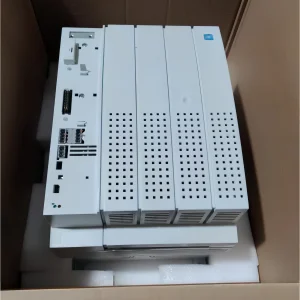
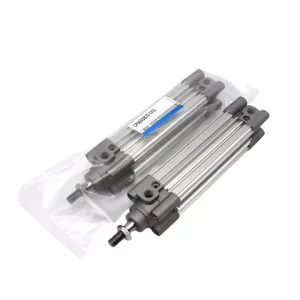
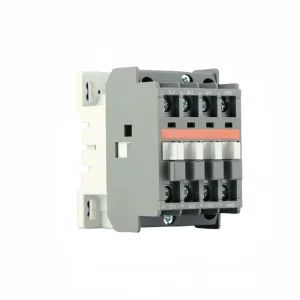
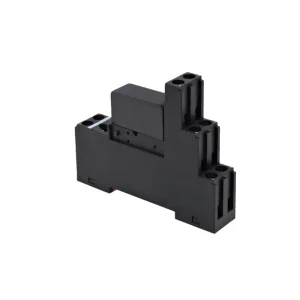
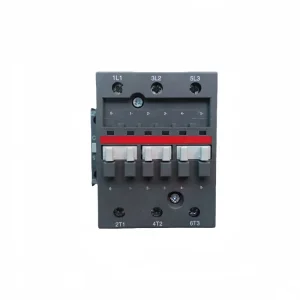
Hongyunlai Technology Co., Ltd. is based in Xiamen, Fujian Province, focusing on the supply of industrial automation electrical components for global markets. With years of in-depth experience in the industrial control industry, we have established stable global supply channels and a professional team for international sales and product selection. We deliver one-stop procurement solutions for system integrators, manufacturing factories and equipment maintenance enterprises across the world.
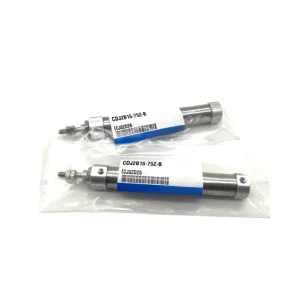
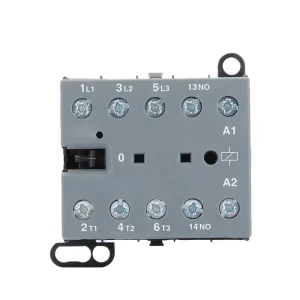
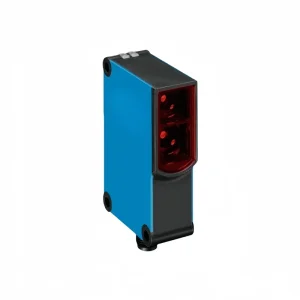
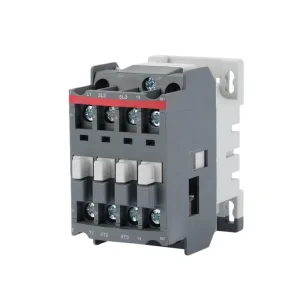
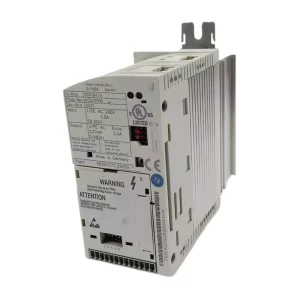
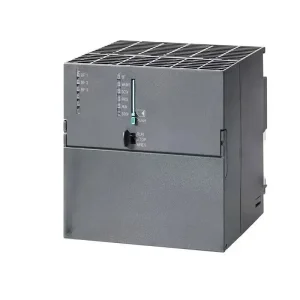
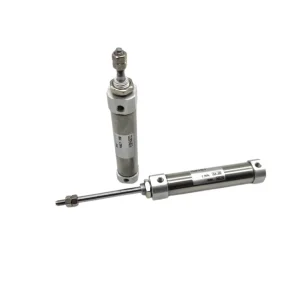
We supply industrial spare parts of mainstream international brands. Our product portfolio includes PLC controllers, servo drives & motors, inverters, HMI touch screens, sensors, contactors, distributed I/O modules, power supply modules and other core automation components. We operate a standardized warehouse and implement strict pre-shipment inspection to guarantee product quality. We respond rapidly to model inquiries and provide flexible international logistics solutions, fully supporting customers’ equipment maintenance, production line upgrading and engineering renovation projects.
In modern industrial process control, accuracy, safety, and reliability are non-negotiable. Signal conditioners play the vital role of translator and bodyguard between raw physical sensors (measuring temperature, pressure, distance, or load) and the digital nervous systems like PLCs, HMIs, and distributed control networks. Whether converting millivolt outputs from thermocouples, micro-amps from strain gauges, or high-frequency pulses from flowmeters, standard catalog products often fall short of meeting specific spatial configurations, electrical parameter thresholds, or compliance requirements.
This is where Custom OEM Signal Conditioner Manufacturers and Factories enter the engineering equation. Customization allows automation engineers to dictate form factor limits (such as ultra-slim DIN rail footprints), channel density (single, dual, or quad-channel designs), tailored galvanic isolation levels (up to 4kV or higher), and specialized signal conversions (e.g., matching a proprietary sensor curve to a standard 4-20mA loop or digital Modbus/IO-Link interface).
Translating nonlinear analog outputs (RTD, Thermocouple, mV) into highly stable standard processes (0-10V, 4-20mA) or robust digital buses (Modbus, Profinet, CANopen).
Protecting fragile PLC inputs and processing modules from high-voltage spikes, transient surges, ground loops, and severe electromagnetic interference (EMI).
Eliminating high-frequency noise and implementing polynomial mathematical models to linearize complex sensor outputs directly on the hardware interface.
As industries worldwide transition into Industry 4.0 and Smart Manufacturing paradigms, the demand dynamics for signal conditioners have undergone substantial technological upgrades:
Traditional analog-to-analog signal conditioners are increasingly incorporating secondary microprocessor units. Modern custom OEM signal conditioners act as edge data processors, packaging analog diagnostics alongside standard digital communication protocols. The incorporation of IO-Link, Modbus RTU, and Ethernet/IP protocols natively within the interface module allows for remote parameter configuration, hot-swappable replacements, and real-time failure prediction.
With electrical cabinet space costing a premium, plants are shifting from 22.5mm units to ultra-slim 6.2mm form-factors. OEM factories prioritize dense thermal dissipation profiles to pack multiple channels without excessive heat buildup.
Process safety requirements in petrochemical, pharmaceutical, and energy systems require signal paths rated under IEC 61508. Factories are developing SIL 2 and SIL 3 certified custom signal isolators for safety instrumented systems.
Software-programmable conditioners configured via PC, mobile app, or Bluetooth interfaces are replacing manual DIP switch arrays. This allows field operators to calibrate and scale spans without interrupting line wiring.
Procurement divisions face unique hurdles when sourcing custom electronic components for high-consequence automation projects. Choosing a production factory requires auditing a matrix of manufacturing capabilities, logistics resilience, and regulatory compliance.
Relying on single-region semiconductor channels is risky. Hongyunlai Technology overcomes this by utilizing pre-vetted international distribution paths and holding buffer stock of core chips in our standardized warehouses to eliminate production delays.
Industrial control components must perform continuously for decades. OEMs guarantee zero-defect shipments through automated optical inspections (AOI), environmental burn-in testing chambers, and full functional signal validation before packaging.
Custom conditioners must connect directly with legacy PLCs and modern I/O nodes. Sourcing departments seek suppliers with extensive catalog support and integration knowledge across brands like Siemens, Modicon, SMC, and Lenze.
Signal conditioners are implemented across distinct industrial sectors. Each macro environment demands custom alterations in design, materials, and internal architecture:
The Problem: Explosive atmospheres (Zone 0/1/2) require absolute spark prevention.
The OEM Solution: Custom loop-powered intrinsically safe isolators limit voltage and current entering the danger zone. Engineered with galvanic isolation barriers >2.5 kVAC to comply with ATEX and IECEx specifications.
The Problem: Ground potential differences across massive municipal basins distort flow and level measurements.
The OEM Solution: 3-way isolation barriers separate the power supply, input loop, and output loop, stopping ground loop currents and protecting remote RTUs from outdoor lighting surges.
The Problem: Extreme high-frequency vibration and electromagnetic fields generated by heavy welding robots distort delicate load-cell readings.
The OEM Solution: Ruggedized, potted modules with advanced analog active filtering circuits reject inductive noise and survive severe vibration stresses.
For worldwide integration projects, a physical component is only as good as its compliance profile. Global factories must adhere to international electrical standard frameworks to allow safe import, distribution, and commissioning inside complex factory floors.
Meeting electromagnetic compatibility (EMC) standards EN 61326-1 guarantees that the custom transmitter will not emit excessive radio frequency interference nor malfunction under high EMI fields.
Essential for North American installations. OEMs prioritize designing enclosures using self-extinguishing polycarbonate materials rated UL 94 V-0 to prevent fire propagation within high-voltage control cabinets.
To support corporate sustainability, custom OEM hardware uses lead-free wave soldering processes and conforms to restricting hazardous chemical elements within internal component substrates.
The horizon of interface electronics points toward greater integration. Over the next decade, OEM signal conditioners will merge closer with edge processors. We foresee several design shifts:
Future active signal conditioners will run off ambient heat differentials or low magnetic fields in proximity to heavy-load lines, completely removing the necessity for dedicated external power grids.
Removing physical wired paths entirely. For complex mechanical configurations, OEM converters will digitize analog sensor measurements and transmit them over secure LoRaWAN, ISA100.11a, or industrial Wi-Fi bands.
Applying localized machine-learning algorithms on microcontrollers to dynamically compensate for ambient temperature drift and sensor age degradation, reducing maintenance calibration cycles from months to years.
Passive loop-powered conditioners extract the power they require to operate directly from the measurement signal loop itself (typically the 4-20mA current loop), eliminating the need for a separate power supply. They are simpler and highly efficient but impose an additional voltage drop on the loop. Active signal conditioners require a dedicated external power supply (typically 24 VDC or 110/220 VAC) to power the internal isolation and conversion circuitry. Active versions provide superior signal amplification, filtering, and are ideal for longer transmission lines or conversion of complex sensor signals (like RTDs or thermocouples) where the sensor cannot supply power.
Optical isolation works by converting the incoming electrical signal into light using a light-emitting diode (LED). This light is transmitted across a physical gap to a photodetector on the output side, which converts the light back into an electrical signal. Because there is no electrical connection between the input and output circuits, ground loop currents—which arise when different parts of a system are grounded at different potentials—cannot pass through. This completely removes ground loop hum, signal distortion, and prevents high-voltage spikes on the field side from physically reaching and damaging sensitive PLC input cards.
Yes, custom signal conditioners can be programmed with specific linearization algorithms. Thermocouples and RTDs exhibit non-linear changes in voltage or resistance relative to temperature variations. OEM factories design conditioners with embedded microcontrollers containing mathematical models or look-up tables specific to various thermocouple types (J, K, T, E, R, S). These microcontrollers perform continuous linearization calculations on the sensor readings to output a perfectly linear 4-20mA or 0-10V analog signal, relieving the host PLC or DCS from processor-intensive linearization tasks.
For chemical processing plants where explosive gases, vapors, or combustible dusts are present, signal conditioners must carry specialized hazardous area certifications. In Europe, they must comply with the ATEX directive, and globally with the IECEx scheme (e.g., Ex ia or Ex nA ratings). These ratings ensure that the conditioner’s electrical parameters (voltage, current, capacitance, inductance) are limited so they cannot generate an electrical spark or thermal surface temperature capable of igniting the surrounding atmosphere. In North America, Class I Division 1 or Division 2 approvals are required.
We bridge the gap between global sourcing demand and factory production through a robust logistical workflow. We operate a standardized warehouse where rigorous pre-shipment inspections are conducted on every batch of controllers, contactors, and converters. By maintaining tight relations with top component manufacturers and operating direct channels for selection and shipping, we secure fast component sourcing, prevent manufacturing delays, and deliver flexible international freight options to keep our clients' assembly lines and maintenance projects running smoothly.