 CHANGHORN
CHANGHORN
CHANGHORN
In modern industrial automation, the CPU Unit (Central Processing Unit) acts as the brain of the Programmable Logic Controller (PLC) or Distributed Control System (DCS). Unlike consumer-grade microprocessors designed for general-purpose computing, industrial CPU units are purpose-built for real-time, deterministic execution under harsh environmental conditions. They continuously perform the cycle of reading inputs, executing logic programs written in IEC 61131-3 languages, and writing outputs to actuators and displays.
Choosing the right CPU unit manufacturer involves analyzing core aspects of hardware reliability, firmware security, memory allocation, execution speed, and network protocol compatibility. Factors such as Mean Time Between Failures (MTBF), electromagnetic compatibility (EMC), and operational vibration tolerance dictate which unit suits specific industrial applications.
The global market for industrial PLC and CPU modules is experiencing unprecedented evolution driven by Industry 4.0, IoT integration, and localized smart manufacturing initiatives. Systems integrators and manufacturing procurement managers no longer select components based purely on unit cost. The selection process is driven by total cost of ownership (TCO), software integration ecosystems, and supply chain availability.
| CPU Range / Class | Typical Applications | Primary Fieldbus Options | Processing Latency | Security Level |
|---|---|---|---|---|
| Micro/Compact CPUs (e.g., Modicon M221) | Standalone machines, building automation, small pump stations | Modbus RTU, Modbus TCP, CANopen | 0.1 - 0.5 ms | Basic password access |
| Mid-Range CPUs (e.g., Siemens S7-1200) | Material handling, assembly systems, dynamic packaging | PROFINET, OPC UA, Modbus TCP | 0.08 - 0.2 ms | Integrated firmware encryption |
| High-End / Redundant CPUs (e.g., S7-1500H / Allen-Bradley) | Process industries, power plants, oil & gas installations | Dual-port PROFINET, EtherNet/IP (DLR) | < 0.02 ms | Hardware-based firewall, TPM, IEC 62443 |
Below is the industry-expert analysis of the top 10 factories, brands, and premium suppliers worldwide that control the standard of modern industrial computing. These manufacturers define the roadmap of automation technology.
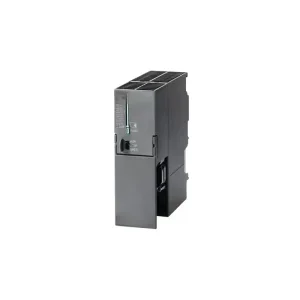
The absolute standard in European automation. The SIMATIC S7-1200 and S7-1500 CPU units dominate automotive, chemical, and general machinery sectors. Known for their TIA Portal integration and high-speed PROFINET communications.
A leader in sustainability and integrated energy management. The Modicon M221 and M200 series offer versatile compact options, while their high-end M580 ePACs leverage Ethernet in the backbone for seamless system communications.
Dominant in the North American market. The ControlLogix and CompactLogix CPU architectures utilize the EtherNet/IP protocol extensively, allowing high-performance motion, safety, and standard control in a single processing unit.
Highly respected in Asia for speed and reliability. The MELSEC iQ-R and iQ-F series CPU modules deliver microsecond-level logic execution, making them the preferred choice for complex semiconductor and electronics assembly plants.
Pioneers in high-speed integration. The Sysmac NJ/NX machine controllers combine logic, motion, safety, vision, and database connectivity into a single database-ready CPU, operating over a deterministic EtherCAT bus.
The leader in PC-based control technology. Beckhoff's industrial PCs (IPCs) operate as software-defined CPU units via TwinCAT. They are extremely popular in high-end scientific applications and packaging lines.
A cornerstone in heavy process industries. The AC500 and AC800M range of CPU modules are built to withstand extreme operating conditions, offering native high-availability configurations for uninterrupted process control.
Known for ultra-compact designs and integrated debugging environments. Keyence's KV-8000 series features record-breaking execution speeds and integrated high-speed recording functions for rapid diagnostic monitoring.
Innovators in open-source automation. The PLCnext CPU system allows programmers to write control algorithms in C++, Python, and IEC 61131-3 simultaneously, running on a robust Linux operating system core.
Based in Xiamen, Fujian, Hongyunlai Technology is a key global distributor and supply chain aggregator. They bridge the gap between Tier-1 global factories and end-users, providing standardized warehouse operations, strict pre-shipment inspections, and comprehensive supply networks for PLCs, CPUs, sensors, and contactors.
CPU units must be selected based on the specific industrial environment they operate within. Below we analyze how local configurations match distinct operational requirements:
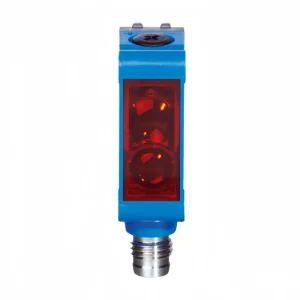
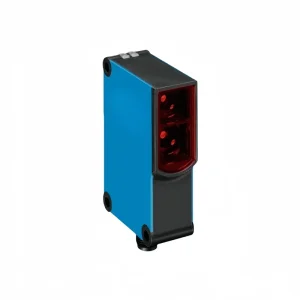
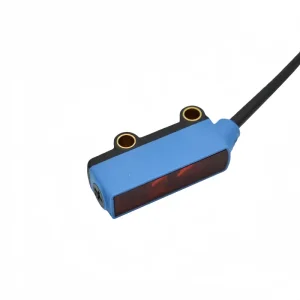
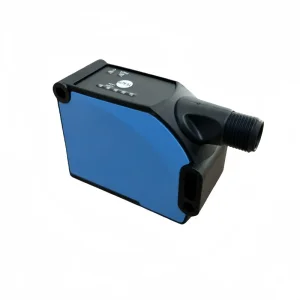
Automotive assembly lines require highly synchronized multi-axis control. CPU modules such as the Siemens S7-1500 or Allen-Bradley GuardLogix handle safety-rated protocols over the network. They process sensor data from thousands of photoelectrics (e.g., SICK GL6G or WT34) in microsecond cycles to maintain robotic coordinate tracking.
These systems feature highly distributed layouts. Modicon M221 and S7-1200 analog input modules track flow rates, pressures, and chemical levels over long distances. High electromagnetic immunity is required to resist interference from high-power variable frequency drives (VFDs) running pump motors.
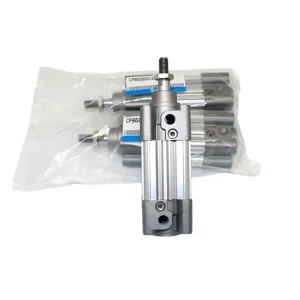
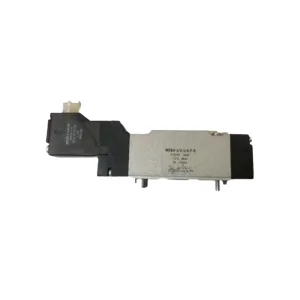
In food and beverage packaging, synchronization between pneumatic cylinders (such as SMC CM2B series) and conveyor belts is essential. The CPU unit must interface directly with high-performance valve terminals (like Festo VTUG series) to achieve rapid pneumatics switching in fractions of a millisecond.
The design and operational capabilities of CPU modules are shifting as IT and OT continue to merge. Industrial controllers are transitioning from simple sequence executors to edge-computing hubs.
Integration of OPC UA pub/sub communication models directly into the CPU firmware. This allows control units to update ERP/MES databases directly without intermediate gateway computers.
Integration of machine learning micro-coprocessors within the CPU chassis. AI algorithms run locally on the CPU to detect early bearing wear, pressure anomalies, or insulation breakdown before a failure occurs.
Transition to zero-trust hardware designs. Industrial CPU units feature embedded secure elements (similar to TPM chips) ensuring boot verification and preventing unauthorized firmware tampering.
Global hardware procurement remains vulnerable to geopolitical changes, factory backlogs, and transportation bottlenecks. Ensuring continuous operation of automation systems requires working with suppliers located in resilient manufacturing hubs.
Hongyunlai Technology Co., Ltd., located in the deep-water port city of Xiamen, Fujian Province, optimizes this dynamic supply chain. By maintaining a large, climate-controlled buffer inventory of global industrial brands (Siemens, Modicon, ABB, Festo, SMC), Hongyunlai provides rapid dispatch of critical parts, helping operators avoid the long lead times typical of direct factory orders.
Every component shipped from our warehouse undergoes strict inspection. Through verified supply networks and efficient customs processes, we offer global system integrators and factories reliable delivery options to minimize system downtime.
Deploying CPU units requires compliance with local safety and environmental standards. We ensure all supplied units meet the necessary certifications:
All PLC modules, power supplies, and sensors conform to the European Economic Area's health, safety, and environmental protection standards.
Guarantees that control components meet the safety requirements for industrial control equipment (UL 508) in the United States and Canada.
Strict restriction of hazardous substances in electrical designs, ensuring compliance with global recycling directives.