 CHANGHORN
CHANGHORN
CHANGHORN
Pre-shipment inspected, high-performance components optimized for precision pneumatic systems and manufacturing integration.
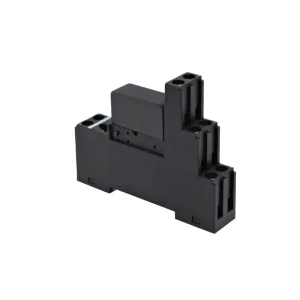
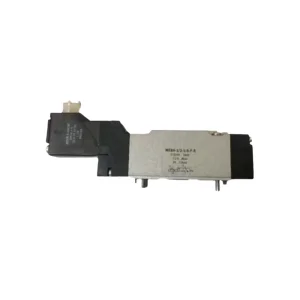
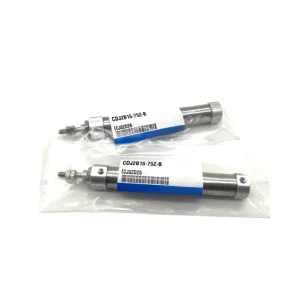
Industrial automation relies heavily on precise feedback loops. At the heart of pneumatic and hydraulic actuator systems, magnetic cylinder sensors act as the eyes of the controller. These sensors detect the magnetic ring mounted on the internal piston, translating mechanical stroke position into digital or analog control signals. As factory floors transition to IIoT (Industrial Internet of Things), these sensors are evolving from simple ON/OFF switches into intelligent diagnostics units.
Choosing the right manufacturer is not just about unit price. For procurement managers, engineers, and system integrators, factors like environmental resilience, electrical compatibility (PNP vs. NPN, 2-wire vs. 3-wire), response frequency, and supply chain resilience determine the lifecycle cost of the machinery. Leading factories globally are adopting GMR (Giant Magnetoresistive) and AMR (Anisotropic Magnetoresistive) technologies to provide faster reaction times and eliminate double-switching points.
Selecting the core operating mechanism determines the sensor's lifespan, speed capability, and suitability for specific hazardous or high-precision environments.
| Sensor Technology | Switching Speed | Expected Lifespan | Ideal Application Environment | Key Strengths & Disadvantages |
|---|---|---|---|---|
| Reed Switch (Magnetic) | < 2 ms (Medium) | 10 - 50 Million Cycles | AC/DC universal setups, budget applications | Pros: Low cost, works with AC. Cons: Mechanical wear, contact bounce. |
| Hall Effect (Solid State) | < 0.1 ms (Fast) | Infinite (No mechanical parts) | High-cycle packaging, general industrial automation | Pros: Highly durable, bounce-free. Cons: Requires minimum magnetic field density (Gauss). |
| AMR / GMR (Magnetoresistive) | < 0.05 ms (Ultra-Fast) | Infinite (No mechanical parts) | Short-stroke cylinders, precise positioning, high-temperature | Pros: Extreme sensitivity, compact size. Cons: Higher cost, sensitive to external fields. |
Why modern global enterprises are partnering with Chinese OEM/ODM factories for magnetic sensor procurement.
China produces over 70% of the world's Neodymium magnets (NdFeB), which form the excitation target inside pneumatic cylinders. This localized supply chain guarantees component cost efficiency and stability.
Leading Chinese manufacturing hubs provide components conforming to UL, CE, RoHS, and REACH guidelines. Automated testing setups like optical coordinate inspection prevent shipment defects.
Top factories bridge the distance gap by deploying local engineering representatives in North America, Western Europe, and Southeast Asia to offer direct on-site design-in support.
Key indicators that highlight the growth, precision demands, and distribution dynamics of magnetic cylinder sensors globally.
Hongyunlai Technology Co., Ltd. is based in Xiamen, Fujian Province, focusing on the supply of industrial automation electrical components for global markets. With years of in-depth experience in the industrial control industry, we have established stable global supply channels and a professional team for international sales and product selection. We deliver one-stop procurement solutions for system integrators, manufacturing factories and equipment maintenance enterprises across the world.
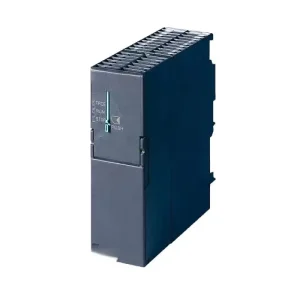
We supply industrial spare parts of mainstream international brands. Our product portfolio includes PLC controllers, servo drives & motors, inverters, HMI touch screens, sensors, contactors, distributed I/O modules, power supply modules and other core automation components.
We operate a standardized warehouse and implement strict pre-shipment inspection to guarantee product quality. We respond rapidly to model inquiries and provide flexible international logistics solutions, fully supporting customers’ equipment maintenance, production line upgrading and engineering renovation projects.
Upholding the business philosophy of integrity and win-win cooperation, we rely on sufficient inventory, professional technical consultation and efficient delivery. We aim to be your trustworthy long-term partner for industrial automation spare parts.
Expert answers addressing the most common issues engineers and purchasing managers face when selecting magnetic cylinder sensors.
Double-switching points occur when the magnetic flux profile of the piston's magnet ring has a dip in the center, causing the sensor to trip twice during a single pass. To resolve this, opt for solid-state AMR/GMR sensors rather than traditional Reed switches. Modern sensors have advanced signal-processing microchips that ignore localized field drops and only trigger based on a calibrated peak-to-peak threshold.
Food, beverage, and pharmaceutical packaging lines require frequent washdowns with high-temperature, high-pressure sanitizing jets. IP69K rated sensors are completely sealed inside stainless steel or heavy thermoplastic enclosures, preventing the high-pressure spray (up to 100 bar at 80°C) from penetrating the electrical connections and causing short-circuits.
Reed switches rely on mechanical contacts that suffer from contact bounce, which can send erroneous signals to the PLC at high speeds. They also have slower reaction times (>1ms). Solid-state sensors (GMR/AMR/Hall) have zero moving parts, react within microseconds, and can process millions of high-speed strokes without physical fatigue, ensuring system uptime.
No, the magnetic field cannot pass through ferromagnetic materials like cast iron or high-carbon steel. Magnetic cylinder sensors require non-magnetic cylinder walls, such as extruded aluminum, brass, or stainless steel, to let the internal magnetic ring interact with the sensor element on the external track.
IO-Link enabled cylinder sensors do not just send a binary ON/OFF signal; they communicate detailed health metrics. This includes the magnetic field strength (detecting magnet degradation or misalignment), sensor temperature, total stroke cycle counts, and installation diagnostic warnings, helping to enable predictive maintenance and minimize unplanned downtime.
Advanced valves, controllers, frequency converters, and heavy contactors engineered for rugged environments and stable industrial operations.