 CHANGHORN
CHANGHORN
CHANGHORN
Direct supply of mainstream industrial components, servo controllers, encoders, and precision sensors for robust mechanical monitoring systems.
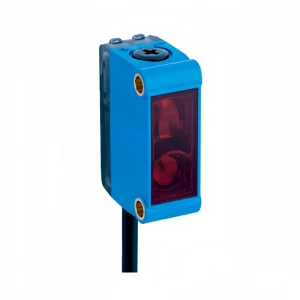
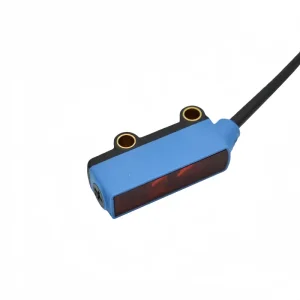
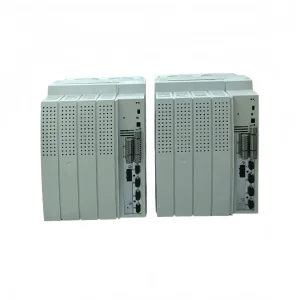
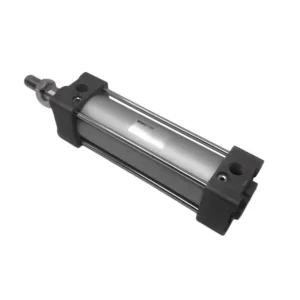
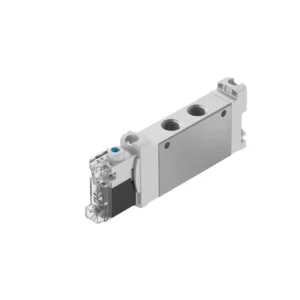
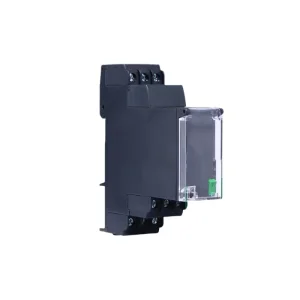
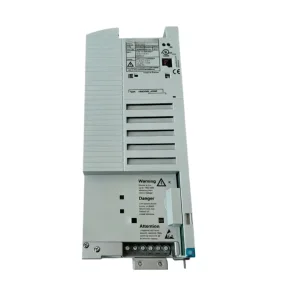
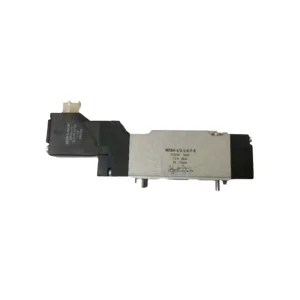
In modern industrial facilities, sudden machinery breakdown translates to catastrophic financial losses. Vibration sensors (also known as accelerometers or vibration transmitters) serve as the primary diagnostic defense line, capturing structural dynamic signals that indicate premature bearing failure, mechanical imbalance, gear misalignment, and shaft eccentricity before structural failure occurs.
By measuring parameters such as acceleration, velocity, and displacement, vibration sensors enable engineers to convert physical kinetic energy into high-resolution electric signals. China's manufacturing sector has rapidly scaled the production of these key elements, integrating piezoelectric ceramics and micro-electro-mechanical systems (MEMS) with built-in micro-processors to execute Fast Fourier Transform (FFT) computations at the sensor level.
Integrating these sensors into the broader automation framework involves routing analog or digital telemetry back to Central Processing Units like PLCs or distributing them to Variable Frequency Drives (VFDs) to govern motor operations dynamically.
Selecting the correct sensor architecture depends heavily on the frequency response required for your specific industrial application.
| Specification Parameter | MEMS Accelerometers | Piezoelectric Sensors (IEPE) | Typical Industrial Target Case |
|---|---|---|---|
| Frequency Range | 0 Hz (DC) to 3 kHz | 0.5 Hz to 24 kHz | Piezoelectric for high-speed spindles; MEMS for low-frequency structural tilt. |
| Signal Output | Digital (Modbus, IO-Link, SPI) | Analog AC (mV/g) or 4-20mA loop | Digital outputs interface directly with edge IoT gateways; Analog for PLC raw inputs. |
| Power Consumption | Ultra-low (< 1mA) | Moderate (2mA to 10mA constant current) | Wireless battery-powered nodes prefer MEMS due to energy conservation limits. |
| Operating Temperature | -40°C to +85°C | -50°C to +150°C (Specialized > 250°C) | IEPE sensors excel in high-temperature environments such as steam turbine exhaust pipes. |
| Cost Profile | Highly cost-efficient | Premium pricing tier | MEMS scales affordably for plant-wide dense sensing arrays; IEPE for critical capital assets. |
An examination of supply chain depth, production velocity, and rigorous engineering compliance standards.
By leveraging established domestic wafer fabs and state-of-the-art semiconductor packaging facilities, Chinese sensor factories output micro-machined silicon elements with exceptional noise-floor metrics and low thermal drift coefficients.
Strict adherence to ISO 9001 quality control pathways, together with laser-interferometer dynamic calibration, guarantees that every exported batch corresponds precisely to national and international metrological standards.
Proximity to raw copper refining, precision machining for stainless steel housings, and specialized cable assembly facilities allows Chinese producers to transition from custom engineering designs to bulk shipping in record time.
Modern industrial sites are heterogeneous environments where sensing equipment must withstand extreme chemical exposure, electromagnetic interference (EMI), and extreme physical stress. Below, we examine the deployment profiles across four primary industrial segments.
In oil refineries and gas processing installations, standard electrical instrumentation poses ignition hazards. Vibration transmitters deployed here must carry intrinsic safety ratings like ATEX/IECEx. Stainless steel (Grade 316L) hermetically sealed enclosures protect internal sensing components from corrosive hydrogen sulfide (H2S) gas. These sensors feed continuous RMS velocity signals (typically 4-20mA loops) directly into DCS systems or explosion-proof PLCs, enabling real-time shutdown triggers upon detection of excessive shaft play in critical pumps.
Steel rolling mills subject instrumentation to intense mechanical shocks, water spray, and massive heat loads. Heavy-duty piezoelectric accelerometers with integrated low-noise cable assemblies are essential here. Factory engineers use specialized mounting blocks welded directly to the bearing housings. Signals are routed through robust shielded conduits back to central industrial cabinets containing high-speed signal conditioners and processing modules like high-frequency PLC output systems and variable frequency drives (VFDs) to control drive motor RPMs dynamic to load anomalies.
Wind turbine nacelles house massive gearboxes and generators positioned hundreds of feet in the air, making physical inspection highly challenging. Low-frequency accelerometers (capable of capturing vibrations down to 0.1 Hz) are installed along the main shaft and planet gear stages. These devices detect slow rotational faults and structural tower oscillation. Sourcing factories integrate these sensors with intelligent edge-analytics modules that transmit diagnostic alarms via fiber optic Ethernet networks directly to cloud monitoring platforms, preventing catastrophic blade or gearbox failures.
Precision manufacturing relies on high-speed CNC spindle performance. Imbalances as small as a micro-gram can ruin tool finishes or damage costly tooling components. Here, miniature lightweight sensors are embedded inside the spindle casing to prevent mass-loading from shifting the spindle's resonant frequency. Operating at frequencies exceeding 15 kHz, these sensors track high-speed bearing deterioration and trigger automatic PLC overrides to stop the feed rate instantly if vibration limits are breached.
Based in Xiamen, Fujian Province, Hongyunlai Technology Co., Ltd. specializes in the supply of high-end industrial automation electrical components for global markets. We recognize that industrial sensors do not operate in isolation. A complete condition monitoring ecosystem requires seamless interaction between precision sensors, programmable controllers (PLCs), variable frequency drives (VFDs), solenoid valves, and stable communication lines.
Leveraging deep industrial experience, Hongyunlai Technology has established stable global supply channels and structured professional teams for international sales and product selection. We provide one-stop procurement solutions for system integrators, manufacturing factories, and equipment maintenance enterprises worldwide.
Whether you require Siemens, Schneider Modicon, Festo, Lenze, or SMC compatible components, our standardized warehouse and strict pre-shipment inspections guarantee optimal performance in harsh field environments. We respond rapidly to technical model inquiries and provide flexible international logistics solutions to support production line upgrades, equipment maintenance, and engineering renovations.
Essential technical questions and answers for procurement managers, maintenance coordinators, and instrumentation engineers.
Displacement measures the total physical travel of a component (typically in mils or micrometers) and is best suited for low-frequency applications (below 10 Hz), such as structural sway or sleeve-bearing movements. Velocity (expressed in inches per second or millimeters per second RMS) is the standard metric for general machine health monitoring between 10 Hz and 1,000 Hz. Acceleration (measured in g) is highly sensitive to high-frequency faults (above 1,000 Hz) such as bearing rolling-element wear, gear tooth defects, and electrical noise.
A rigid threaded stud mount onto a flat, machined metal surface offers the highest frequency response (exceeding 10 kHz). Adhesive mountings using industrial epoxy provide acceptable results up to several kilohertz. Magnetic mounts are convenient for quick route-based measurements but act as low-pass filters, restricting accurate readings to frequencies below 1 kHz to 2 kHz due to slight mechanical compliance in the magnetic coupling.
4-20mA transmitters process raw acceleration internally to output an analog current proportional to the overall vibration velocity or acceleration level. These connect directly to standard PLC inputs without external amplifiers. Integrated Electronics Piezo-Electric (IEPE) sensors output the raw, unfiltered dynamic AC voltage waveform. This raw signal requires high-speed acquisition modules for FFT spectrum analysis, making IEPE ideal for detailed diagnosis, whereas 4-20mA units are preferred for simple alarm thresholds.
Cross-axis sensitivity measures how much signal the sensor generates when subjected to lateral movement perpendicular to its primary measurement axis. Typically expressed as a percentage, a high-quality sensor features a cross-axis sensitivity of less than 5%. Minimizing this metric ensures that horizontal vibrations do not interfere with vertical readings, which is essential for accurate diagnostics on complex rotating assemblies.
Large industrial motors, switching drives, and VFDs generate high electromagnetic noise. Unshielded sensor cables act as antennas, distorting dynamic signals and leading to false alarms. Industrial-grade vibration sensors feature double-shielded twisted pair cables with internal Faraday shielding. Grounding the shield braid only at the monitor/PLC side prevents ground loops, ensuring clean data transmission.
The globally accepted benchmark is ISO 10816 (recently updated within the ISO 20816 series). This standard classifies machinery based on physical dimensions, mounting configuration (rigid vs. flexible foundations), and power ratings, establishing threshold bands for velocity (RMS) categorized into Zone A (Good), Zone B (Acceptable), Zone C (Marginal), and Zone D (Unacceptable).
Moisture ingress causes internal trace oxidation and dielectric breakdown, leading to signal drift or complete sensor failure. True industrial-grade accelerometers employ glass-to-metal seals or laser-welded stainless steel housings. Hermetic sealing guarantees that internal piezoelectric crystal structures remain moisture-free, even under high-pressure washdowns or submersed operations.
Vibration sensors experience thermal expansion and changes in crystal properties when exposed to fluctuating operational temperatures. Sensor datasheets define this via a Temperature Coefficient of Sensitivity (e.g., ±0.05% / °C). Advanced Chinese factories incorporate internal temperature compensation components or utilize shear-mode crystal geometries that are inherently less sensitive to thermal fluctuations compared to compression-mode designs.
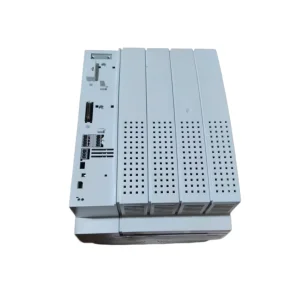
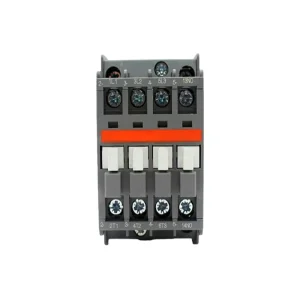
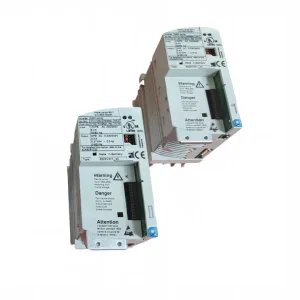
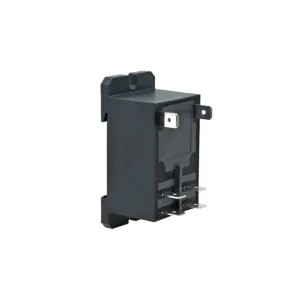
Integrate your monitoring systems with robust control components, line repeaters, inverters, and original contactors.