 CHANGHORN
CHANGHORN
CHANGHORN
The manufacturing sector is undergoing an unprecedented digital shift, transitioning from legacy analog tooling systems to software-defined, hyper-connected micro-machining environments. At the center of this transformation lies the Computer Numerical Control (CNC) controller. This essential hardware coordinates physical actions with digital commands, acting as the brain of modern precision machinery.
Globally, the market is divided between proprietary ecosystem developers (such as Fanuc, Siemens, and Mitsubishi) and open-architecture manufacturers designed for integration. Understanding this landscape is vital for industrial procurement teams. When upgrading older lines or installing new 5-axis machines, deciding which CNC controller to use dictates not only immediate capital investment but also long-term maintenance costs and integration flexibility.
Modern CNC controller factories operate under tight tolerances. Raw microprocessing boards are fabricated in cleanroom settings to prevent particulate contamination, followed by rigorous testing under extreme thermal and electromagnetic conditions. This ensures that controllers can run continuously in demanding environments without signal decay or component failure.
Selecting a CNC controller requires evaluating its underlying architecture. A modern system must support high-speed interpolation, manage multiple closed-loop servo configurations, and maintain real-time fieldbus communications. Below, we compare proprietary and open-architecture configurations.
| Technical Criterion | Proprietary Systems (e.g., Fanuc, Siemens) | Open-Architecture Systems (LinuxCNC, EtherCAT-Based) |
|---|---|---|
| Hardware Interoperability | Highly restricted. Requires matching proprietary servo drives and encoders. | High. Integrates with third-party components via standardized fieldbuses. |
| Programming Flexibility | Strict standard G-code with brand-specific conversational extensions. | Highly flexible. Supports C++, Python, G-code, and custom kinematic models. |
| Lifecycle & Maintenance Costs | High. Dependent on manufacturer service contracts and proprietary spares. | Low. Utilizes standard industrial PCs (IPCs) and off-the-shelf modules. |
| Communication Protocols | PROFIBUS, PROFINET, FL-Net (highly optimized). | EtherCAT, Modbus/TCP, CANopen, OPC UA. |
| Dynamic Interpolation Speed | Optimized at ASIC level for exceptional speed and reliability. | Software-dependent; handles complex multi-axis toolpaths using RT-Linux. |
By leveraging EtherCAT and PROFINET, modern CNC controllers maintain sub-millisecond synchronization across multiple motion axes. This allows for smooth tool movement and minimizes machine vibration.
Real-time dual-loop feedback captures position data from both the rotary motor encoder and linear scales on the machine bed, eliminating backlash and compensating for thermal expansion.
High-end controllers handle complex kinematic conversions for parallel links, hexapods, and multi-axis articulated robot arms, expanding their use beyond standard Cartesian configurations.
CNC requirements vary significantly across different industrial sectors. A controller designed for high-speed woodworking will not meet the structural rigidity and positioning requirements of aerospace milling.
Aerospace manufacturing involves cutting complex geometries out of tough alloys like titanium and Inconel. CNC controllers in this sector require high block processing speeds (over 2000 blocks per second) and Look-Ahead capabilities of 1000+ blocks. This allows the system to adjust feed rates dynamically before directional changes, preventing tool gouging and ensuring clean surface finishes.
Key Requirement: Real-Time Dynamic Tool Path SmoothingIn high-volume automotive manufacturing, downtime is costly. CNC controllers must connect directly to manufacturing execution systems (MES) via OPC UA or MQTT. Here, priority is given to modular controllers that can be swapped out quickly in minutes, reducing mean time to repair (MTTR).
Key Requirement: Heavy Fieldbus Integration & Rapid Exchange Modular PLC CardsMold manufacturing requires maintaining smooth, accurate tool movements over hours-long cycles. The CNC controller must execute high-resolution 3D micro-interpolation. Advanced systems employ jerk-limitation algorithms to smooth acceleration profiles, protecting mechanical guide rails and ball screws from excessive wear.
Key Requirement: Nano-Interpolation and Acceleration ControlUpgrading legacy machines with modern CNC controllers extends their service life at a fraction of the cost of new equipment. By combining modular PLCs, custom operator panels, and modern safety systems, factories can bring older mechanical beds up to Industry 4.0 standards.
Key Requirement: Retrofit compatibility, Analog-to-Digital I/O conversionThe convergence of artificial intelligence, edge computing, and high-speed network protocols is changing how CNC controllers manage machining operations. Modern controllers are transforming from passive command executors into active, predictive systems.
AI-Driven Adaptive Control: Traditional systems follow fixed programmed feed rates. Next-generation controllers monitor spindle load, vibration sensors, and thermal feedback in real time. If a hard spot is encountered in the material, the controller automatically adjusts the feed rate to prevent tool breakage and optimize cutting speeds.
Cloud-Connected Machining: Modern systems use MQTT and OPC UA protocols to stream operation data directly to cloud platforms. This data enables predictive maintenance by identifying potential spindle bearing failures or linear guide wear before they cause unplanned downtime.
Integration of Additive and Subtractive Manufacturing: Hybrid controllers manage both tool paths and laser cladding or material extrusion heads within the same program, simplifying the production of complex, multi-material components.
Managing the procurement of CNC controllers, PLCs, and drive components requires balancing cost, technical specifications, and delivery timelines. Relying on a single supplier can lead to production bottlenecks when chip shortages or logistics issues occur.
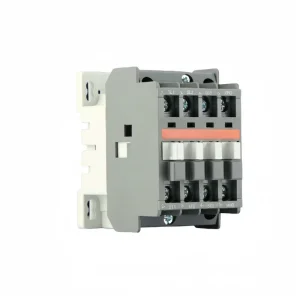
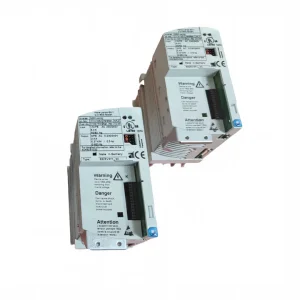
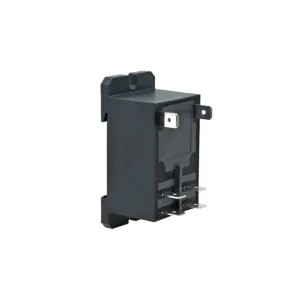
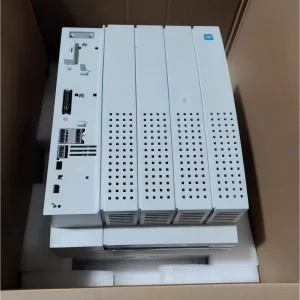
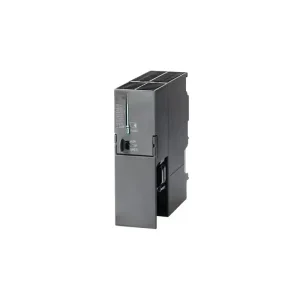
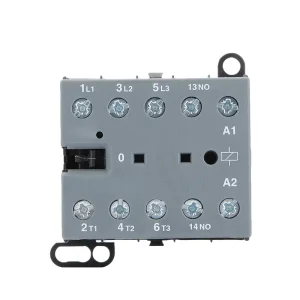
System integrators and maintenance teams must establish relationships with reliable supply chain partners. Hongyunlai Technology Co., Ltd., based in Xiamen, Fujian Province, addresses this need by providing comprehensive sourcing for industrial automation components. Partnering with a distributor that maintains an inventory of major brands allows factories to source critical spares like PLC modules, servo drives, sensors, and contactors from a single provider.
To secure operations against unexpected downtime, procurement managers should follow a structured sourcing strategy:
Industrial machinery must comply with strict safety and performance standards. A CNC controller or PLC module must meet local electrical and safety regulations before installation.
Key standards include the CE Mark for the European Economic Area, which confirms compliance with safety, health, and environmental standards. The UL Listing is essential for North American installations, ensuring that components satisfy fire safety and electrical shock prevention guidelines. Additionally, the RoHS Directive restricts hazardous materials in electronic assemblies, protecting workers and simplifies recycling.
Equally important is localized technical support. While a controller may offer excellent specifications, a lack of local technical documentation or regional support can lead to extended downtime during system integration or troubleshooting. A reliable distribution partner helps resolve these challenges by providing verified documentation, technical support, and component matching.
A CNC controller is designed for high-precision, multi-axis coordinated path control, translating G-code into synchronized motion profiles. A PLC (Programmable Logic Controller) handles sequential logic, interlocks, safety states, and auxiliary systems like coolant pumps, tool changers, and part loaders. Modern systems often combine both, with a CNC processor managing path interpolation and an integrated PLC handling digital I/O coordination.
EtherCAT uses a "processing on the fly" method where Ethernet frames pass through all nodes without being buffered. This reduces communication cycle times to sub-millisecond levels (often under 250 microseconds), minimizing synchronization jitter between axes. This low latency is essential for high-speed machining and complex 5-axis operations.
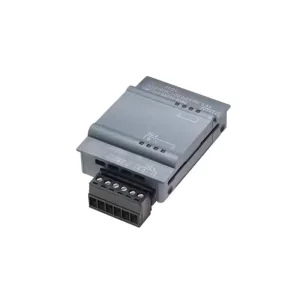
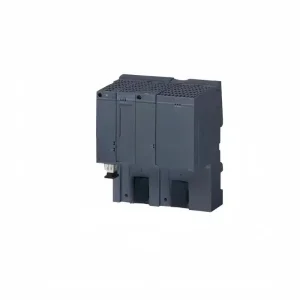
Yes. Using communication gateways or industrial switches, legacy systems can connect to modern PLC modules (such as Siemens S7-1200 or specialized output units). This allows for partial upgrades, enabling features like barcode scanning, remote monitoring, and safety light curtains without needing to replace the entire CNC controller.
Look-Ahead algorithms analyze hundreds of G-code lines ahead of the current cutting position. This allows the controller to detect tight curves or abrupt direction changes early, adjusting the feed rate dynamically. Without Look-Ahead, the tool could overshoot the programmed path, causing dimension errors, tool wear, or damage to the workpiece.
To minimize EMI, maintain separation between high-voltage power lines and low-voltage signal lines. Use shielded cables for encoders and communication networks, ensuring the shields are grounded correctly. Additionally, installing miniature circuit breakers and contactors helps manage power surges and electrical noise within the control cabinet.
Experienced distributors like Hongyunlai Technology implement strict verification processes. This includes verifying physical serial numbers, checking component packaging, performing static testing on circuits, and conducting functional diagnostics on test beds to ensure modules perform reliably in production environments.
Based in Xiamen, Fujian Province, Hongyunlai Technology Co., Ltd. supplies industrial automation electrical components to global markets. With extensive experience in the industrial control industry, we have established reliable global supply channels and a professional international sales and product selection team. We provide one-stop procurement solutions for system integrators, manufacturing plants, and maintenance enterprises worldwide.
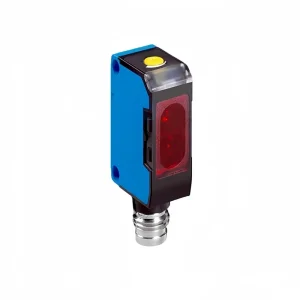
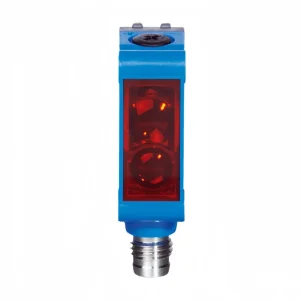
We supply spare parts from major international brands, with a product portfolio including PLC controllers, servo drives, motors, inverters, HMI touch screens, sensors, contactors, distributed I/O modules, power supply units, and other essential automation hardware.
Our standardized warehouse and strict pre-shipment inspections help ensure product quality. We respond quickly to component inquiries and offer flexible international shipping options, supporting equipment maintenance, production line upgrades, and engineering renovation projects.
Committed to integrity and collaborative partnerships, we support our clients with reliable inventory, technical consultation, and efficient delivery to serve as a dependable partner for industrial automation spares.