 CHANGHORN
CHANGHORN
CHANGHORN
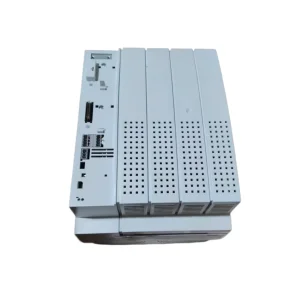
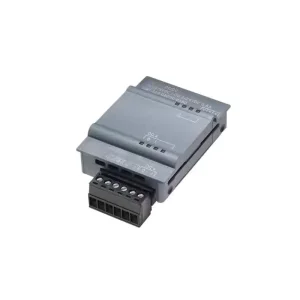
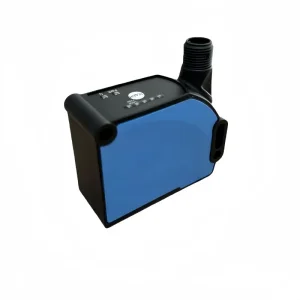
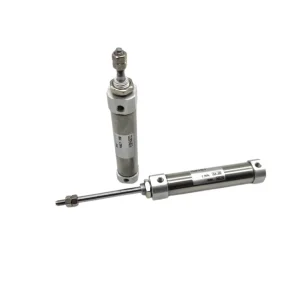
Within the rapidly evolving ecosystem of Industrial Internet of Things (IIoT) and Industry 4.0, fieldbus communication modules serve as the nervous system of modern production facilities. Among these protocol layers, EtherNet/IP (Ethernet Industrial Protocol) remains one of the most reliable and widely adopted networking systems worldwide.
Managed by ODVA, EtherNet/IP utilizes standard Ethernet infrastructure (IEEE 802.3 combined with TCP/IP and UDP/IP) to host the Common Industrial Protocol (CIP™). This implementation enables absolute transparency of real-time control data, parameter settings, diagnostics, and safety messages over a singular, high-speed backbone network.
For operations managers and control engineers, transitioning to or maintaining an EtherNet/IP infrastructure translates directly to reduced configuration overhead, optimized interoperability, and accelerated data access from the physical layer up to enterprise-level Cloud applications.
Bridge the gap between OT and IT infrastructures. By deploying certified communication interfaces, raw machine-level sensor readings, energy usage telemetry, and diagnostics are routed directly to enterprise resource planning (ERP) databases and cloud analytic nodes.
EtherNet/IP architecture permits concurrent transport of cyclical real-time I/O control data and acyclical diagnostic information. Modules feed asset-health parameters into predictive analytics algorithms, avoiding unplanned downtime.
Optimize cable topologies by daisy-chaining multiple distributed modular remote I/O bases via standard Cat5e wiring. This drastically minimizes electrical installation layouts and reduces labor costs during plant commissioning phases.
Modern industrial sites present severe electromagnetic interference (EMI), high vibration, thermal extremes, and chemical exposure risks. Standard office-grade network devices deteriorate rapidly under these operational environments. High-performance EtherNet/IP interface boards, gateways, and switches are engineered to perform reliably under such constraints, incorporating ruggedized components, physical galvanic isolation, and specialized physical housing designs.
Industrial EtherNet/IP systems utilize specialized physical interface topologies. Heavy-duty applications rely heavily on 4-pin or 8-pin D-coded or X-coded M12 connectors instead of plastic RJ45 jacks. The M12 standard features IP67 ingress protection, ensuring water, dust, and vibration-proof physical connectivity. Galvanic isolation up to 1.5 kV AC is standard across industrial network ports to prevent ground loops from damaging sensitive PLC processors.
CIP provides a common set of messages and services for security, control, information, and synchronization. It defines an object-oriented programming model where variables are designated as Attributes of defined Class Instances. The communication stack segregates traffic into:
High-availability networks require single-fault resilience. EtherNet/IP utilizes Device Level Ring (DLR) technology directly at the device level, bypassing the slower Spanning Tree Protocol (STP) standard. A DLR network contains one designated "Active Supervisor" and multiple "Ring Nodes". If a break in the physical cable occurs, the Supervisor detects the interruption within microseconds and routes control frames through the alternate direction, maintaining operation without halting production.
With ODVA's primary development and standardization roots, North American manufacturing facilities rely heavily on EtherNet/IP as their native backbone. It integrates natively with mainstream programmable automation controllers, driving standard industrial communication protocols across the continent.
Traditionally centered around PROFINET, the European industrial landscape has seen massive integration of dual-protocol interfaces. Global machinery exporters routinely install modules that dynamically toggle between PROFINET, Modbus TCP, and EtherNet/IP, enabling flexible export options.
As smart manufacturing expansions accelerate throughout APAC, there is a substantial demand for certified communication processors. Transitioning older legacy networks to real-time industrial Ethernet configurations enables more scalable infrastructure deployments.
Deploying networking equipment across international borders requires meticulous attention to regional standards and technical conformity certification rules. To qualify as a high-performance network interface on an industrial floor, hardware must undergo rigorous physical testing. Our logistics channels focus heavily on distributing hardware certified under global and localized regulatory regimes.
ODVA Conformance Testing: The cornerstone of EtherNet/IP reliability. Hardware must pass ODVA-certified physical conformance tests to verify strict protocol stack compliance. Conformance testing prevents unexpected communications timeouts, interoperability failures, or packet collisions when integrating multi-brand controllers in a single infrastructure.
International Safety & EMI Standards: Industrial environments generate high electromagnetic noise. Validated communication products are certified under CE (Conformité Européenne) and UL (Underwriters Laboratories) testing schemes, complying with EN 61000-6-2 (Immunity for Industrial Environments) and EN 61000-6-4 (Emission Standard). Compliance with RoHS (Restriction of Hazardous Substances) is also strictly verified to meet global environmental mandates.
High-speed industrial robots communicating with central PLCs via CIP Safety extensions over EtherNet/IP to manage interlocked tooling and safety fences.
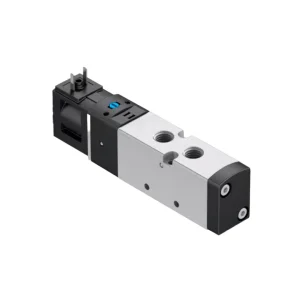
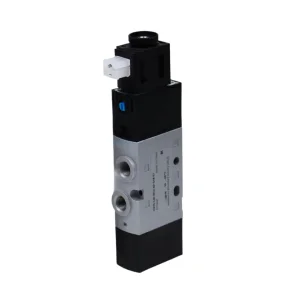
Washdown-safe remote valve manifolds and pneumatic actuators operating under precise, high-speed cyclical sequences to manage wash/fill lines.
Distributed telemetry sensors monitoring flow rates, chemical levels, and pressure limits, feeding back data over long distances via fiber-optic rings.
CIP Motion integration synchronization of multi-axis servo drives and high-resolution optical cameras for real-time label application and quality control checks.
Hongyunlai Technology Co., Ltd. is based in Xiamen, Fujian Province, focusing on the supply of industrial automation electrical components for global markets. With years of in-depth experience in the industrial control industry, we have established stable global supply channels and a professional team for international sales and product selection. We deliver one-stop procurement solutions for system integrators, manufacturing factories and equipment maintenance enterprises across the world.
We supply industrial spare parts of mainstream international brands. Our product portfolio includes PLC controllers, servo drives & motors, inverters, HMI touch screens, sensors, contactors, distributed I/O modules, power supply modules and other core automation components.
We operate a standardized warehouse and implement strict pre-shipment inspection to guarantee product quality. We respond rapidly to model inquiries and provide flexible international logistics solutions, fully supporting customers’ equipment maintenance, production line upgrading and engineering renovation projects.
Upholding the business philosophy of integrity and win-win cooperation, we rely on sufficient inventory, professional technical consultation and efficient delivery. We aim to be your trustworthy long-term partner for industrial automation spare parts.
The industrial communication sector is on the verge of significant modernization, driven by the need for higher bandwidth, unified networks, and advanced cybersecurity protection. The future of EtherNet/IP architecture is guided by three main technical developments:
By establishing time synchronization (IEEE 802.1AS) and scheduled traffic configurations (IEEE 802.1Qbv), TSN enables standard control packets and real-time motion commands to share the same physical cable safely without interference.
Using a single twisted pair of copper wires, SPE enables EtherNet/IP communication to extend directly to instrumentation sensors and actuators. This eliminates the need for translation gateways, simplifying field network architectures.
As operations connect more widely with IT systems, CIP Security adds data authentication, message integrity, and encryption directly to fieldbus traffic. This protects industrial automation control systems from unauthorized access or manipulation.
Standard Ethernet handles general data transmission across networks using TCP/IP or UDP/IP protocols. EtherNet/IP adapts these technologies for the factory floor by adding the Common Industrial Protocol (CIP) on top of standard IP layers. This enables real-time device control, synchronization, and diagnostic reporting on a unified industrial network.
DLR monitors communication pathways in a ring configuration. If a cable break occurs, the designated ring supervisor quickly detects the loss of connection and reroutes data packets within milliseconds. This keeps the physical network running and prevents the control system from triggering an emergency stop.
Yes. Because EtherNet/IP uses standard TCP/UDP ports, it can share cabling with other Ethernet traffic. However, to maintain control performance, managed industrial switches must use IGMP Snooping and Quality of Service (QoS) prioritizations. This prevents standard network traffic from disrupting critical industrial control packets.
Factory floors contain significant electrical noise from motors, drives, and welding equipment. Shielded twisted-pair (STP) cables (such as Cat5e or Cat6) protect data signals from electromagnetic interference. Rugged connectors, like M12 D-coded and X-coded shells, provide secure, water-resistant physical links that resist vibration and mechanical stress.
CIP Safety adds safety-oriented services directly into the EtherNet/IP data stream. It meets high international safety standards (up to SIL 3 and PLe) by continually validating communication integrity. The protocol checks for data corruption, packet loss, or delivery delays, ensuring safety devices trigger reliably if a fault is detected.
Key factors include target environment ratings (temperature, humidity, vibration), certification requirements (ODVA compliance, CE, UL), support for redundant network paths (like DLR), diagnostic features, and the number of supported connections. High-quality components help minimize communication timeouts and unexpected system downtime.