 CHANGHORN
CHANGHORN
CHANGHORN
In the modern manufacturing landscape, the stability of key electrical components is non-negotiable. Hongyunlai Technology Co., Ltd., based in the high-tech industrial hub of Xiamen, Fujian Province, is a premier global supplier dedicated to bridging international markets with top-tier industrial automation components.
Equipped with years of deep expertise in the industrial control sector, we have built highly integrated global supply pipelines and dynamic technical sales divisions. We address the immediate demand for system integrators, manufacturing plants, and OEM machine manufacturers worldwide, offering a robust one-stop logistics and parts sourcing pipeline designed to minimize project lead times and secure hardware compatibility.
Every device that exits our warehouse undergoes rigorous pre-shipment validation, guaranteeing that PLC hardware, servo systems, and critical safety scanners function within nominal design boundaries.
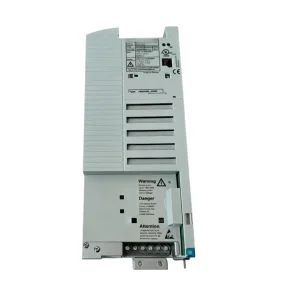
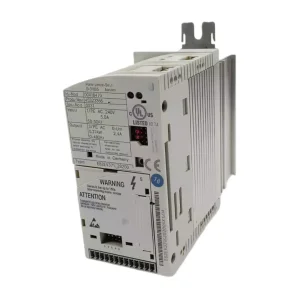
As heavy industry faces strict energy efficiency mandates, the design of frequency inverters (Variable Frequency Drives - VFDs) is transforming. Modern processing plants demand intelligent motor speed adjustments to balance torque curves, lower thermal losses, and eliminate high startup currents.
Integrating Wide-Bandgap (WBG) materials like Silicon Carbide (SiC) and Gallium Nitride (GaN) into VFD inverter topologies significantly reduces switching losses, allows higher switching frequencies, and minimizes the physical footprint of industrial drives.
Modern inverters are no longer isolated motor drivers. They now act as edge-intelligence nodes that capture telemetry data, monitor stator insulation degradation, track bearing temperatures, and report anomalies to cloud-hosted SCADA nodes.
Hardware-implemented Safe Torque Off (STO) loops are now a standard industry requirement. Integrated safety protocols guarantee that personnel can service drive equipment without risking accidental motor restarts or unsafe mechanical shifts.
Procurement engineers and operations managers face several challenges when sourcing frequency converters, including supply chain bottlenecks, compatibility issues, and complex grid integration parameters. Our service model is designed to simplify this process.
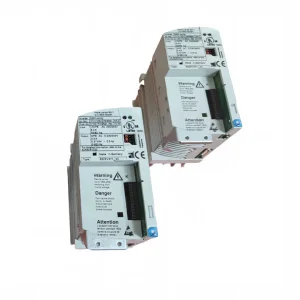
Beyond the initial purchase cost, drive systems generate expenses through downtime and complex programming tasks. By offering premium, cross-compatible hardware options—including leading brands like Siemens, Lenze, and Modicon—we ensure our customers enjoy long-term reliability and straightforward spare parts sourcing.
Large non-linear loads can introduce harmonic distortion into factory grids, running counter to IEEE 519 standards. Our experienced technical support team helps procurement departments select inverters equipped with built-in DC links and AC line reactors, keeping harmonic levels within compliance limits.
China's manufacturing hubs have evolved from basic components assembly to complex, precision engineering and highly integrated supply chain management under the "Factory 4.0" framework. Our strategic location in Xiamen gives us direct access to high-efficiency manufacturing clusters and robust deepwater shipping links.
This local ecosystem enables us to respond quickly to engineering demands, offering prompt sourcing for obsolete parts, direct cross-referencing for legacy equipment, and fast lead times for custom control panels.
Selecting the correct inverter topology depends heavily on the specific mechanical requirements of the target application. This comparative matrix outlines standard configurations across modern industrial environments.
| Drive Topology | Typical Voltage Range | Control Methods | Key Strengths | Typical Applications |
|---|---|---|---|---|
| Scalar Control (V/f) | 220V - 690V AC | Linear, Quadratic, Multi-point | Cost-effective, simple commissioning, drives multiple motors simultaneously | HVAC fans, centrifugal pumps, simple conveyors |
| Sensorless Vector Control (SVC) | 380V - 1140V AC | Open-loop flux estimation | High starting torque at low speeds, dynamic load response | Extruders, mixers, heavy-duty material handling |
| Closed-Loop Vector Control | 380V - 6.6kV AC | Quadrature/Direct current decoupling with encoder feedback | Zero-speed full torque, highly precise speed regulation | Winding lines, cranes & hoists, high-speed test benches |
| Direct Torque Control (DTC) | 380V - 1140V AC | Direct flux link/Torque hysteresis control | Fastest torque response loop, high stability without encoder | Mining excavators, marine propulsion, steel mills |
Industrial automation requirements vary significantly depending on the operating environment. We configure and supply components tailored for diverse international setups.
In wastewater installations, multi-pump systems must adjust to variable flow rates while preventing pipe strain from sudden pressure shifts.
Plastic and rubber extrusion lines depend on steady torque performance to maintain consistent product thickness and finish.
Automated sorting terminals need rapid, reliable positioning, often using safety laser scanners alongside variable-speed motor lines.
Explore answers to common questions about selecting, applying, and troubleshooting industrial frequency inverters.