 CHANGHORN
CHANGHORN
CHANGHORN
In high-precision industrial processing, liquid and bulk solid level instrumentation serves as the sensory nervous system. Precise level metrics dictate operation yields, process safety margins, and structural integrity parameters. Operating as a leading global distributor of industrial components, Hongyunlai Technology Co., Ltd. (headquartered in Xiamen, Fujian Province) bridges the gap between premium instrumentation manufacturing and physical operational systems.
As a trusted supply channel partner, Hongyunlai Technology does not merely distribute hardware; we construct comprehensive supply integration structures. By aligning deep technical selection expertise with critical system configurations, our engineers ensure that procurement personnel, system integrators, and plant managers obtain specialized level sensing components alongside compatible PLC controller architectures, contactors, and variable frequency drives (VFDs).
Our operational model reduces global logistics complexity. Leveraging a standardized warehousing protocol and deep supply channel relationships with mainstream international automation brands (including Siemens, ABB, SMC, Festo, and Modicon), we act as a singular point of accountability, alleviating the structural fragmentation that often delays major process engineering installations.
Industrial level instrumentation relies on diverse physical principles. Choosing the appropriate sensor requires understanding the properties of the process medium, the geometry of the vessel, and ambient temperature/pressure limits. Below is a comprehensive breakdown of the core technologies utilized in modern industrial automation loops.
Frequency Modulated Continuous Wave (FMCW) radar emits high-frequency linear sweeps (typically at 24 GHz or 80 GHz). The difference between the emitted and returned frequency is proportional to the distance. 80 GHz narrow beam paths allow measurement inside narrow vessels with internal agitators, ignoring false reflections from internal vessel hardware.
GWR uses Time Domain Reflectometry (TDR) along a physical waveguide (rod or cable probe). The microwave pulse travels down the probe, reflects off the liquid surface, and returns. Excellent for low-dielectric constant media (hydrocarbons) and applications prone to steam layers, dust, or severe surface turbulence.
Utilizes acoustic time-of-flight pulses. Non-contact, cost-effective, and highly reliable for water, wastewater, and open-channel applications. However, they are sensitive to temperature gradients, heavy vapors, and surface foam, which absorb or refract the acoustic signal.
A primary issue in guided wave radar (GWR) and capacitive level sensing is the dielectric constant ($\epsilon_r$) of the target media. While water exhibits a high dielectric constant of approximately 80, petroleum-based oils and solvents typically fall in the range of 1.4 to 2.5. At low levels of $\epsilon_r$, the signal reflection is weaker.
Our technical engineering advice for low dielectric fluids is to utilize a coaxial waveguide probe. Coaxial probes concentrate the microwave energy inside a outer tube, maximizing signal returns and shielding the measurement from external vessel factors such as metal walls, nozzle interference, or internal plumbing.
| Sensing Principle | Optimal Media Type | Dielectric Limit ($\epsilon_r$) | Process Temperature Range | Key Advantage |
|---|---|---|---|---|
| 80 GHz FMCW Radar | Liquids & Bulk Solids | > 1.3 | -196°C to +450°C | Very narrow beam path, ignores internal obstructions |
| Guided Wave Radar (GWR) | Slurries, Low Dielectrics | > 1.1 | -50°C to +400°C | Immune to heavy vapor, steam, and turbulence |
| Ultrasonic | Water & Chemicals | N/A (Acoustic) | -40°C to +80°C | Cost-effective, simple non-contact setup |
| Hydrostatic Pressure | Conductive & Corrosive Liquids | N/A | -40°C to +120°C | Direct density & mass calculations |
Automation requirements vary significantly across different industrial sectors. A chemical synthesis plant operates under completely different constraints than a municipal municipal wastewater system. Here are the specific integration frameworks for level control across major industry verticals.
These systems must handle corrosive chemicals, high pressures, and explosive environments (ATEX/IECEx Zone 0). Typical solution: High-frequency non-contact radar sensors with PTFE-lined flanges or isolation seals. System safety relies on SIL 2 or SIL 3 rating certifications, coupled with safe isolation barriers and auxiliary contact logic to prevent overfills.
These operations use deep wet wells, open channels, sludge clarifiers, and chemical feed tanks. Typical solution: Corrosion-resistant, submersible hydrostatic pressure transmitters paired with ultrasonic transmitters. Standardizing on IO-Link integration paths provides diagnostics for build-up, and PLC code handles surface agitation and turbulence using signal averaging.
Sanitary standards (3-A, EHEDG) dictate zero crevices, surface roughness under Ra 0.8 µm, and resistance to aggressive CIP (Clean-in-Place) chemicals. Typical solution: Hygienic capacitive level switches and flush-mounted non-contact radar sensors. Wetted components are composed of PEEK and stainless steel 316L, maintaining pressure seal integrity during hot water and acid washes.
Cement, grain, and plastics silos experience high dust levels and uneven surfaces. Typical solution: FMCW 80 GHz radar instruments equipped with air-purging flanges to prevent dust build-up. The high frequency penetrates heavy dust clouds, and adjustable beam optics can align with discharge cones to optimize material profiles.
A level sensor does not operate in isolation. It forms the input node of a closed-loop control system. Integrating the sensor with processing and actuation hardware is critical to avoiding unstable control behaviors, line faults, or structural overflows.
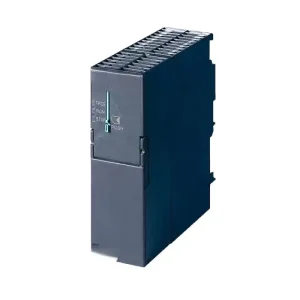
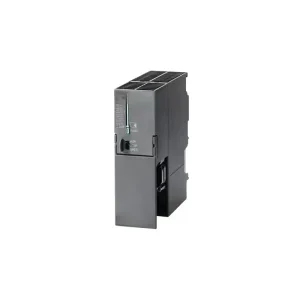
In a standard liquid storage application, the level transmitter (utilizing an analog 4-20mA HART or digital IO-Link output) transmits real-time values to a PLC Controller Module (such as the Siemens S7-300 or Modicon M200).
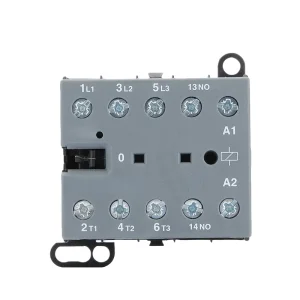
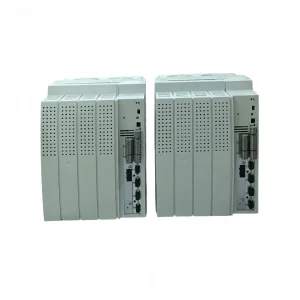
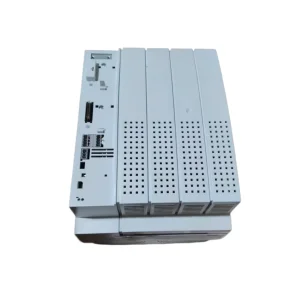
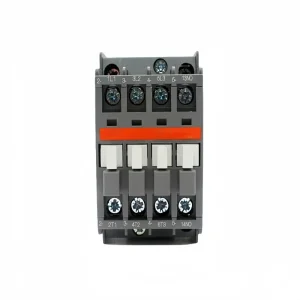
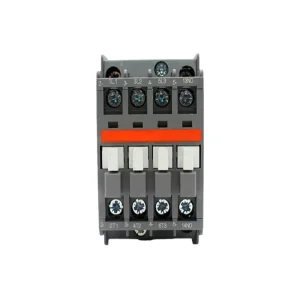
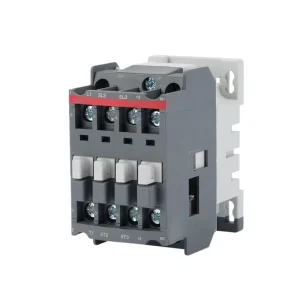
The PLC executes a PID (Proportional-Integral-Derivative) algorithm, determining the correct output signal to send to the Variable Frequency Drive (VFD). The VFD, like the E82EV751_4C, modulates the electric motor speed of the inlet/outlet pump to maintain the level setpoint. Safety contactors, such as the AF09-30-10-13, provide a hardwired fallback path, isolating motor power if the PLC detects high-limit sensor alarms.
Modern process designs utilize Fieldbuses (PROFINET, Modbus TCP, EtherNet/IP) to transport multi-variable diagnostics from the sensor head. Beyond the level value, sensors report temperature, signal quality, and sensor status. This information routes through communication processors (like the Siemens CP443-1 module) to central SCADA networks, enabling predictive maintenance and troubleshooting from remote locations.
Procurement delays can halt production lines, costing operations thousands of dollars per hour. System integrators and maintenance managers must balance component specifications with delivery timelines.
Hongyunlai Technology Co., Ltd. addresses these challenges through a specialized procurement framework:
Many facilities rely on legacy infrastructure (e.g., Siemens S5, S7-300 PLCs). We stock and source certified, new, and obsolete components to keep systems operational without requiring expensive engineering redesigns.
Every sensor, PLC module, and contactor undergoes verification at our warehousing facilities. This process checks firmware versions, physical seal integrity, and visual specifications, preventing DOA (Dead on Arrival) issues.
We offer flexible international logistics options (DHL, FedEx, air freight) combined with export compliance management, reducing customs delays and ensuring deliveries arrive on schedule.
Level measurement is moving beyond basic level data collection toward edge intelligence. Understanding these trends helps engineering teams future-proof their operations during current upgrade cycles.
Next-generation radar and ultrasonic transmitters use edge algorithms to filter out dynamic wave profiles, foam build-up, and agitator blades. Built-in signal quality metrics alert control systems before a sensor fails, reducing unplanned maintenance windows.
Ethernet-APL (Advanced Physical Layer) brings high-speed Ethernet communications directly to instruments in hazardous locations. This allows 10 Mbit/s data transfer rates over two-wire setups, enabling direct sensor-to-cloud diagnostics alongside standard automation loops.