 CHANGHORN
CHANGHORN
CHANGHORN
Explore our selected primary range of advanced programmable logic controllers, industrial frequency converters, sensor elements, and high-performance contactor interfaces.
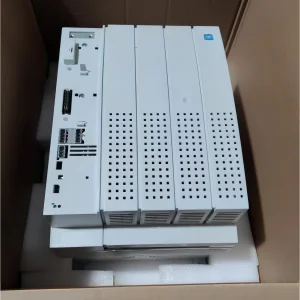
E82ZAFPC001 Frequency Inverter PLC Profibus I/O Module Frequency Converter VFD
View Details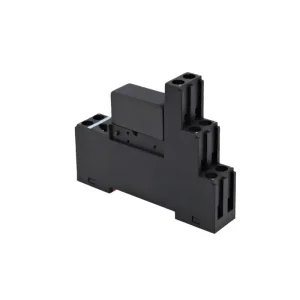
New Original Modicon M241 TM241C40U NPN Transistor Output 40IO PLC Controller
View Details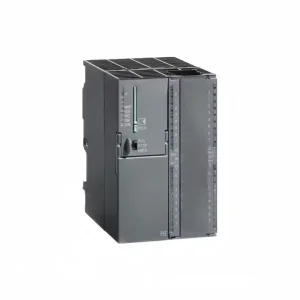
Original Plc Controller Module 6es7132-4bd01-0aa0
View Details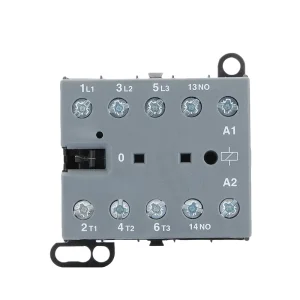
For AX205-30 220V/380V/110V/24V 9A/12A/16A Main Contact 3NO Auxiliary Contact 1NO/1NC Contactor From China
View Details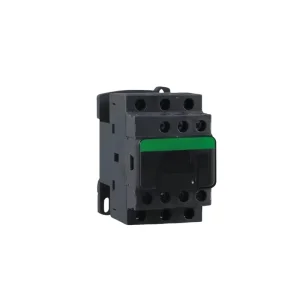
Brand New Original TM200C24T Modicon M200 PLC Controller Programmable Logic Controller
View Details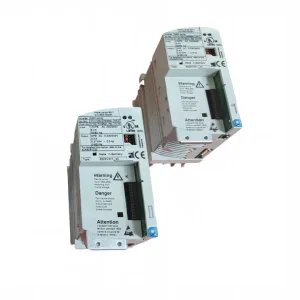
E84AYCPMV Frequency Inverter PLC Profibus Module Frequency Converter VFD
View Details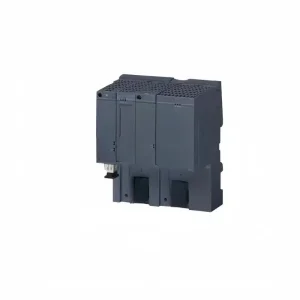
New Original Plc S7-300 Fm353 Module 6es7353-1ah01-0ae0
View Details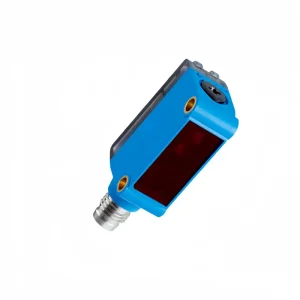
New Original Contrast Sensor KTS-WB9114115AZZZZ Photoelectric Switch Sensor KTS Sensor
View DetailsThe global industrial automation market is undergoing a significant transition. Historically, heavy industrial operations demanded large, expensive programmable logic controllers (PLCs) to orchestrate complex tasks. Today, the rapid expansion of edge computing and distributed systems has created a surge in demand for micro-automation solutions. Within this ecosystem, Micro800 controllers have established themselves as an industry benchmark. Designed for standalone machines and modular processes, these micro-PLCs offer high-performance logic capabilities at an economical price point.
From a commercial standpoint, the demand for flexible micro-PLCs is driven by machine builders (OEMs) and system integrators who require customized hardware scaling. In North America, Europe, and Asia-Pacific, manufacturing plants are increasingly utilizing microcontrollers to drive standalone packaging machinery, conveyor lines, building control systems, and water treatment systems. The modular design of modern microcontrollers allows for customization via plug-in modules, enabling users to add analog I/O, communication modules, and specialized outputs without changing the base physical footprint of the panel.
Integrators can tailor space-constrained panels using optional Plug-in modules (analog, communication, memory expansion) without expanding DIN rail footprints.
Equipped with embedded EtherNet/IP™ and Modbus TCP channels, these systems connect seamlessly to cloud gateways and local SCADA networks.
Using advanced Connected Components Workbench™ (CCW) software, programming complies with IEC 61131-3 standards for standard, structured logic.
Hongyunlai Technology Co., Ltd. is based in Xiamen, Fujian Province, focusing on the supply of industrial automation electrical components for global markets. With years of in-depth experience in the industrial control industry, we have established stable global supply channels and a professional team for international sales and product selection. We deliver one-stop procurement solutions for system integrators, manufacturing factories and equipment maintenance enterprises across the world.
We supply industrial spare parts of mainstream international brands. Our product portfolio includes PLC controllers, servo drives & motors, inverters, HMI touch screens, sensors, contactors, distributed I/O modules, power supply modules and other core automation components. By maintaining a robust network across major manufacturers, we bridge the gap between regional component shortages and local industrial execution.
We operate a standardized warehouse and implement strict pre-shipment inspection to guarantee product quality. We respond rapidly to model inquiries and provide flexible international logistics solutions, fully supporting customers’ equipment maintenance, production line upgrading and engineering renovation projects. Upholding the business philosophy of integrity and win-win cooperation, we rely on sufficient inventory, professional technical consultation and efficient delivery. We aim to be your trustworthy long-term partner for industrial automation spare parts.
The development of micro-PLCs like the Micro800 series matches key shifts in global smart manufacturing. Traditionally, standalone machines relied on localized logic loops. In the era of Industry 4.0, every machine is expected to function as a data node within a wider enterprise network. This expectation drives manufacturers to build controllers with enhanced security, open standards, and IIoT capability.
Engineers require software that simplifies operations. Modern engineering environments now unify HMI design, variable speed drive parameters, and controller logic into a single program (such as Connected Components Workbench for Micro800 controllers). By adopting standard languages like Ladder Diagram (LD), Structured Text (ST), and Function Block Diagram (FBD), manufacturers reduce training times and speed up machine startup.
Micro-PLCs are gaining processing power to compute analytics at the machine level. This edge processing allows systems to filter raw analog signals, track cycles, monitor runtime, and output structured JSON payloads directly to MQTT brokers or databases. This architecture reduces bandwidth load on corporate IT networks and eliminates the need for expensive middle-tier gateways.
As control systems connect to the cloud, protection from outside threats becomes critical. The technical roadmap for controllers emphasizes encrypted firmware updates, port-specific firewalls, and role-based login credentials. Secure Ethernet connections ensure that local machinery is protected from unauthorized access or network-based attacks.
Controllers like the Micro800 family, along with Modicon and Siemens platforms, are designed for versatile use across diverse industrial environments. Below, we examine the typical systems where these controllers and modules are applied.
Managing chillers, compressors, and air-handling units requires reliable temperature controls. Implementing a Micro820 or Modicon M241 controller allows integration of Modbus temperature sensors and variable frequency drives (such as Lenze E82Z or E84 series) to maintain climate conditions while optimizing energy use.
High-speed packaging requires accurate tracking and synchronization. In these systems, photoelectric contrast sensors (such as the SICK KTS or KTM series) detect registration marks. The controller processes these inputs to actuate pneumatic cutters (using SMC/Festo valves) or trigger motion controls.
Pumping stations and chemical dosing systems rely on distributed analog I/O. Using modular interface setups (like Siemens ET200SP or Micro850 expansions), system operators monitor flow rate and tank level data. This data is transmitted back to central SCADA networks via Profibus or EtherCAT interfaces.
When choosing between microcontrollers and larger PLC platforms for your application, consider this technical reference:
| Controller Series | Primary Comm. Protocol | Expansion Capability | Ideal Application Scale | Programming Environment |
|---|---|---|---|---|
| Micro820 | EtherNet/IP, Modbus TCP, Serial | Up to 2 Plug-in modules | Standalone machines & remote terminal units | Connected Components Workbench (CCW) |
| Micro850 | EtherNet/IP, Modbus, USB | Up to 4 expansion I/O modules | Custom OEMs & modular automation systems | Connected Components Workbench (CCW) |
| Modicon M241 | Ethernet, CANopen, Serial | Up to 7 local TM3 expansion modules | High-performance machine controls | EcoStruxure Machine Expert |
| Siemens S7-300 / ET200SP | PROFINET, Profibus DP | Highly modular, massive multi-rack setup | Distributed plant-wide DCS architectures | TIA Portal / STEP 7 |
In real-world manufacturing environments, engineering teams rarely build networks using components from only one manufacturer. A typical setup often includes an Allen-Bradley Micro850 PLC acting as the central controller, communicating with Modicon M241/M200 units, utilizing Siemens ET200SP I/O modules for distributed nodes, controlling speed via Lenze VFDs, and tracking product alignment using SICK contrast sensors.
Managing this type of multi-brand setup requires a clear understanding of communications protocols:
By providing components from across these major brands, Hongyunlai Technology helps organizations maintain, update, and integrate multi-vendor environments without supply chain delays.
Micro800 controllers are programmed using Rockwell Automation's Connected Components Workbench (CCW) software. The Standard Edition is available as a free download and supports ladder diagram, structured text, and function block programming, making it an accessible option for smaller projects. A Developer Edition is also available for projects requiring online editing and advanced diagnostics.
Yes, this integration is possible. However, because the ET200SP is designed primarily for PROFINET or Profibus networks and the Micro800 series uses EtherNet/IP or Modbus TCP, you will need a protocol gateway (such as a PROFINET-to-EtherNet/IP coupler) to map the input and output registers between the two systems.
We conduct functional inspections and serial verification on all items before they leave our warehouse. Our engineering team checks packaging seals, power-up diagnostics, and physical connectors, ensuring that components arrive at your site ready for system installation.
The Modicon M241 is optimized for higher-speed machine control and applications that require integrated CANopen or EtherCAT networking. The Micro850 is a modular micro-PLC designed for cost-effective standalone machinery that benefits from simple plug-in expansions.
Complete list of high-precision components, including pneumatic actuators, distributed interface units, communication repeaters, and distance sensors.
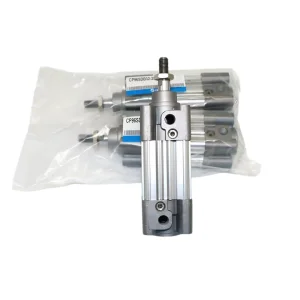
S-M-C Single Blade Swing Cylinder CRB2BW10-180SZ Pneumatic Cylinder Free Mounting Swing Cylinder
View Details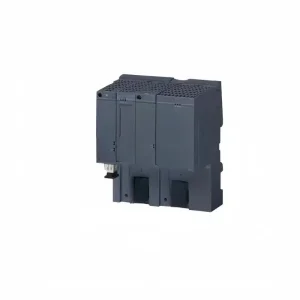
Original Plc Controller Et200sp Interface Module 6es7155-6aa01-0bn0
View Details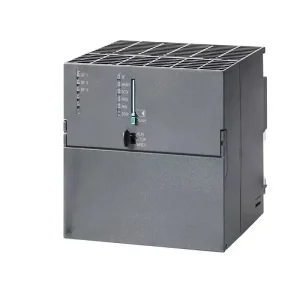
New Original Plc S7-300 Msm378 Module 6es7378-2ba00-0ac0
View Details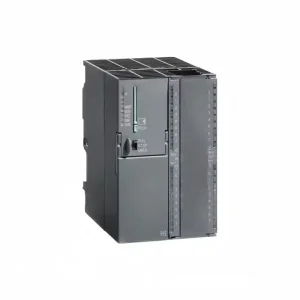
6es7972-0aa02-0xa0 Rs485 Repeater
View Details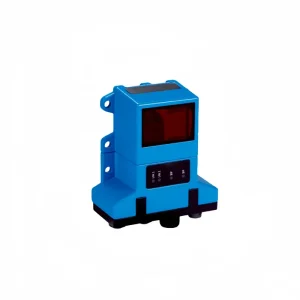
Distributor New Original 100% Photoelectric Sensor 1062200 KTM-WN11181P Contrast Sensors
View Details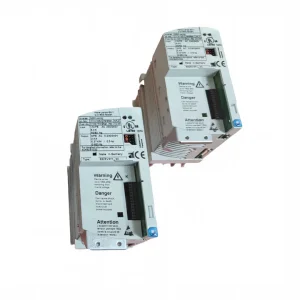
E84AYCETV Frequency Inverter PLC EtherCAT Communication Module Frequency Converter VFD
View Details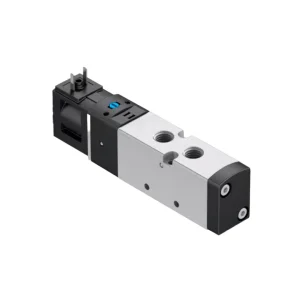
Fes-tto Cover Plate VABB-S4-1-WT 539212
View Details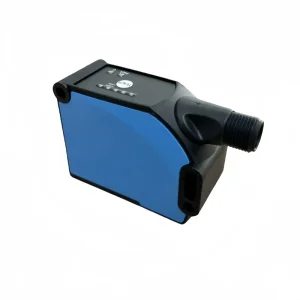
New Original DT50-P2113 Electronic Laser Distance Measuring Sensor Photoelectric DT50-P2113 AG Waldkirch Sensors
View Details