 CHANGHORN
CHANGHORN
CHANGHORN
Direct access to OEM-certified controllers, actuators, and sensor configurations deployed by leading international industrial networks.
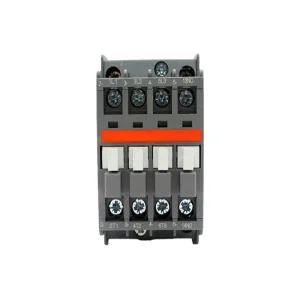
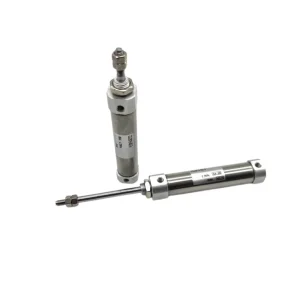
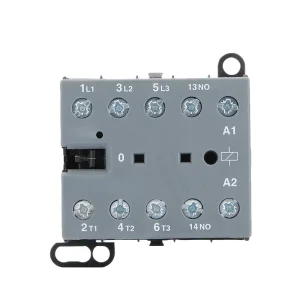
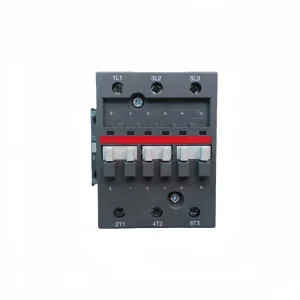
Hongyunlai Technology Co., Ltd., headquartered in Xiamen, Fujian Province, is a premier global supplier of industrial automation electrical components and high-performance sensor systems. Backed by extensive field experience in the industrial control sector, the company has structured robust, verified global supply channels alongside an elite technical sales team specializing in international hardware selection.
Providing one-stop procurement solutions, we empower system integrators, manufacturing factories, and global equipment maintenance enterprises with OEM-certified components. By bridging raw manufacturing capacity with precise mechanical and electrical specifications, we eliminate complexity in global component acquisition.
Our inventory consists of authentic products engineered by the world’s leading industrial automation manufacturers. Our comprehensive catalog features:
The global market for ultrasonic sensors is undergoing a significant transformation, driven by the demand for non-contact, high-precision distance measurement and object detection. Ultrasonic sensors utilize high-frequency acoustic wave propagation (typically from 40 kHz up to several hundred kHz) to calculate the distance to a target object by measuring Time-of-Flight (ToF) metrics. Unlike optical sensors, they operate independently of target color, transparency, or surface finish, making them indispensable in challenging industrial environments.
Industrial supply chains struggle with component variability, long lead times from tier-one manufacturers, and localized distribution failures. Partnering with a consolidated supplier mitigates these bottlenecks.
Leading factories focus on developing piezoelectric ceramics (lead zirconate titanate or PZT) that exhibit high electromechanical coupling factors, ensuring maximum signal sensitivity.
Compliance with ATEX/IECEx certifications for hazardous environments and IP67/IP69K protection ratings dictates engineering configurations in processing plants.
The ultrasonic sensor landscape is shifting toward digitization, intelligence, and edge processing. Factories and research institutes are introducing next-generation capabilities that overcome historical limits, such as environmental temperature fluctuations, beam angle dispersion, and cross-talk interference.
Modern factories are phasing out pure analog (4-20mA or 0-10V) transmitters in favor of digital IO-Link interfaces. IO-Link enables real-time diagnostic reporting, remote configuration parameters, parameterization replication, and continuous transducer status evaluation, bringing predictive maintenance directly to the sensor node.
As sensor density increases on production floors, acoustic interference becomes a challenge. Advanced manufacturing facilities integrate microcontrollers running proprietary digital signal processing (DSP) algorithms. These systems employ multiplexing, variable pulse lengths, and dynamic thresholds to filter out stray signals.
Because the speed of sound fluctuates with temperature changes (approximately 0.17% per degree Celsius), high-end sensors feature built-in temperature sensors. Algorithms calculate real-time offsets to correct measured values, ensuring high accuracy across varying operating ranges.
Ultrasonic transducers serve crucial roles in various industries. By examining their operational contexts, engineers can choose the optimal combination of frequency, beam angle, and housing material for their specific environments.
In wastewater management, acid tanks, and chemical processing facilities, non-contact level measurement is critical for safety. Ultrasonic sensors are installed at the top of storage vessels, emitting acoustic pulses downward. Because they do not contact the liquid, they resist chemical corrosion. For aggressive chemical media, plants select PVDF or PTFE-faced transducers with IP69K ratings to protect the internal piezoelectric crystals.
Automated Guided Vehicles (AGVs) and Autonomous Mobile Robots (AMRs) use ultrasonic sensors for collision avoidance. They detect transparent glass partitions, dark metallic structural frames, and dust clouds that can disrupt optical LiDAR systems. Operating as redundant sensors alongside LiDAR, they provide a reliable safety layer, preventing collisions in tight warehouse aisles.
| Target Medium | Optimal Sensor Type | Key Metric |
|---|---|---|
| Aggressive Acids | PVDF Faced Transducer | Corrosion Resistance |
| AGV Obstacles | Wide Beam Angle Sensor | Response Latency <10ms |
| Food Packaging | Stainless Steel IP69K | Washdown Proof |
| Bulk Solids | Low Frequency Transducer | Dust Penetration |
The evolution of ultrasonic detection systems is mapped out through clear technological milestones, guiding manufacturers and system integrators on what to expect in the coming decade.
Current industrial applications focus on standardized M12, M18, and M30 cylindrical housings with fixed beam characteristics. These systems deliver reliable measurement ranges from 20 mm up to 8 meters, with resolution figures dropping to 0.1 mm under optimized conditions.
The shift toward PMUT (Piezoelectric Micromachined Ultrasonic Transducers) and CMUT (Capacitive Micromachined Ultrasonic Transducers) silicon structures is beginning. This allows the integration of array electronics and transducer elements on a single chip, reducing component size and power consumption.
Future smart sensors will feature active beamsteering and adaptive focal points. Rather than emitting a static cone, the sensor will dynamically adjust its acoustic beam shape to target specific objects, ignoring complex structural components within its field of view.
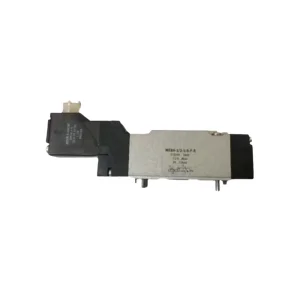
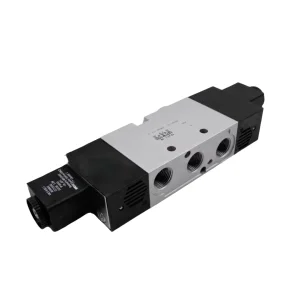
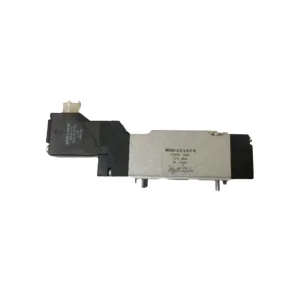
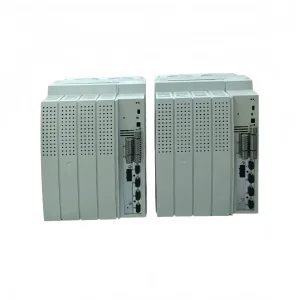
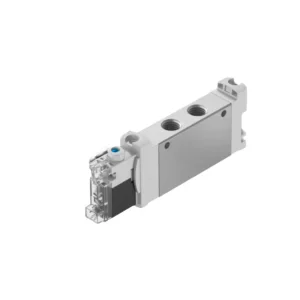
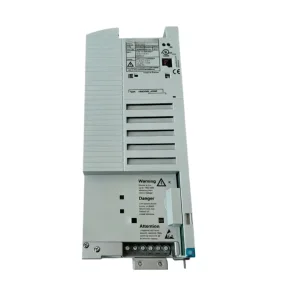
No sensor operates in isolation. In modern automation, ultrasonic sensors function as key endpoints within a larger industrial architecture. For example, level data gathered by an ultrasonic sensor is transmitted to a PLC (such as the 140 Series PLC Module or other systems), which then processes the signal to actuate a control valve (like the Festo Solenoid Valve CPV18-M1H-5LS or VSVA-B-B52) or regulate a pump via a frequency inverter (such as the EVS9324 Inverter).
For system integrators, maintaining hardware compatibility across different brands is essential for system stability. Operating a mixed brand topology requires:
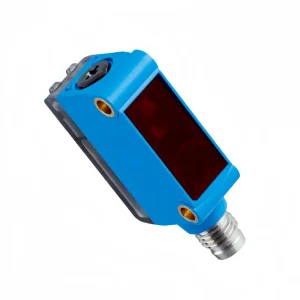
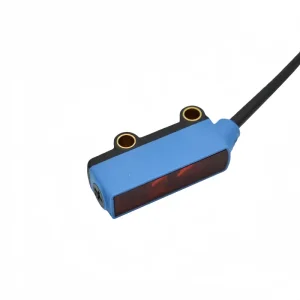
Hongyunlai Technology Co., Ltd. helps resolve interoperability issues by verifying component specifications before purchase. Whether you are replacing a photoelectric sensor, integrating a new solenoid block, or installing an ultrasonic unit, our technical team confirms that electrical outputs, mounting threads, and communication protocols match your existing PLC setup.
This pre-shipment validation reduces integration troubleshooting on the factory floor, ensuring new components connect smoothly with your control networks.
Detailed answers to common questions encountered by system designers and procurement specialists during sensor installation and commissioning.
Select from our verified range of frequency converters, valves, and PLC modules to complete your system integration projects.